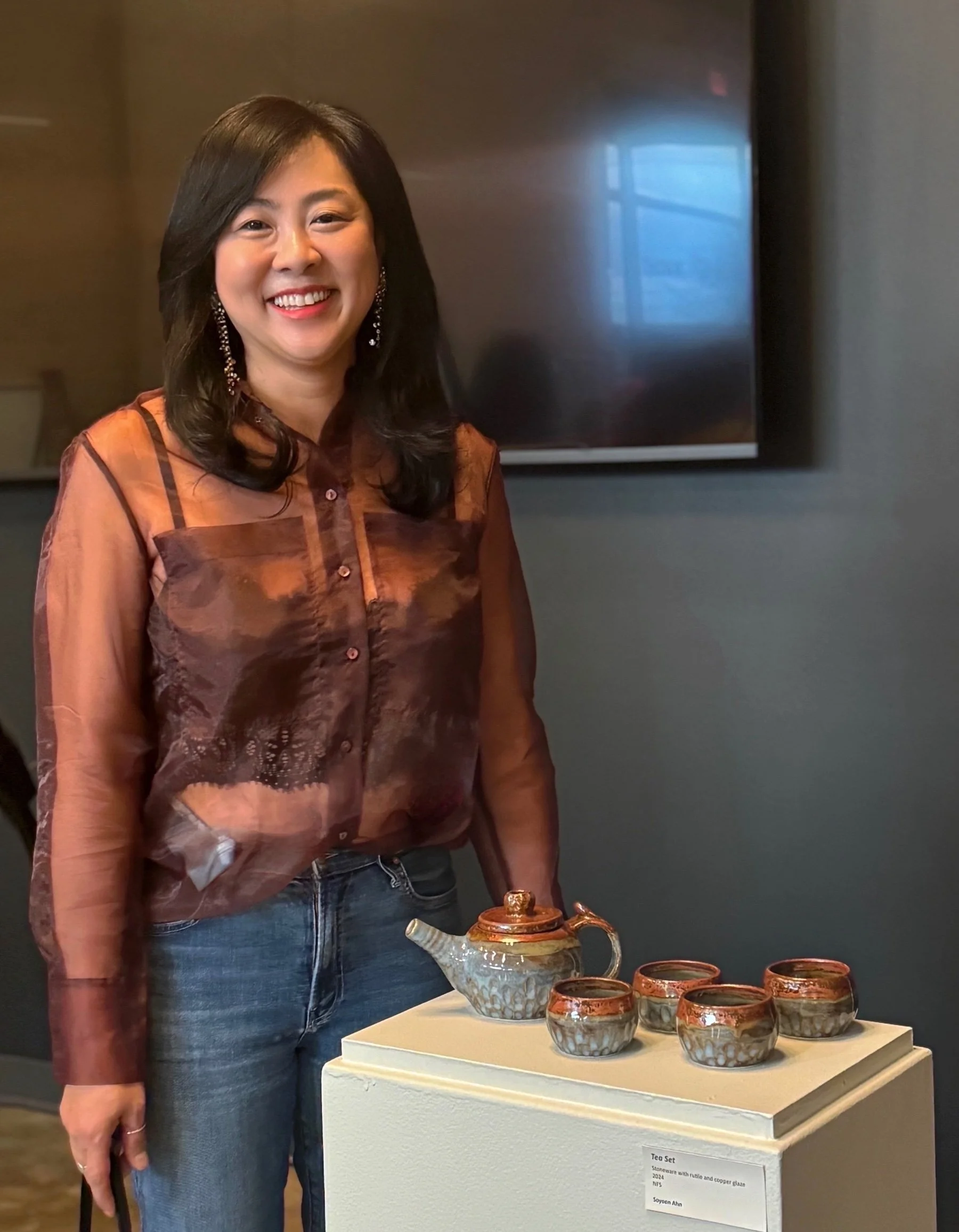
“I’ll never claim to have complete control over my glazes. I don’t think any potter can. But I love the process. Opening the kiln after a glaze fire is like Christmas every time!”
All in Interviews
“I’ll never claim to have complete control over my glazes. I don’t think any potter can. But I love the process. Opening the kiln after a glaze fire is like Christmas every time!”
“You can feel the film wind and feel the mirror slam. I think it just has a little more soul to it than digital photography. Taking the time to do what I’m doing, makes me appreciate it that much more.”
“Curating is about developing ideas, bringing different perspectives into conversation, and creating an experience that allows visitors to discover something they might not have encountered otherwise.”
“After all the time I have spent with a career in retail, the thing I have wanted to do was to create a store that celebrates art, design, and creativity.”
“There’s always a reason to be found to make even the most ridiculous art, you just need to find the reason.”
“We love B-movies and old sci-fi movies. We also watch a lot of cooking shows, partly because we love cooking, but sometimes we get ideas for pottery.”
“I give myself the freedom not to have to be excellent at everything, and this allows me to find joy in dabbling, playing. I challenge myself to take the artistic risk, try a new method, experiment.”
“It’s good to remember that watercolor is like a teenager — it has a mind of its own. We get in trouble when painting watercolor if we try to control it. Get in and get out. Enjoy the paint.”
“As artists, it is our job to show the viewer how we see the world. My goal with my still life paintings is to take utilitarian objects and give them their moment.”
“Art to me is the closest thing we have to a bridge between our inner private world and the outer world we share.”
“Following in my father’s footsteps, I am basically always working… but as he taught me, when it is work you love, you don’t get tired of doing it.”
“I love drawing for its simplicity, its practicality, and its expressiveness. Drawing lends itself to storytelling.”
“Looking back, I can see how those experiences—building worlds with my hands, paying attention to nature, and learning collaboration through music—have shaped how I work as an artist today.”
“When I get overstimulated in life, being a parent, doing the must-dos and so on, making art is a meditation. I can shut off everything except what drives my mark-making, color choices and focus on the tactility of hand to paper or canvas.”
“I was a perfectionist and preferred to be in total control. However, pottery transformed my perspective, shifting my focus from the outcome to the process itself.”
“I’m usually so focused on the technical aspects of a painting I tend to let the meaning of the work be whatever it’s going to be. If it has meaning in the conventional sense that can be put into words, so much the better.”
“Through my work, I hope viewers reconsider the assumption that toys are simply harmless playthings. By transforming familiar materials, I aim to make the work accessible yet thought-provoking—inviting reflection on the cultural values embedded in objects we often overlook.”
“I developed an understanding of working with wood as a child. Cutting and splitting firewood along with building numerous forts, all these things informed my understanding of wood.”
“Our art explores the aesthetic potential of various materials, and the inherent qualities of these materials drive our creative process.”
“The tactile nature of my process–the feel of materials, the movements, the changing workspaces–feeds me.”