Interview with artist Lo Patt
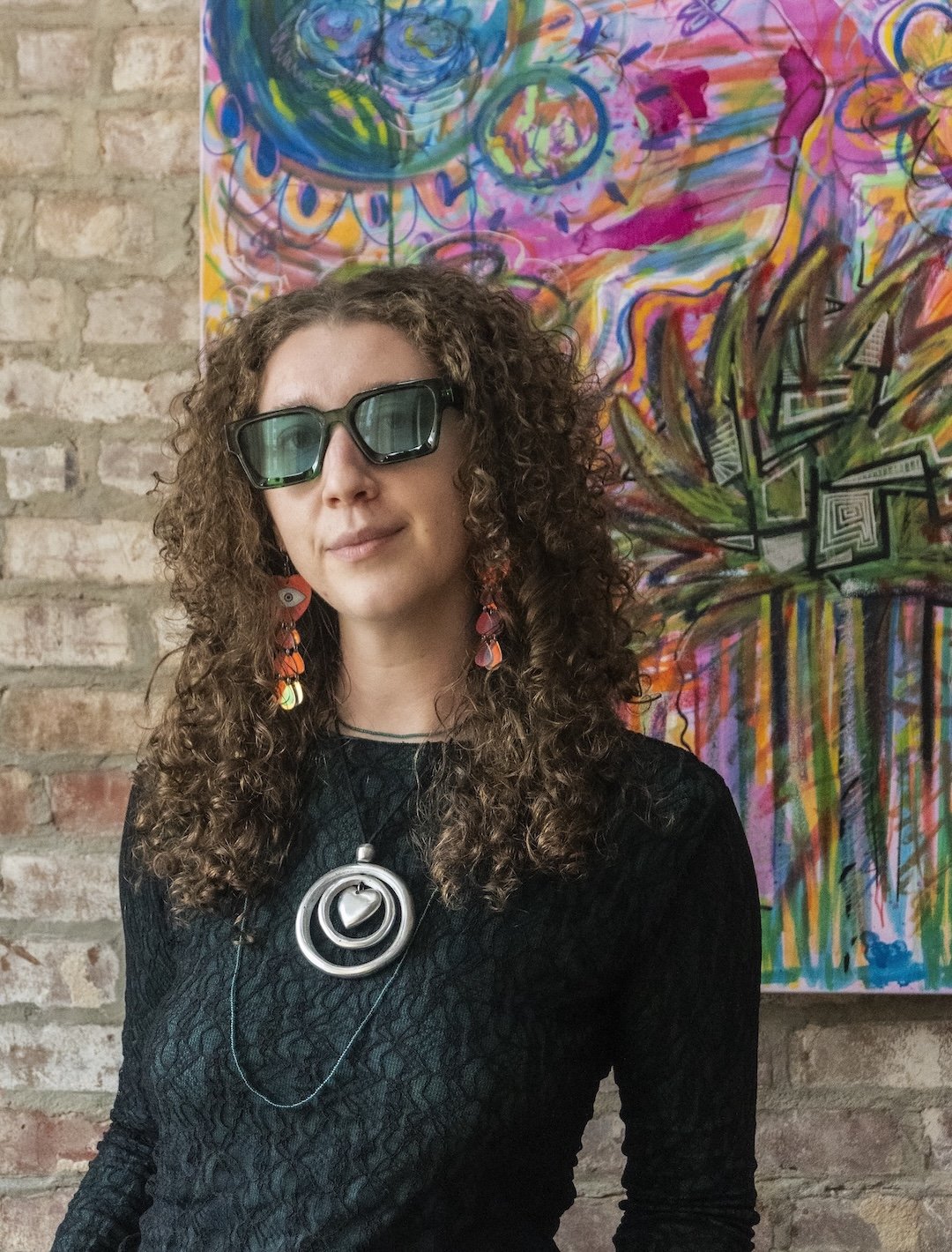
Lo Patt is a multimedia artist based in Little Rock. She received her B.A. in Studio Art from California State University, Long Beach, but it was her work there as an analog and digital photography lab technician that helped to refine her skills as a photographer, which serves as the foundation of her art practice today. She has exhibited nationally and throughout Arkansas, most recently at The Window On Sixth in Little Rock. More of Lo’s work can be found at her website lopatt.com and Instagram. —2026
AAS: Lo, where did you grow up?
LP: I grew up in both Arkansas and Southern California. My relationship to Arkansas has odd origins, when I was four, my mom moved the two of us here, starting a new life with a love she had met through eHarmony. In elementary and middle school, I lived with my mom and stepdad in North Little Rock, Arkansas, then for high school and college I returned to living with my father and larger family just outside of LA. I went on to complete my B.A. in Studio Art from California State University, Long Beach.
Mother Me, Darling Angel, Polaroid, silver, paper doily, resin, 10” d
After graduation and during the peak of COVID in 2020, I unexpectedly moved back to Little Rock. I anticipated my career beginning in California following my education. However, my mom was at the end of a long battle with cancer. I've been back in Arkansas the last six years and now see how important it was for my art practice and career for it to begin here. My lens on this place has changed completely from what I once knew as a kid to being a young adult and emerging artist focused on building community. A lot of that shows up in my art — memory, nostalgia, grief, change. My practice is intentionally driven by the experiences of this place, investigating my memories and relationship to it as a queer femme in the American South. Through my art, I share what it’s like being here and of here while simultaneously functioning as other.
AAS: I suppose during the time you spent in the LA area you were exposed to art of all kinds. But did you have any artist role models growing up?
LP: I spent my teenage and college years in LA which were the same years I began developing art more seriously. It was dreamy being in proximity to museums like The Broad, LACMA, The Getty… My high school prom was at the Petersen Museum in downtown LA. I have very fond memories of taking frequent museum trips with my Aunt Sammy. Some favorites I’d admire were Barbra Kruger, Jean Micheal Basquiat, Andy Warhol, Frida Khalo.
What inspired me most about my years there as I found an academic interest in art was the common presence of art, music and performance culture in everyday life. My father is my role model. He is a full-time musician, and I was always inspired by watching musicians come in and out of our home, hearing laughter and jams fill the air. I saw my dad work very hard recording, teaching, practicing, booking and playing gigs. I also saw the freedom and possibility in making your own schedule and doing what you love for a living. Because of my dad and his friends living their dreams, I always knew it would be possible for me. Now I live that and understand first-hand the sacrifices it requires. I have been a freelance artist and somatics instructor for the last two years. I teach on average seven classes a week between art programs at the Arkansas Museum of Fine Arts, yoga classes at Barefoot and Sixth House Studio and facilitation for incarcerated youth with Prison Yoga Project. I also offer services such as intuitive artistic tarot readings. Of course, I sell and exhibit my visual art and take on photography shoots and commission paintings. All of these involve deep looking and listening to my community members, feeling them and offering something that transcends the visual into the spiritual or the embodied. Following in my father’s footsteps, I am basically always working… but as he taught me, when it is work you love, you don’t get tired of doing it.
AAS: When did you first become interested in photography?
LP: 2016 in high school, photography was one of the first electives I took alongside dance. I found wild pleasure in both and used them as tools for self-discovery. I started taking a lot of self-portraits at that time, something that still makes its way into my work, now a bit more advanced and abstracted, often through seeing myself in a shadow or silhouette. Photography became my close companion to point a lens at my world, myself, and in turn understand it all deeper. Freeze a moment in time with all my feelings attached to them, speaking through the pictures. I work in documentary style, capturing what’s there. For me, a photo usually begins with seeing something that I can’t go without witnessing again or that I know needs a deeper look. I pull out my camera and memorialize that person, place, or thing.
When I was just 16 learning a camera, I began shooting friends' senior portraits, family photos, birthday parties and never stopped. Since then, I’ve shot weddings, a concert series at the Arkansas Museum of Fine Arts and continue to do commission-based work for special clients. I think what draws my photo clients to me is my artistic intuition. You know you’re not just getting a photographer. You’re getting a deep human experience of being seen and photos that really speak to who you are.
AAS: Your photographs are great and congratulations on the selection of The August Ash Left Arkansas to Small Works On Paper 2025.
The August Ash Left Arkansas, photography, 18” x 24”
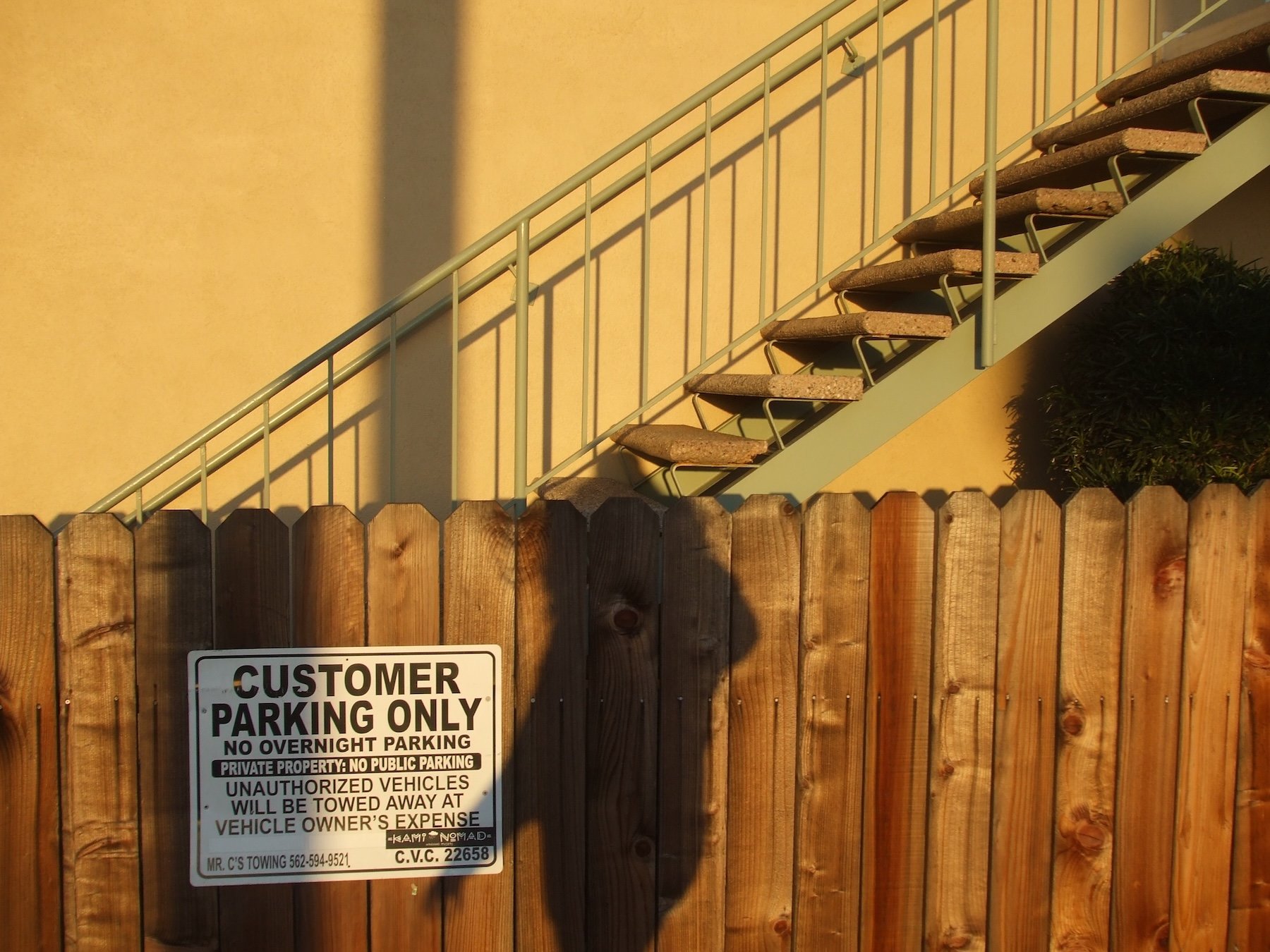
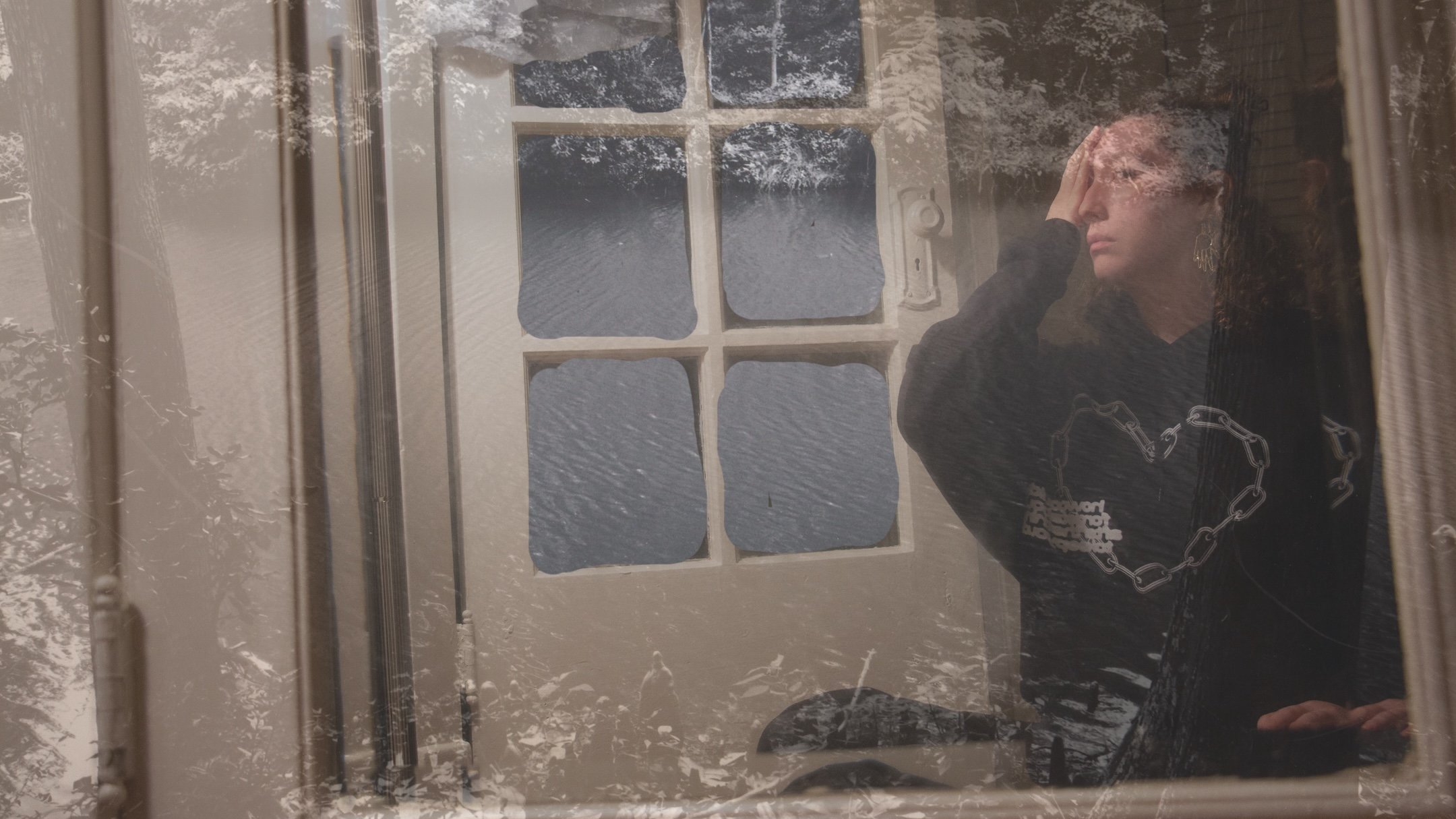
LP: This exhibition was particularly exciting for me as it marked my first participation in a traveling exhibition. The show traveled all throughout the state, visiting nine galleries over the course of a year. It was also meaningful to have this specific photo chosen which captures my friend Ash leaning against her Dodge Journey outside of my house on a hot humid summer day, the last time I’d see her. The next day she drove that Journey all the way up to Idaho and built a new life for herself. The humidity of that summer day attacked the lens. I love working with natural elements and letting the unexpected reign. There was no use in wiping off the lens, I embraced the way it fogged my view and pictures, complementary alongside the quality of light filtering through the trees. The photo speaks to being from the South, a relationship of love and leaving.
AAS: Another piece, a collage, that incorporates photography is The House Smelled Like Biscuits That Night, which earned Best in Show at the Lawrence, Kansas Arts Center, 8x8 Exhibition in 2024. Tell me about it and your interest in collage.
The House Smelled Like Biscuits That Night, found object, Polaroid photography, 18” x 18”
LP: I got more serious about collage works when I was exploring a wide breadth of mediums during my Studio Art studies at California State University, Long Beach. While taking foundational classes in newer mediums like oil painting, sculpture, ceramics, and drawing, I was continuing to develop my photography practice in classes while working as a Photography Lab Tech Assistant for the School of Art. Collage felt like a natural bridge for using what I knew well, photography, with the newer mediums I was drawn to. In my collages, the work is typically photo heavy, making my images the main characters alongside colorful markmakings, poetry, sentences or words and now fabrics, which add to the dialogue. Collage allows me to set my photos in a scene. By complimenting or juxtaposing images and objects, far different meanings are born beyond the standalone image.
Scattered Selves on a Silver Platter Pt.2, personal relics, found objects, 20” d
I’ve recently begun found object assemblages, which I think of as 3D collages. In my new series, Scattered Selves on a Silver Platter, I collect family photographs and intimate objects, arrange and cast them in resin on silver platters — exalting the ordinary and elevating my 2D photo collages within a 3D plane amongst other objects. In 2025 I assisted local inspiration Diane Harper in teaching collage to adults at the Arkansas Museum of Fine Arts.
AAS: I am a big fan of woodblock prints. Tell me about Mirror and how you learned about printmaking.
Mirror, woodblock print, on muslin, 36” x 35”
LP: I discovered printmaking through a beginner printmaking summer course at the Arkansas Arts Center, before it was renamed the Arkansas Museum of Fine Arts, where I now teach. That was back in 2018 when I was in college at CSULB, visiting my mom in Arkansas for just a few weeks in the summer. My introduction was with local printmaker, Carmen Alexandria Thompson who has since passed (RIP). In 2025, I assisted Perrion Hurd in beginner printmaking at the AMFA and learned woodblock printing when I went on to do a workshop with Hurd and Yashua Klos, a visiting artist from New York. I don’t like proper drawing. I like scribbling, doodling, writing, painting, and photomaking. Expressing with my hands in often quick messier ways, scratches the itch for me. Printmaking (especially on woodblock) is a really cool convergence of mediums. You can do very meticulous prints that come from intense drawings, or you can do a general outline, start carving and see what comes from the carvings. I much prefer the later.
I became really interested in a use of symbols in printmaking. Universal languages that we can all understand or impose our own meaning to. With my prints, I usually begin with a concept, a few key elements then allow the carvings to expand into their own world. For Mirror, my concept was born from thinking about the micro to the macro. The relationship we have as human beings to all things in the environment, seeing ourselves as pieces of the universe dispersed amongst different bodies. Here the eye, a symbol for the window to the soul, sheds tears that rains down on the birds.
AAS: You often incorporate words or poetry into your work. Tell me about Love Makes a Liar Out of Us All, which was in your recent show Revival at The Window On Sixth in Little Rock.
Love Makes a Liar Out of Us All, photography, screenprint, ink 33”45”
LP: This piece was like therapy for me. I was reading the book “End Emotional Outsourcing” by Beatriz Victoria Albina and was struck by her theory on “Survival Selves”. Essentially, archetypes we’ve adopted to attain and maintain relationships. On the left in this piece, are some of those “selves” with Martyr circled- the one I personally relate to. Beatriz says “The martyr self-sacrifices leaving most of themselves behind.” I made this piece coming out of a 5-year relationship, reflecting on the way I felt like I gave everything to a detriment, the unfavorable parts of myself included.
It’s easy to get attached to a version of yourself that ignores those parts, casts judgements towards others instead of relating to where those qualities show up in yourself. It is a piece of acceptance, acknowledging that we are all capable of showing up in the unhealthier or unwanted parts of ourselves. The versions of us we created to survive, receive love and remain safe. These selves feel especially present in intimate relationships where we share deep care with a partner and witness self-sacrifice in action. I paired the writing with a photograph I took years ago of two artist friends and lovers whose relationship I was always inspired and fascinated by. When I took them into the studio I wanted to play with their dependency on one another. I asked them to intertwine arms back-to-back and then this beautiful thing happened where Natalie started slipping, and Ali started rising. I relate to her, collapsing under the weight of lifting someone else up. Last year, I screenprinted the image to create this piece and while journaling found its home along these words.
Love is a Beautiful, Wonderful, Terrible Thing, photography, ink, 16” x 18”
Another piece from that show, Love is a Beautiful, Terrible, Wonderful Thing, feels very related to this work too. It was made while processing the same relationship just two years earlier. It’s a look on love and intimate relationships in its many different faces. Deep devotion brings out the best and worst of us. My show last month, Revival at The Window On Sixth, dealt with a lot of these themes. Exploring the pitfalls, anguish, and possibility in loving another and then coming back to the self after heartbreak.
AAS: Not surprising, you also paint. Victorian Little Rock is a terrific interpretation of some of the iconic homes in Little Rock’s Quapaw Quarter. I like the way the changing perspective gives almost a collage feel.
Victorian Little Rock, oil on canvas, 26” x 48”
LP: Since moving back to Arkansas, I have lived downtown, admiring the beautiful Victorian homes in my neighborhoods. I’m curious about the histories they’ve lived through. This piece began from photographs I would take of these homes on my walks. I then printed each individual home then cut out and crafted a physical photo collage to paint from. So yes, you’re right on! If I had to give hierarchy to my mediums, I’d say I’m primarily a photographer who enjoys painting. So, when I paint it is often from photographs I am fascinated by. I make paintings out of my photos as a way to process the moment again with a different set of time and attention. Through copying what I captured, I study the subject and stretch the once fleeting moment, through a span of many hours or days. Seeing it in shapes and colors also helps me understand my feelings in a fresh way when I step away from the finished piece.
AAS: LA Is On Fire expresses the mayhem and fear residents on the LA area felt in early 2025 and I assume members of your family there did too. What were you hoping to capture in that painting?
LA is On Fire, acrylic and colored pencil on canvas, 40” x 30”
LP: This piece was one made for the purpose of expressing, which as you felt expressed a lot of mayhem and fear. I began this piece in the start of 2025 when there were bad LA wildfires. Living in Arkansas at the time, it felt so odd to see the places I grew up going to, gone, and to worry about family members who were so close they had to evacuate their homes. I felt so out of control watching it all from afar. This piece helped me process emotions, so they didn’t get trapped in my body. I wasn’t intent on capturing anything as much as I was focused on the opposite, releasing. It was a pure form of letting go of anxiety, stress, grief- unattached to an outcome. I returned to the canvas a year later when these feelings rearose for other reasons and the piece became far more layered. I will do that from time to time, let a piece live one way for a few months to years then return to it with further things to process in the same vein and I accept that it is time for it too to change and evolve.
AAS: Lo how do you see your art practice evolving in the next 5-10 years?
LP: For the next stage of my art, I would like to emerge in scale and material. Pushing bigger, including the spaces in which I can exhibit my work. I would love to work in collaboration with other artists. It’s a good possibility I could move back to LA. Family is important to me and while I don’t have a single biological family member here, I do have a lot of community and chosen family which has kept me grounded in purpose.