Interview with artist Brandi Parker
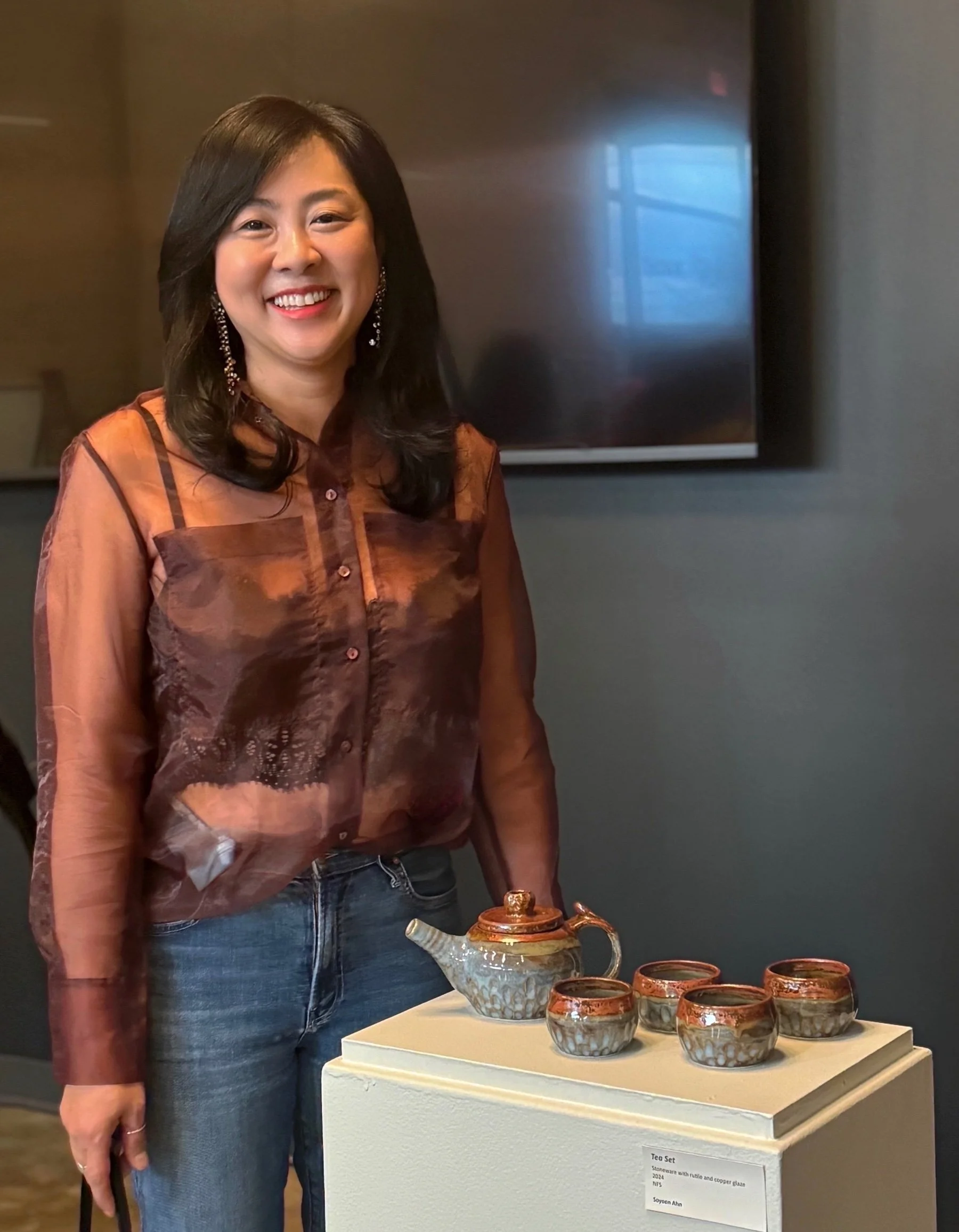
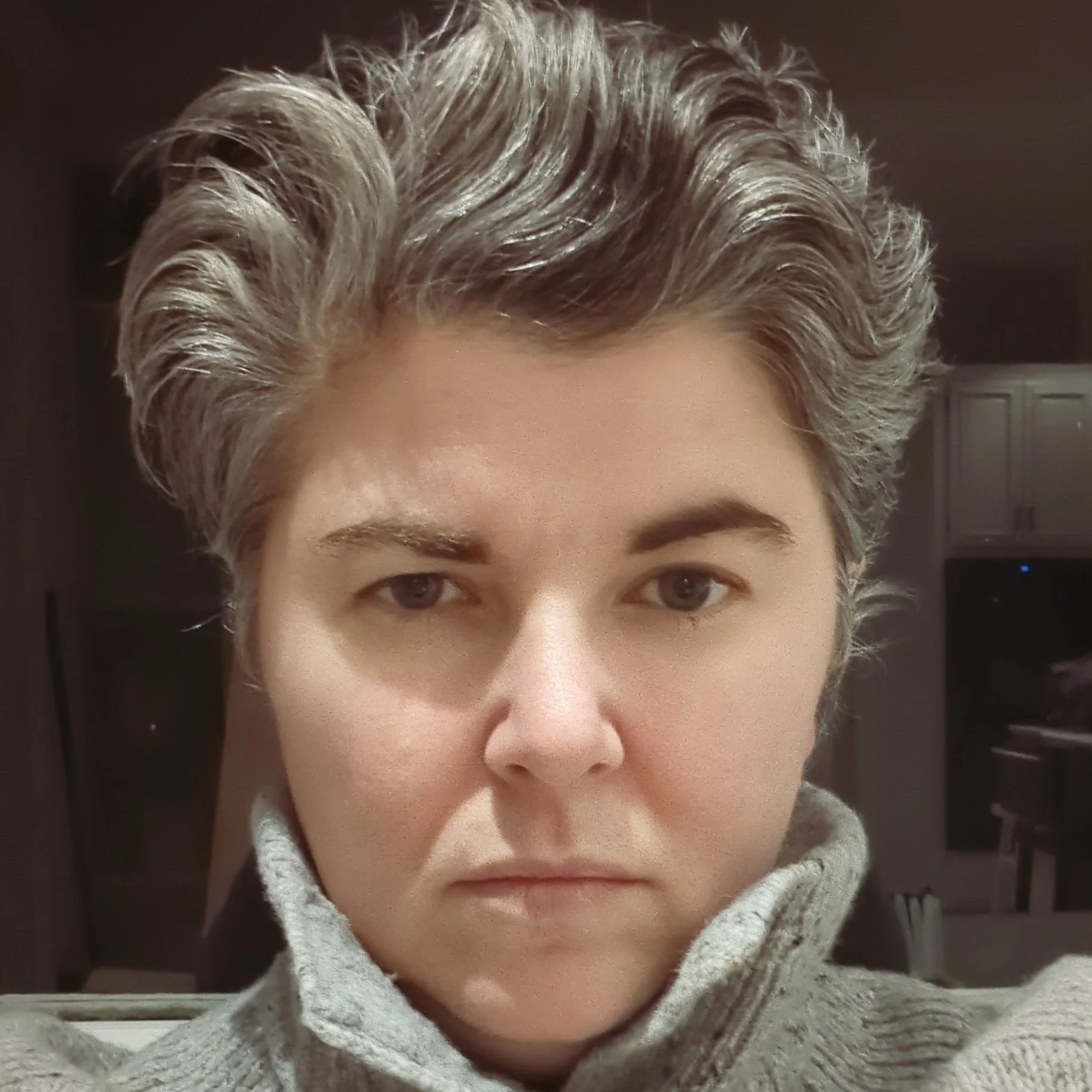
Brandi Parker is an artist and entrepreneur from El Dorado, Arkansas. Following graduation from the University of Arkansas with a BA in Fine Arts, she moved to New York City and worked for a design agency and as a musician. After returning to El Dorado at the start of the Covid pandemic, she resurrected her art practice, which now juxtaposes themes of happiness and sadness to exuberant joy and despair through abstraction and surrealism. More of Brandi’s work can be seen in the 2026 Small Works on Paper traveling exhibition and at her website. —2025
AAS: Brandi, are you an Arkansas native?
BP: I am a proud Arkansas Native! Born in El Dorado, where I currently reside. My family moved to Dallas when I was in grade school, but then we came back. I finished school here and then I was off to college at the University of Arkansas. After graduation, I moved to New York City and was there for about 18 years. The pandemic brought me and my wife back here, where we both are close to family and started a family of our own.
AAS: Was art something you were interested in as child?
BP: I’ve always loved creating, and drawing was one activity that was always very accessible—you don’t need special equipment to start. I loved to draw things around the house, and I’d even ask my parents to draw things for me so I could watch them, though they were never confident and not self-proclaimed artists in any sense.
Beyond my parents, my first role model was probably Lee J. Ames, author of the famous “Draw 50…” series. Like, Draw 50 Famous Faces or Draw 50 Monsters. I absolutely loved these books. They were a solid foundation on how to break down complexity into simple shapes. I diligently drew all the books I could get my hands on at the library. My mama was trying to cultivate in me a reading habit and a love of the library, which she did, but probably not for the purpose of learning to draw.
I do a lot of public speaking with my day job, and often that means telling my story to students. Part of that story is how I picked a major at the U of A. As an entering freshman in the mid-90s, the way you picked your major was by standing in line. I had come to the U of A with two majors in mind, either art or music. The art major had 3 people in line, music had like 100+. So, I chose art. I’m so glad that I did, because that course of study impacted my life in many, many ways. With an art major, at that time, you had to declare two emphases. Mine were printmaking and drawing. I wouldn’t go back and change a thing.
AAS: What was it like for you returning to El Dorado after years in New York?
BP: I discovered such a thing as reverse-culture-shock. I’d moved, with my now wife, to NYC in the early 2000’s and it was exciting, hard, scary and immensely shocking. Life just works completely differently in NYC. Living spaces are small. We got rid of our cars and took mass-transit everywhere. No one knew us (save for a couple friends we knew there), and there were just so many people that you’re shoulder-to-shoulder all the time. Distance and time work differently too. It might take you an hour to go 5 miles as the crow flies and walking can be way faster than taking a cab. Space and time just warp.
I am also a musician, and I’d managed to keep my music going while in the city. When we first got there, I had a few studio gigs and was playing in different kinds of bands, everything from Irish pop rock to Afropunk. It was so much fun. NYC has a pulse—you can feel it as soon as you land there—and everyone is pushing themselves to strive and achieve all the time. It gets addictive (and can swallow you whole). So, I was just trying everything I knew to see what stuck and, for that time, music eclipsed my art practice.
My day job at a design agency was super fun and challenging, and I do believe that kept my art skills alive—color theory, composition, applications of traditional printmaking to commercial and so forth. Even though I was not practicing my art on my own time, I was utilizing skills all day long, every day.
So, after moving back, all of that reversed. Suddenly I could get done with three different errands in 30 minutes that would have taken me hours in NYC. Instead of getting off work at 9pm (design agency life), home at 10pm, dinner and bed, it became a totally different timeline: working from home ‘til 4 or 5pm and then, whoa, normal dinner and bedtimes, and SPARE time to boot!
Most importantly, I had space to reinvigorate my personal art practice. It wasn’t too long after we got back (during the pandemic) that I managed to get a solo exhibition at the South Arkansas Arts Center. I booked it in 2021, and I had about two years to get the show together. I hadn’t had any shows since college, so I was rusty, but the SAAC was so supportive and wanted me to dive in. So, I did, and that show became Organism. Having a deadline is probably the most motivating thing I can think of to get you to dive back into something in earnest.
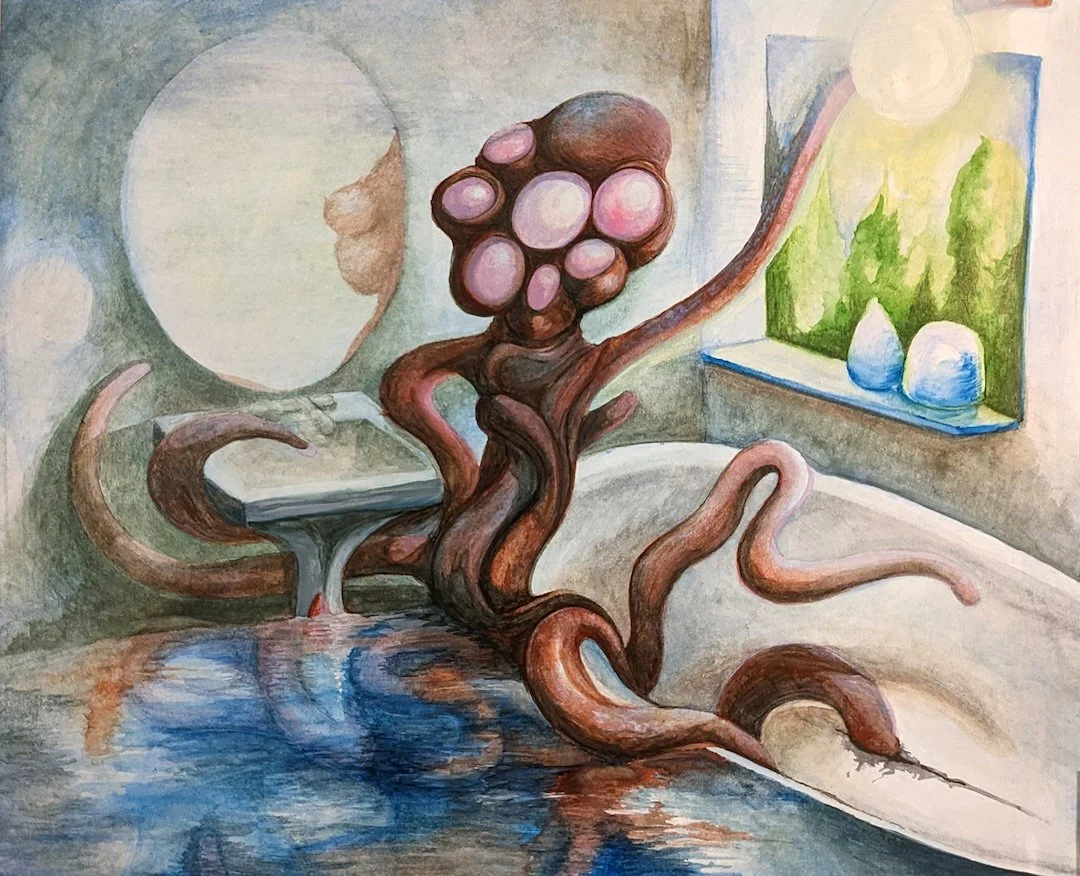
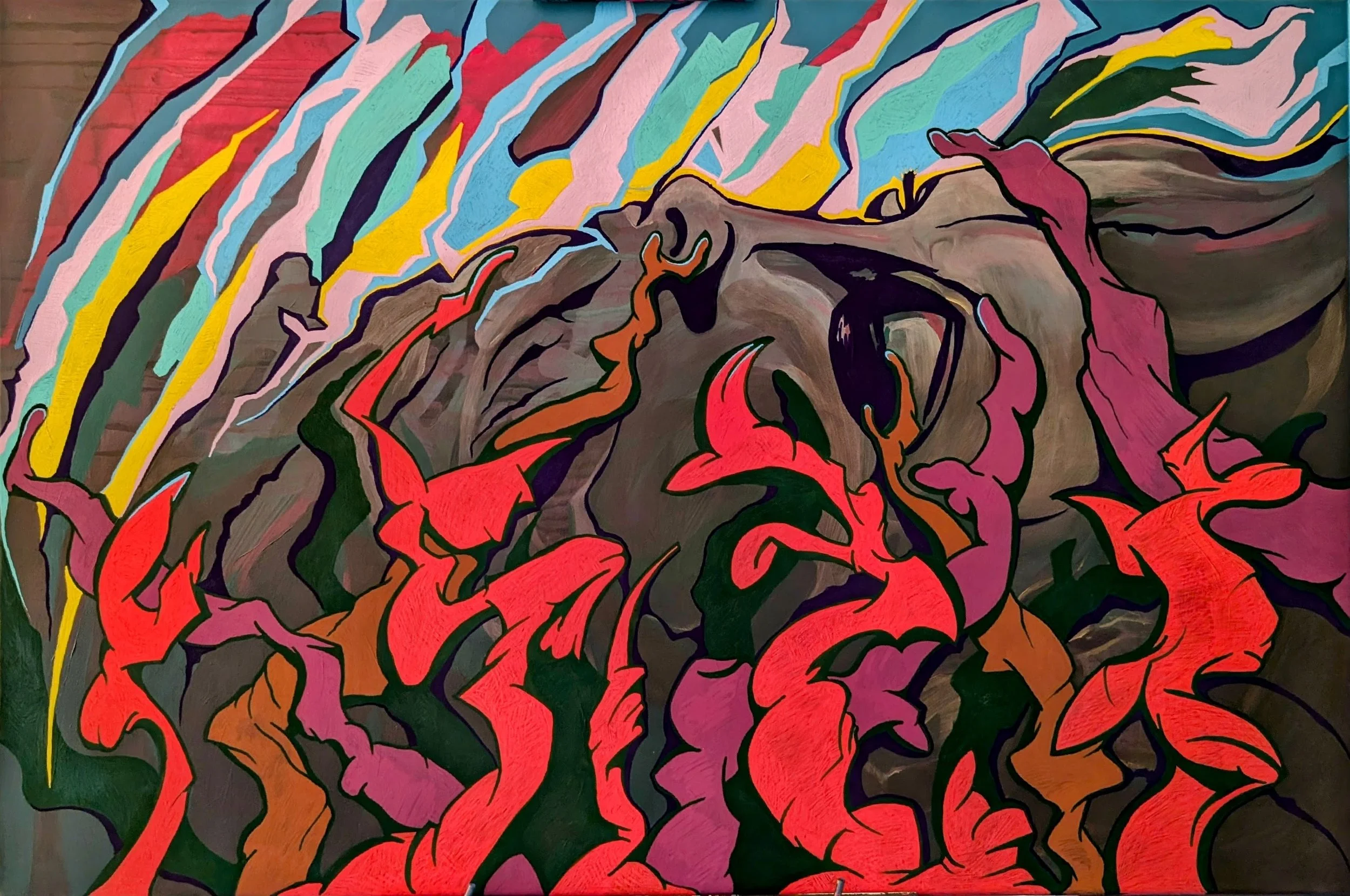
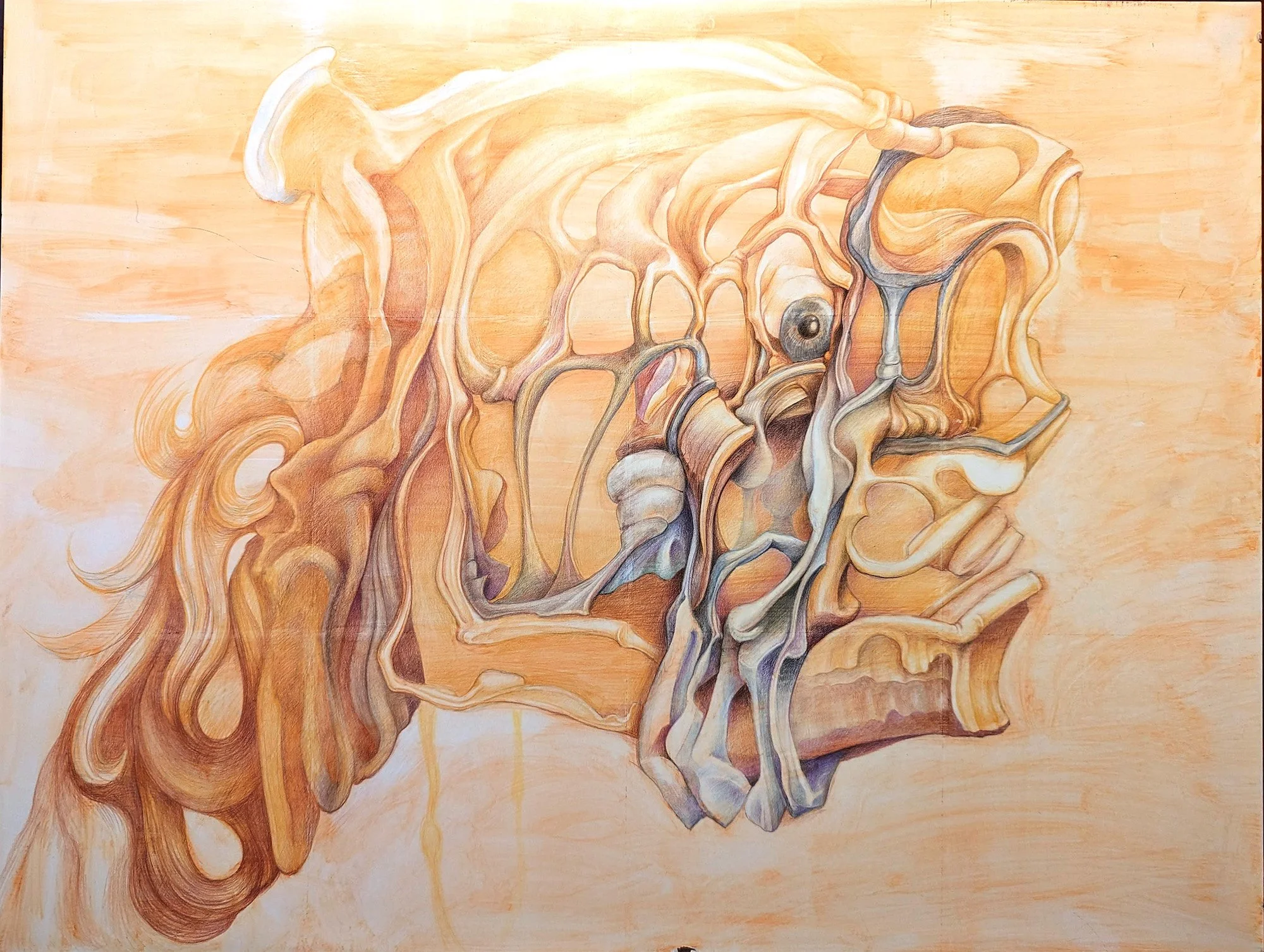
AAS: I want to ask you first about your drawing selected for the 2026 Small Works on Paper Traveling Exhibition, Brood Birth. I’m sure you are thrilled to be in that very prestigious show, which will be viewed throughout the state.
Brood Birth, 18” x 24”, color pencils on paper
BP: I’ve been so impressed with the Small Works on Paper shows I’ve seen. They’re intimate because of the size limits, and there are so many artists from so many backgrounds. I think it’s one of the best shows you can see to get a glimpse of the immense talent in this state. And it’s so awesome that it travels.
This year I got up the guts to apply, even though I wasn’t in the midst of creating work for a show, and WOW the shock when I got in! I was truly happy and totally surprised. I think I read the email like 10 times. Also, I was pleasantly surprised with the curators’ choice of the piece. Sometimes I think surrealism can be so niche, but I’d like to think that the obvious family themes going on in Brood Birth made it more relatable.
AAS: In looking at your work, it is evident that drawing is a fundamental and crucial element. Why do you think drawing is so essential to your art practice?
BP: Drawing is such an interesting discussion in the art world. If you know much about western art history, there’s such a de-emphasis on drawing and it’s not as highly valued, because painting is THE thing. It’s like drawing is the price of entry. But, going through classical art training, you must learn how to draw. And it is intense study—so so hard—which makes sense, because if you cannot draw, everything else is harder. It’s so weird to me that it is seen as so basic by the wider industry.
It’s a central skill and comfort zone for me. Having started with drawing as a really little kid, and it being such an accessible thing to do—you don’t need fancy implements—just a pencil and some paper, I was just able to sit down and draw all the time, anywhere. Plus, pencils are so amazing. They smell good, sharpening them is so satisfying. Later in my school life, I would figure out that being able to doodle while taking notes actually helped me pay attention and focus in a huge way.
I definitely expanded on my drawing skills and techniques through my study of printmaking. Techniques like intaglio or even lithography do centralize drawing. Those became among the techniques I felt most confident in. Also, because when I jumped back into art after about a twenty-year hiatus, drawing was an obvious place to go. A lot of my pieces centered around drawing as a result, especially in Organism.
“My art has taught me nearly everything about myself. In these last few years working so much, it’s become therapy for me—to understanding how I feel, to processing grief. “
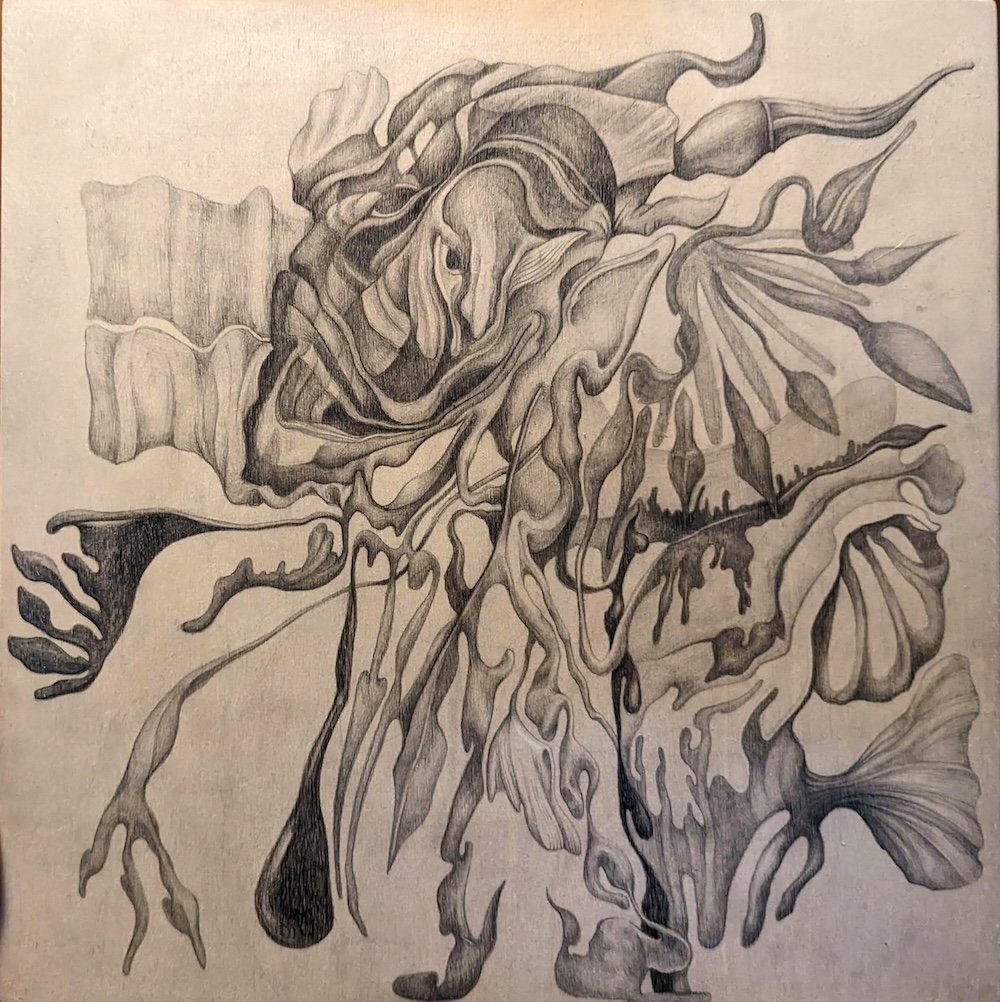
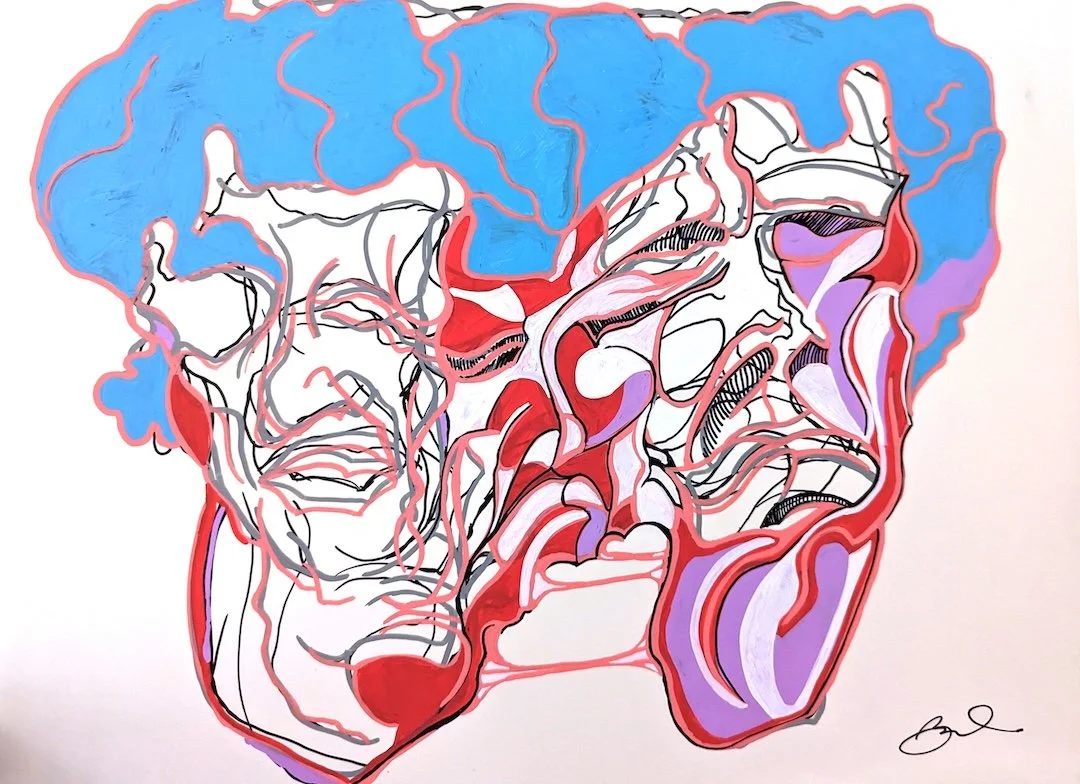
AAS: Memories are Reality is an extraordinary drawing with elements of surrealism. Surrealism is often a way artists explore their own psyche. Do you think your art has taught you much about yourself?
Memories are Reality, 20” x 26”, colored pencils, pastels, graphite on paper
BP: Thank you very much! I really love that piece and I had a lot of fun making it, even though it’s about the fragility of memories, which are the main painful losses with Alzheimer’s. I also was thinking a lot about how my mother was reliving certain memories over and over during this time, and it was as if they were playing out in real time in front of her. Her memories and her reality got really mixed up.
I set off to relax my expectations and let myself drift into surrealism and soft colors and pastels and pencils—I just let go. When making work for a show, I find it’s so easy to get uptight about certain pieces. I wanted to make sure that this one definitely felt loose—similar to how my mother’s perceptions were loosely intertwining and less rigid—the concept that reality is relative. This piece needed to feel more like that.
My art has taught me nearly everything about myself. In these last few years working so much, it’s become therapy for me—to understanding how I feel, to processing grief. When I get overstimulated in life, being a parent, doing the must-dos and so on, making art is a meditation. I can shut off everything except what drives my mark-making, color choices and focus on the tactility of hand to paper or canvas. My world is in front of me.
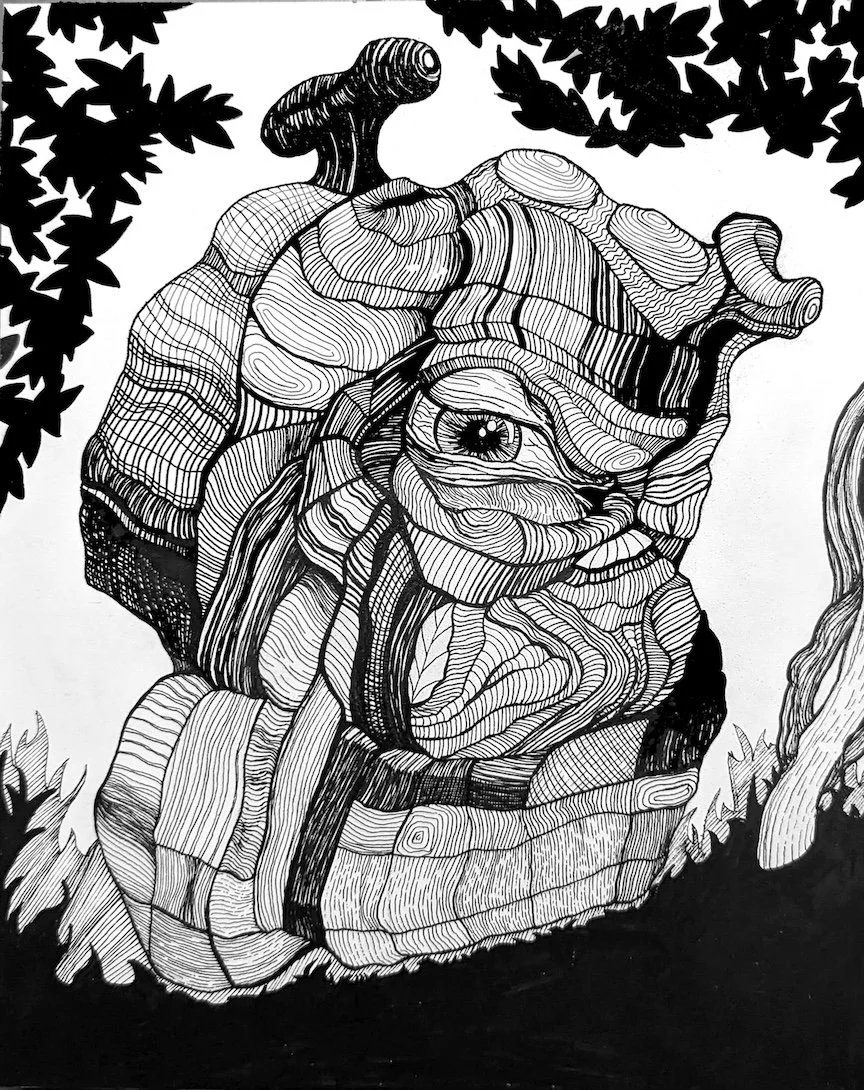
AAS: Specimen: TurkeySnail is one my favorite pieces from your Specimen series. Tell me about it.
BP: Thank you! It’s one of my favorite pieces of all-time. I love how that one just seemed to flow out of me. It’s weird, unexpected and has some humor in it. It’s also one of the first pieces I finished for Organism.
Sketchbook drawing
I’d been carrying around a really small sketchbook, furiously sketching ideas for the upcoming show. My wife was pregnant with our child for most of the time I was working on the show, so I was doing a lot of caregiving, making sure she had what she needed. We traveled a lot during that time, too, with doctor appointments in NYC and Dallas as we transitioned back to Arkansas. So, I needed to be able to sketch in 15-minute increments in waiting rooms and in the car or the plane.
Brandi and Ellea
The idea and sketch for TurkeySnail came to life during that chaotic time. I’d begun executing the final piece when we headed out to have the baby. So, once Ellea was born and we were deep in the newborn phase, I paused work for about two months. I have a great photo of when I’d picked the piece back up. Ellea is in my lap, almost exactly two months old. The look on her face is hilarious—this tiny baby was enthralled by the process of the drawing. It was hard to work while holding her, but I tried to do it as much as I could. This weird TurkeySnail dude saw my evolution in real time from a 40-something-year-old childless person to full-on parent. In a way, the mashup of the turkey and the snail makes sense in that context.
Specimen: TurkeySnail, 16” x 20”, watercolor and color pencils on Canson hot press paper
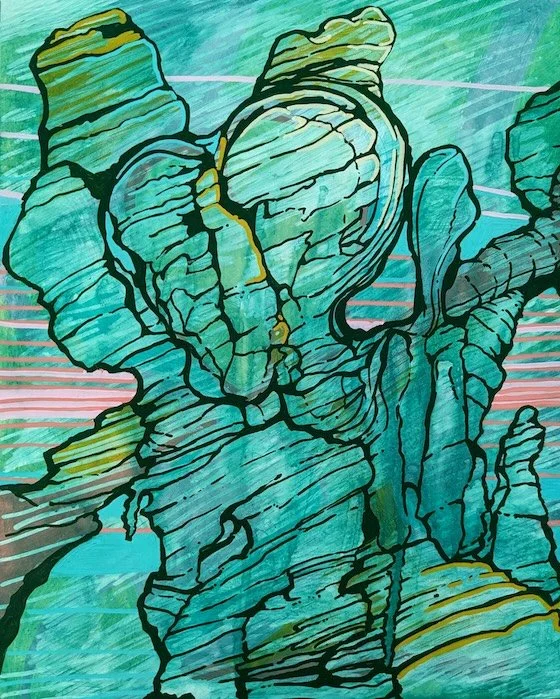
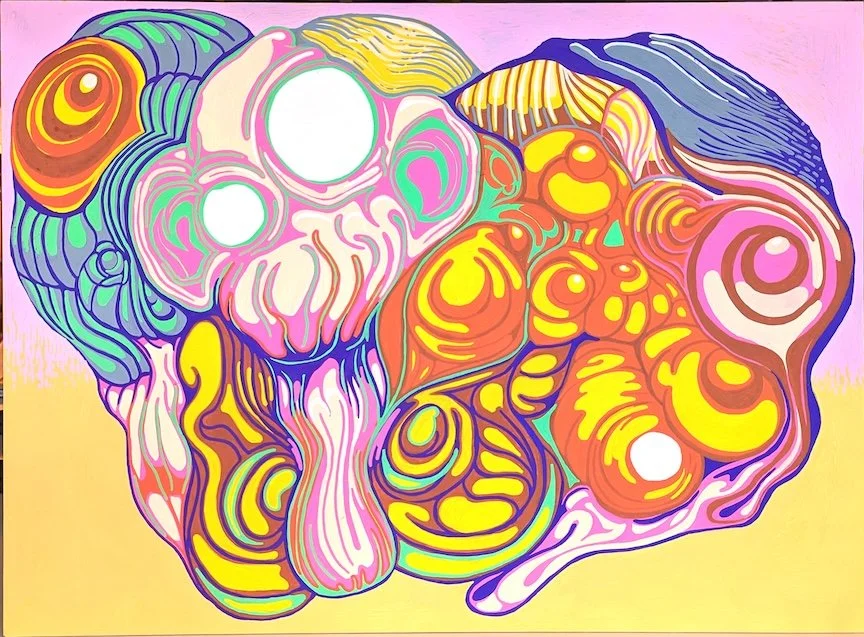
AAS: The Egg Floats as it's Released into the Empty Abdomen is one of your more abstract pieces but still highly organic with interesting, what I would have to call, visual special effects. Tell me about that piece.
The Egg Floats as it's Released into the Empty Abdomen, 30” x 30”, acrylic and Posca markers on canvas
BP: This piece is another one that saw a sharp evolution of me. I was preparing work for my show, Hysteria at the Pine Bluff Arts Center, when I needed to have a hysterectomy (another core theme to that show). After years of excruciating pain and debilitating periods and all sorts of problems, I was finally getting it remedied because a doctor FINALLY saw what I’d been talking about—endometriosis ALL over my abdomen and a giant endometrioma on my right ovary. I started researching questions I had, that the doc hadn’t answered yet, like: if I still have an ovary, and I’m not in menopause, then where do the eggs go that get released if there are no fallopian tubes or uterus? The answer: out into your abdomen. They just float out there. The idea of this was fascinating and very sad to me. I’d grieved the loss of ability to have kids; I’d celebrated the loss of periods and of pain and suffering. But I hadn’t considered a detail like that. These eggs, that formed before I was born, had been coming to maturity and being shed, one-at-a-time, every month since I was 12. They’d had this predictable route and demise. But now, they were going on a new adventure, where they wouldn’t be converted to pain and blood, but instead have their own journey and get absorbed by a neighboring organ. That and many other facts kept me absolutely focused up until the surgery (and pleasantly distracted from the fear of surgery).
Since the story of my hysterectomy became important to the theme of the show, I wanted to really try to focus at least one piece on the egg story—hence The Egg Floats as it's Released into the Empty Abdomen. This one also started, unusually, without a sketch. I just started painting. I knew that I wanted a circular kind of composition, feeling a bit tunnel-like; I knew what color palette I wanted— deep reds, browns with pops of yellows and purples—stuff that felt like viscera and flesh and fat and veins without being overly prescriptive about it. Finally, I’m a sucker for textures. There was a point at which I wanted to really emphasize cellular and fatty textures and blended hunks of stuff… and as I was painting, I just really wanted to have some sharpness to contrast to the painterly marks. That’s when I had the idea to go back in with markers. I suppose it could have ruined it, but those marks made the piece so much more exciting to me and others. It sold before I had the show hung!
AAS: I've Already Forgotten Her Favorite Flower is maybe my favorite of your pieces. It takes the viewer on a journey of emotions through its composition and color.
I've Already Forgotten Her Favorite Flower, 20” x 16”, acrylic and charcoal on Gessobord
BP: Thank you! You’re really calling out many of my own favorites. This piece is so intense for me. It’s just sadness. Many years ago, I’d asked my mama what her favorite flower was. She’d told me, and I would get her flowers for various occasions and then I had made plans to someday tattoo that flower on me in her memory. But, at some point, I’d lost my sketches and my notes. I’d forgotten what the flower was. I’d been so distracted with life in the big city, and working a million hours a week and flying all over the world. By the time I realized I'd forgotten, she was already fully into the throes of Alzheimer’s, so I couldn’t ask her. Her sister, my aunt, had passed, and there was really no one else who might have remembered because she loved all flowers, so most of my close family didn’t necessarily know her favorite. I guess I was the only one that thought to ask. But now that didn’t matter. Like other thoughts during that time in preparing for Hysteria, this one became one I wanted to feature, too. Similar to The Egg Floats as it's Released into the Empty Abdomen, this one started with no sketch, either. I started with charcoal on a panel. I wanted it to feel blurry and fluid and wandering and soft. I wanted it to feel like broken images you might see in a dream or as a flash in your mind. Like most of my pieces, I try to start with a palette firmly in mind, which I did here. But everything else was fairly automatic and not planned. I even rotated the panel a few times during creation, which you can see by multidirectional drips and scrape textures in the background. I cried a lot during the making of this one and I just feel like you can see or feel that in the image.
AAS: Tell me about your design and branding business.
BP: As a continuation of what I’ve been doing with my career the last twenty plus years, I decided to start my own business, Parker Brands. This came both from practicality (my agency wanted folks to come back into the office, and now I was 1,500 miles away, AND we’d just had a baby) and from a dream I’ve always had to be an entrepreneur. That and I was just realllllly over having a boss. I wanted more freedom with time and with my focus to do exactly the work I wanted to do, which is design in packaging and branding with a sharp focus on sustainability. So, in March of 2023, I started doing exactly that. Since then, I've worked with some large companies, like Vita Coco, McDonald’s, General Mills, Bacardi and others. I’ve also had some pivots but still am largely working in the world of consumer-packaged goods. This year has seen way fewer sustainability projects due to the current administration, so I’ve been filling my time with print-and design-focused work. I do a lot of work with the Sustainable Packaging Coalition. Last year I led a design refresh of the How2Recycle label, that you’ve more than likely seen on just about anything you might buy at the grocery store.
I’ve also had more time to do personal projects this year, as well as apply and get accepted to the Artist in Education (AIE) Roster, which allows me to work on art and music related projects with local school students. And, it’s all funded by the Arkansas Arts Council.
While this year has been hard and slow business-wise, it’s been absolutely fulfilling from a project standpoint. I’ll be curious to see where it all goes in 2026. I love having my own business even though it’s a whole lot less ‘stable’ in the classic sense, but it’s a whole lot more freeing and I have so much more time with my daughter and family.
AAS: So, Brandi, what can we expect from you in the next 5 years?
BP: I hope you’ll continue to see more artwork from me! I’ve been applying like crazy to all kinds of group exhibitions and have been working on ideas for future solo shows, but right now there are no shows planned, other than the 2026 Small Works on Paper.
I think it needs to be a bit quieter for now—fewer deadlines—so that I can ramp up again. Every day I am more comfortable in my life as a parent and entrepreneur, so that I can explore more and ideate and make time for work that I want to do. I think the important thing is to stay open to opportunities and pay attention to things I might not have ever paid attention to before. I want to keep this momentum I have going, but at a reasonable pace, not at a 150bpm pulsing beat that carries you with it. There are aspects of life that have slowed down that I want to keep slow. But I’ll always be a dreamer and a creator, so there’s also always a drive that works alongside the slowness.
I have such a strong community of people, of friends, coworkers, neighbors and I just feel so blessed. Having moved around as much as my wife and I have, there are times where community was a concept just out of reach. But, where we are now, home in Arkansas, we are surrounded by love. Beyond making art, creating circles of love, as cheesy as that might sound, is my other focus. Love is the one thing we can carry with us when we die.