Interview with artist Jeannie Fry
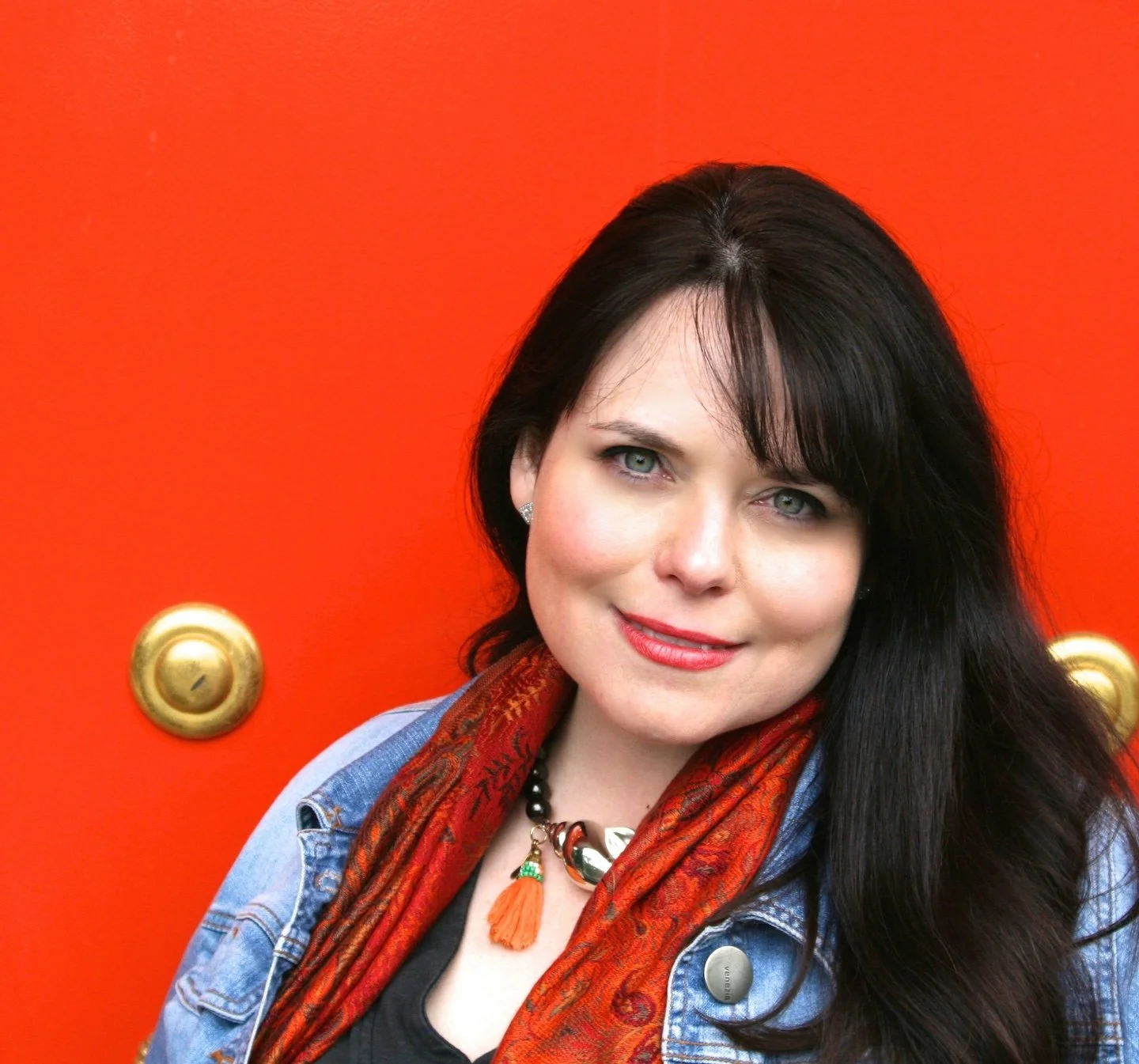
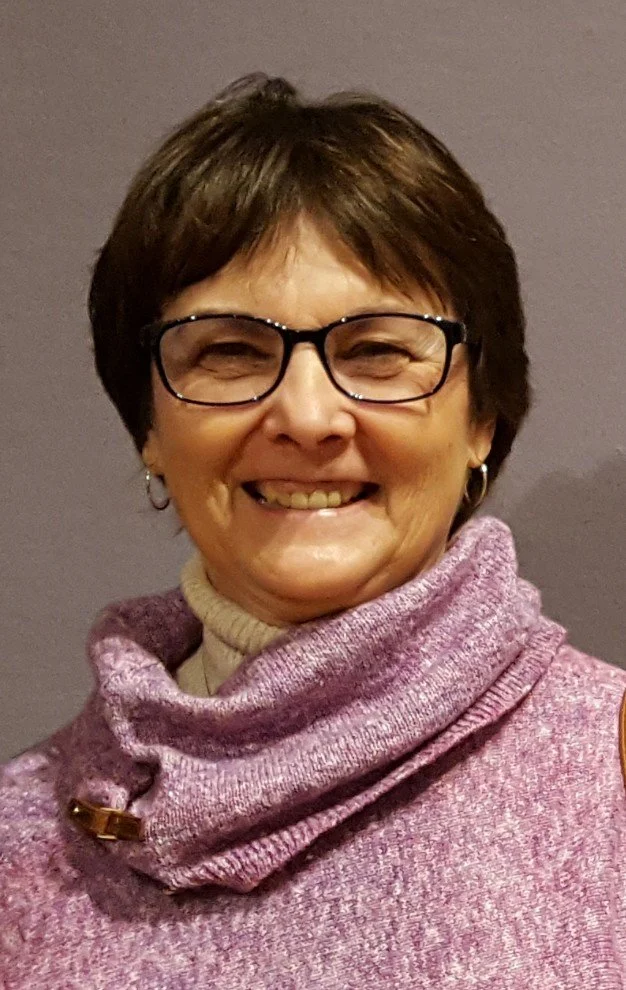
Jeannie Fry is a water media painter living in Central Arkansas. Originally from Kansas, she received a Bachelor of Art Education from Wichita State University and a Master of Arts in Education from Michigan State University. After working in Fayetteville, Arkansas and Washington, DC, Jeannie retired to Arkansas and now paints full-time. She is very active in the Mid-Southern Watercolorists, which she credits as having helped her grow as an artist. More of Jeannie’s work can be found at her website bjeanniefry.com. —2026
AAS: Jeannie, where did you grow up?
JF: I was born and raised in Kansas. Initially I wanted to be a meteorologist and chase storms. But my calling in art led me to earn an undergraduate degree in Art Education from Wichita State University. I subsequently obtained a graduate degree in education from Michigan State University. My first job out of graduate school was in the Dean of Students staff at the University in Fayetteville Arkansas. So, I am one of those “Yankees” that came to the South and never left.
While growing up in Kansas, I would often go exploring, walking the fields alone with my dog to enjoy the out of doors. Michiganders love to explore the woods and streams, and I really learned to enjoy more of the outdoors while living there. So, coming to Arkansas to work and to float the Buffalo and to fish was a natural extension of what I enjoyed doing. I’ve always loved the out of doors and wildlife. I sketched and painted while I was young, often painting what I saw and experienced while out of doors. The same is true for me today. I enjoy the out of doors and often paint what I’ve seen or experienced outside.
While working at the U of A, I was involved with the Women’s Commission and became interested in women in business. Through contacts with that commission, I got a job with Southwestern Bell at a time when they were hiring women to do non-traditional jobs. Subsequently I was assigned several other management jobs, including one in accounting; so, I took courses at night at UALR in accounting, in order to survive that job, and passed the CPA exam. The broad background with Southwestern Bell led me to a job in Washington DC working as a liaison between AT&T and the government. I worked in DC until my retirement and returned to Arkansas — and I don’t plan to leave again!
AAS: Did you have any artist role models growing up?
JF: I am blessed to have had many “role models” and mentors. My first artist role model was my mother. Art seemed to run in her family; I still have the framed pastel drawings done by my great aunt. My mother had a natural ability to draw and paint and create. Sometimes when I paint portraits or pictures of dogs or cats, I see and sense my mother’s hand moving my brush strokes.
I was fortunate to have great art teachers, especially, in junior high and high school. I don’t recall ever being asked to copy a picture. Rather, I was taught to see, to draw what I saw or paint what I felt. I was always challenged to do better. I think that we do a disservice to growing artists today when we teach them to copy rather than to find and develop their own ideas.
I recall my high school art teacher once holding up an abstract drawing for the class to see that he found in the trash. He said, design like this is what we need to be striving for. Well, I will never forget the look on his face when I told him that it was my drawing that he had retrieved from the trash. So, I’ve always had to confidence since then to try abstract works and let my imagination run freely.
I was also influenced by the watercolorist, John Marin. I recall my junior high teacher showing us a film about John Marin. I loved the freedom I saw in the way he painted and the different way he presented his subject matter, especially his landscapes. I painted a landscape watercolor, with some wax resist, using how I interpreted his techniques and my teacher sent it to New York to be included in an exhibit there.
My other role models are from Mid-Southern Watercolorists. For example, I could slop paint freely but wondered why my paintings didn’t seem to “work.” Selma Blackburn taught me some watercolor techniques and about rules for good composition using line, shape and value. She often critiqued my paintings. Reita Miller also said things that made me want to try things “out of the box” and enter my paintings outside of Arkansas. I heard more than once to “use your biggest brush for as long as you can,” or “don’t be afraid of the darks,” or “get in and get out” of the painting when painting with watercolor.
AAS: Do you mostly paint places you’ve seen or people you’ve encountered. How is s direct relationship with your subject important to the final painting?
JF: I strive to paint only things I’ve encountered or experienced. I often use photographs that I’ve taken of places I’ve been or things that I’ve seen. A direct relationship means you have seen it, maybe touched it, maybe smelled it, and enjoyed the experience. The one-on-one experience allows you to use your God-given talent to express the moment. We cannot copy it exactly. It will never turn out just exactly like what you saw because it is your interpretation of the moment. Your experience with the subject matter is special. Tell others about it. Show others how you feel. To quote John Marin: “You cannot create a great work of art unless the things you behold respond to something in you.”
AAS: I saw Mack recently at the Mid-Southern Watercolorists show and just love it. Tell me about Mack.
Mack, watercolor on paper, 15" x 12"
JF: Thank you for the compliment. Mack is not only just the picture of a potter, it is about the place that he is in, especially all the texture surrounding him. The clay he is working on is very clean and smooth, in contrast to the messy hard table and the cluttered surroundings. There is a burlap cloth that is rough, behind him, covering up the cabinet and we wonder what is behind it. He holds the clay in his hands, creating something that is not quite finished, and we wonder what it will look like, where will it go, how will it be used. His head is tilted and his eyes look down, but then when you see what he is looking at, you see his hands, then his arms and your eye goes up to his shoulders and back to his titled head, again. Your eyes never go off the paper but stay inside the composition and staying in the moment with “Mack.”
I wasn’t sure what his name was, at the time, but he had “Mack” on his cap. So, I decided to call him “Mack.” A little bit of fun! I often had driven between Fayetteville and Little Rock on Highway 412 and Highway 65, rather than the interstate so that I could enjoy the ride and scenery of the Ozarks. Quite by accident, I ended up in Alpena, Arkansas and Osage Clayworks. It is housed in an old general store and in the middle of the room was this potter, throwing pot after pot on his wheel. There were a couple of rows of chairs in front of him, so that he could talk about what he was doing, and how he got there, to those of us seated or standing in front of him.
I was mesmerized by the whole experience inside this old cluttered general store that is on the historic register. He described his life and how he had quit his other jobs to sit and throw clay pots all day long, every day of the week. So, Mack is my story about the road not taken, but finally taken, and the potter that I call “Mack.”
AAS: Cowboy is a terrific character study, quite different from Mack. Tell me about it.
Cowboy, watercolor on paper, 16" x 16"
JF: Cowboy is different from Mack. They are quite different people. Cowboy is also a real person, a veteran, that I met. My dad was a World War II vet, and I appreciate the struggle that those have gone through to protect our freedoms. Cowboy has had a hard life, as many vets have had. The painting is a portrait, and I’ve tried to show his struggles detailing his wiry hair and lines in his face, his faded blue jacket, contrasted with a very simple, yet textured background.
“We get in trouble when painting watercolor if we try to control it. Get in and get out. Enjoy the paint.”
AAS: You have worked in other mediums but is watercolor your favorite?
JF: I like the freedom of the medium. I like the fact that all you need is water to make things happen. There are things you can achieve in watercolor that don’t happen in any other medium. When I first started painting in oils, we had to stretch the canvas ourselves, prime the canvas, and then, mix the paint with some medium like linseed oil or walnut oil. When you paint in oils, you usually have to wait for it to dry, before going back into a painting. The nice thing about painting in oils is that you can keep going back over the paint, changing things as you like. Not so with watercolor. We get in trouble when we overwork a watercolor painting.
With watercolor, all you add is water to the paint and then, onto paper. But you can get watercolor to do things that no other medium does. You can build layers or just let the medium do what it wants. It dries more quickly, which works for me since I’m not the most patient person in the world.
It’s good to remember that watercolor is like a teenager — it has a mind of its own. We get in trouble when painting watercolor if we try to control it. Get in and get out. Enjoy the paint. As John Marin said: “Painting is like golf; the fewer strokes I take, the better the picture.”
AAS: I think Before the Storm is a good example of the way you control the medium. I like the way you combined the flowing qualities of watercolor with sharp lines. That can produce a bit of tension, and it certainly works for Before the Storm.
Before the Storm, watercolor on paper, 22" x 30"
JF: Actually, in a way, Before the Storm is a good example of the way not to control the medium. That is to say, let the medium lead you. In working wet into wet, I start by wetting both sides of the paper then draw off the large pools of water and excess water, just a bit, with a big dry flat brush. Then, I add heavy doses of paint with some free, loose bush strokes of paint. Thick, creamy-like paint is mixed on the palette or sometimes colors are mixed directly on the paper. After putting paint on the wet surface, I back out to see what the paint is doing. Sometimes I might turn the paper to let the paint “run” or drop some water into the paint on the paper to intentionally create “blossoms” or “cauliflowers”.
I guess part of the reason that I enjoy doing skies is my experience growing up in Kansas, wanting to be a meteorologist, watching clouds form and enjoying the magic of clouds. I find that watercolor is made for skies. I will also often contrast the freedom and magic created in the clouds with a quieter more serene or detailed scene in the foreground, often using mostly dry brush to create the feel or movement of grasses.
I also like to put little “tid bits” into my painting to keep the viewer entertained—that is, small details for the viewer to find or enjoy. For example, sometimes it might be a red cardinal or image of a deer. In this landscape, when you look more closely, we also see someone rushing about trying to get the laundry off the line “before the storm.”
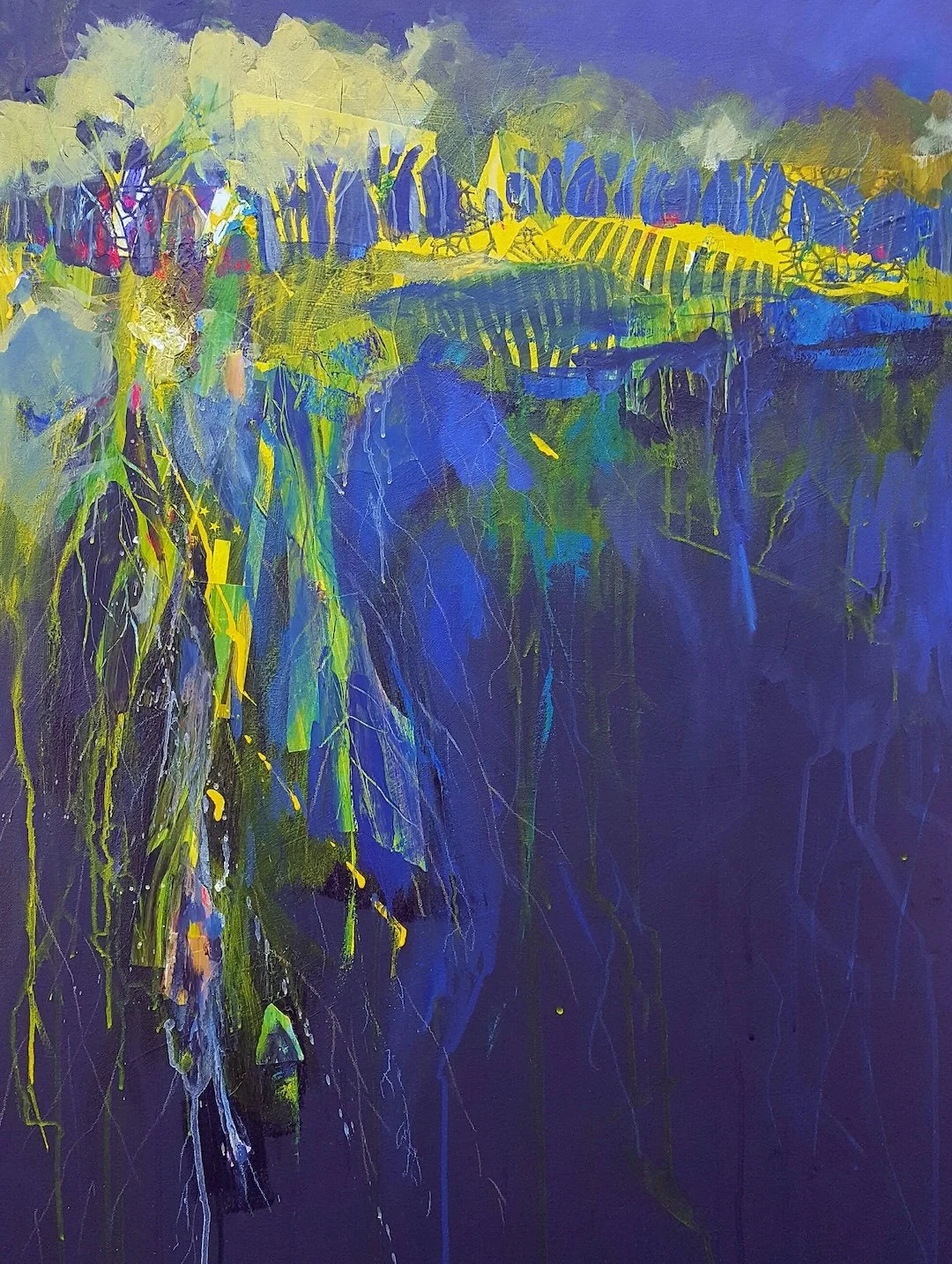
AAS: You have also done more abstract paintings. Tears for Ukraine is one of my favorites.
Tears for Ukraine, acrylic on canvas, 24" x 24"
JF: I find painting abstracts in acrylic on large canvases allows me to express feelings through line, shapes and color. I am very moved by what has happened to the Ukrainian people, in part because my mother’s family immigrated from that part of the world many years ago seeking a better life. There are stories we grew up hearing about them running from the Russians. The Sunflower is not just the national flower but the symbol for Ukrainian people — their resilience, unity and strength. I chose not to just show the Sunflower, but also its petals are falling, like tears, tears on the canvas…simulating tears for them, tears that they have shed. The painting was featured in an Arkansas Symphony Orchestra event in 2022, the same year that the Ukrainian conflict began.
AAS: You’ve also painted some wonderful pet portraits. Do you do many commissions?
My Pal, watercolor on paper, 10" x 8"
JF: Yes, I have done many commissions of pets, and I enjoy doing cat and dog portraits. Our pets are special “people.” I paint the pet portraits from pictures provided by the owner, but I often also try to meet the pet, if possible. I try to capture something of their personality, their soul, and their eyes, and not just the color of their fur. Here, “My Pal” is actually a portrait of my lab.
AAS: I know you are a past president of the Mid-Southern Watercolorists and serve on its Board of Directors. Tell me about that organization.
JF: I joined Mid-Southern Watercolorists in 2008 after returning to Arkansas. MSW certainly helped me to grow as an artist. I encourage anyone of any level, beginner to advanced, to become a part of MSW. There are many opportunities offered to both members and non-members.
Mid-Southern Watercolorists was formed in 1970 to elevate the stature of watercolor and educate the public to the significance of watercolor as an important creative, permanent painting medium. The organization meets almost monthly in one day informal “paint-in gatherings” that are open to everyone. In addition, formal three- or four-day workshops are offered twice a year led by nationally known watercolorists. Other events are sponsored by MSW, at no charge, such as the one hour get togethers held on most Fridays, once a month, at Art Outfitters in Little Rock.
MSW sponsors two formal exhibitions annually. The annual juried exhibition is open to members to enter two works of art online. This year the annual juried exhibition is at the Laman Library in North Little Rock and all works will be on exhibit through May 1, 2026. In addition, MSW sponsors an “open member” non-juried exhibition which offers members an opportunity to display original works of their choice. In addition to our website, we also have a Facebook page which regularly posts information about happenings and opportunities to members and non-members.
AAS: Is watercolor a good medium for someone just starting to learn to paint? And what advice do you have for an artist wanting to explore water media?
JF: Learning to draw and learning the rules of good composition are probably the most important tools for a beginning artist. Watercolor is a rather inexpensive way to learn to paint. All you need is paint, water and a few GOOD brushes. I also strongly believe having quality materials in the beginning will also help you to enjoy the beginning in watercolor much more. Many people back off from starting with watercolor, but you will enjoy it more if you tell yourself to enjoy the journey, get in and get out, start with the biggest brush you have and use it as long as you can, and take as few brush strokes as possible. Rather than trying to make your paintings look like exactly what you see, remember you are making your interpretation of the experience and, like life, it is not about perfect. Just have fun with watercolor!
I also encourage folks to come to one of Mid-Southern Watercolorists gatherings, even just to observe, or experiment with the medium. And I want to thank you, Philip, for helping to put the spotlight on watercolor and for this experience of being a part of the Arkansas Art Scene blog!