Interview with artist Carrie Waller
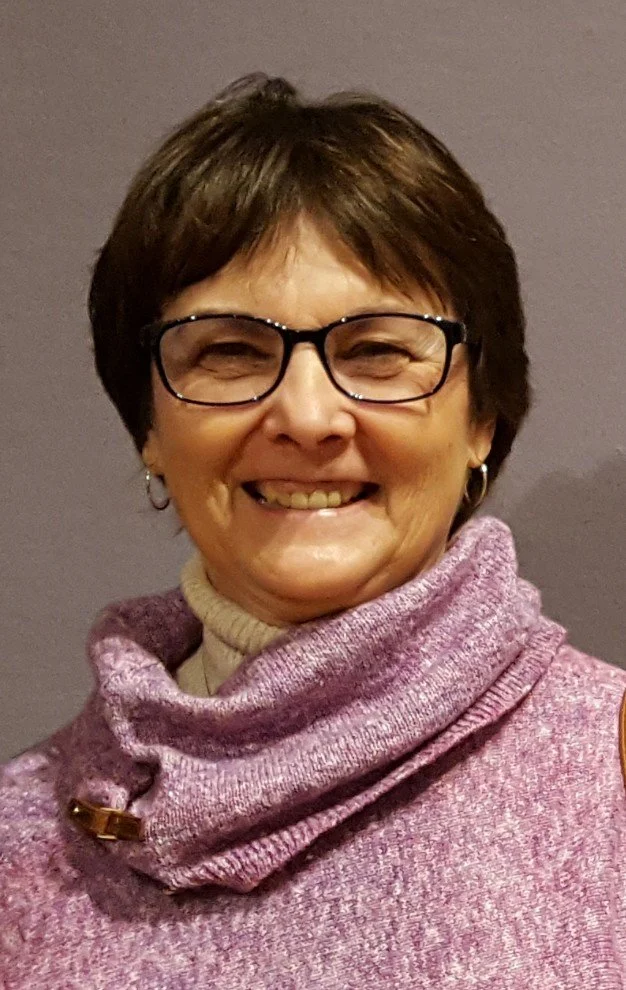
Carrie Waller is an internationally recognized watercolorist. Her highly detailed, realistic paintings use bold color to explore light and reflection. Her paintings have been exhibited widely throughout the US, Europe and Asia and featured in top watercolor art publications. In addition to her studio practice, she teaches workshops both online and in person. More of Carrie’s work can be found at her website carriewallerfineart.com. —2026
AAS: Carrie, are you an Arkansas native?
CW: I have been nomadic my entire life. My father’s career had us move every few years. I was born in Indianapolis, lived in Dallas and Houston during grade school. I went to junior high in the Washington D.C area and then spent my high school and college years jumping between Illinois and California. I continued this lifestyle in my adult years because I married someone in the military. My husband just retired in February after serving 25 years in the US Air Force. During our marriage we have been stationed in Germany, Charleston, South Carolina, Dayton, Ohio, Montgomery, Alabama, Little Rock, Tokyo, Japan and then back to Little Rock. We spent the longest in Tokyo, living there for almost a decade. Now we plan on staying in the Little Rock area. Our youngest child is in high school and our oldest is going to college at the University of Central Arkansas.
AAS: Was design and painting something you were interested in as child?
CW: I have always been interested in art and in being creative. I lived in a creative household as a child. My father is a professional photographer, and my mother was always involved in crafts and creative hobbies. In the third grade I won a blue ribbon in the Texas State Rodeo for a collage that I did in art class, and I realized I had artistic ability. I graduated from Southern Illinois University with a Bachelor of Science in Interior Design.
AAS: I have seen your amazing watercolors over the years at the Mid-Southern Watercolorist shows at Layman Library in North Little Rock. But your entry for this year, May Contain Pits, just blew me away. The color and the way you render light is just extraordinary. It must have been so fun to paint!
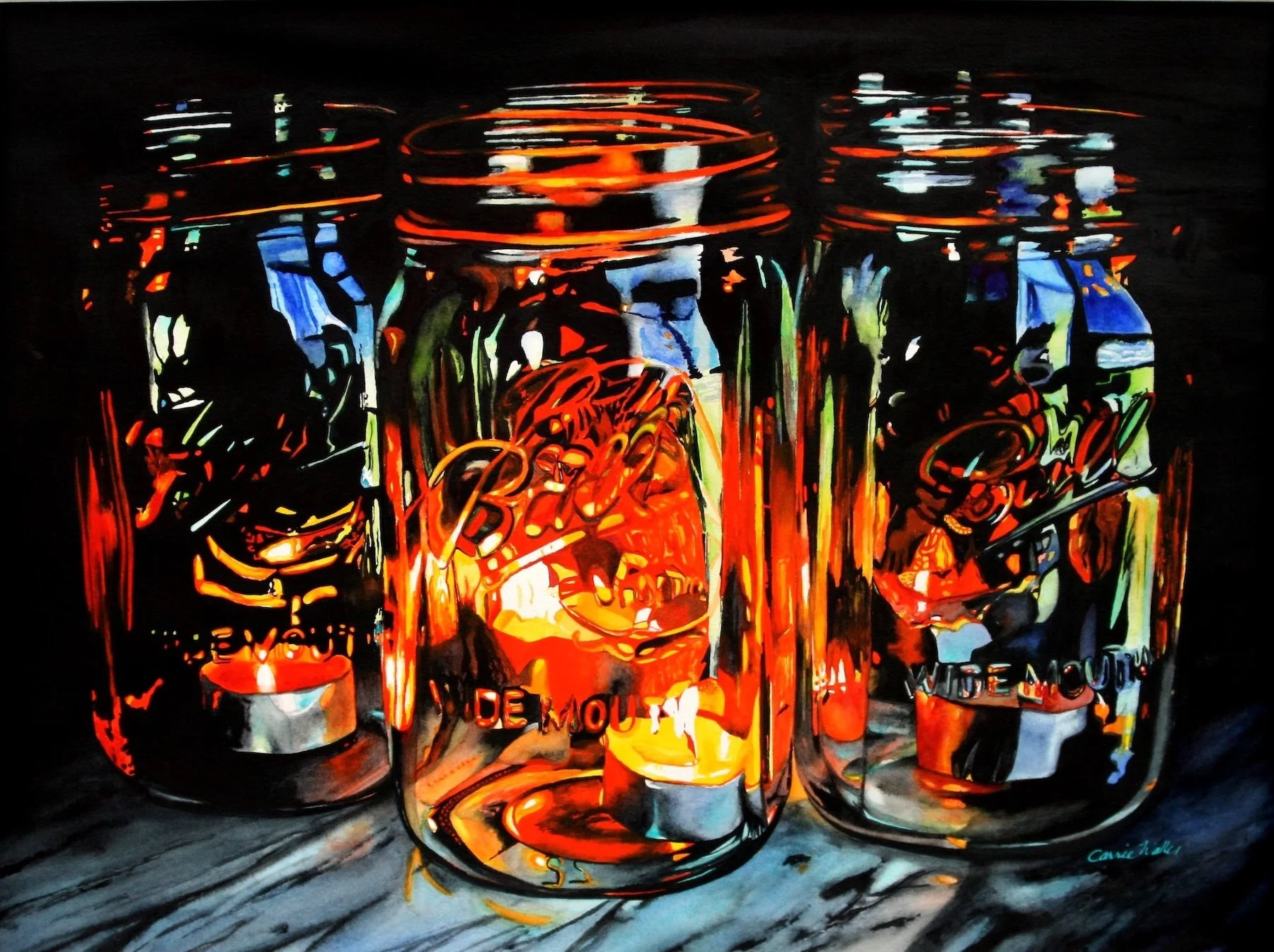
May Contain Pits, 23” x 30”, watercolor on paper
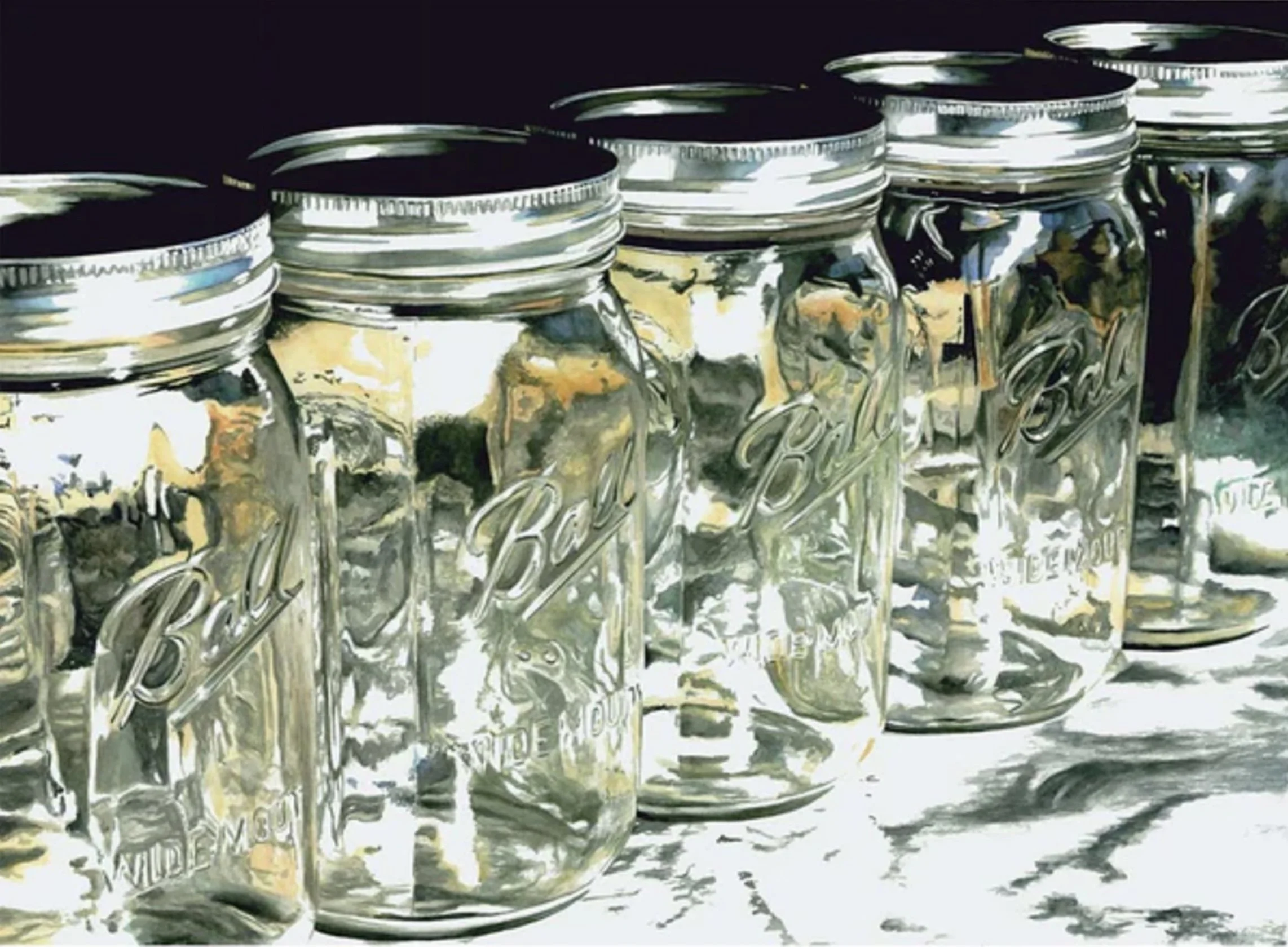
CW: I loved painting May Contain Pits. I had the idea to paint backlit cherry jars mulling around in my head for a few years. During COVID I decided it was time to paint them. The phrase life is a bowl of cherries kept popping into my head during that challenging time. I wanted to play off the idea of an ideal life being interrupted. I found it so fitting that the cherry jars had an explicit warning right there on the lid, “May Contain Pits”. It all just fit into place as the perfect analogy for the times we were living. That painting has won several awards including Award of Excellence in Watercolor USA, and it received the Arkansas Artist’s Award in the MSW show this year.
“As artists, it is our job to show the viewer how we see the world. My goal with my still life paintings is to take utilitarian objects and give them their moment.”
AAS: Do you approach your realistic paintings as a challenge or just with the goal of showing the viewers something familiar but from a different viewpoint – often eye level?
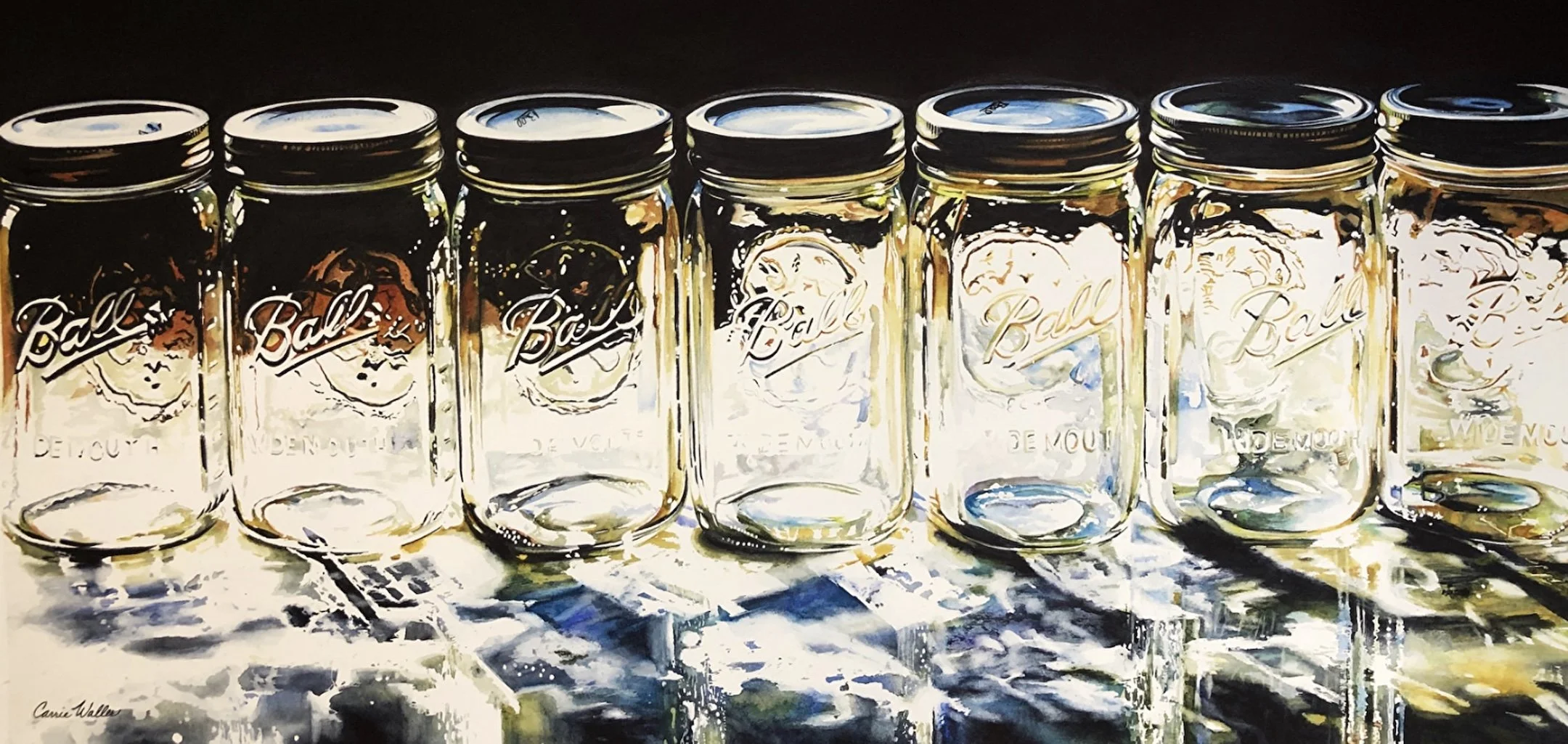
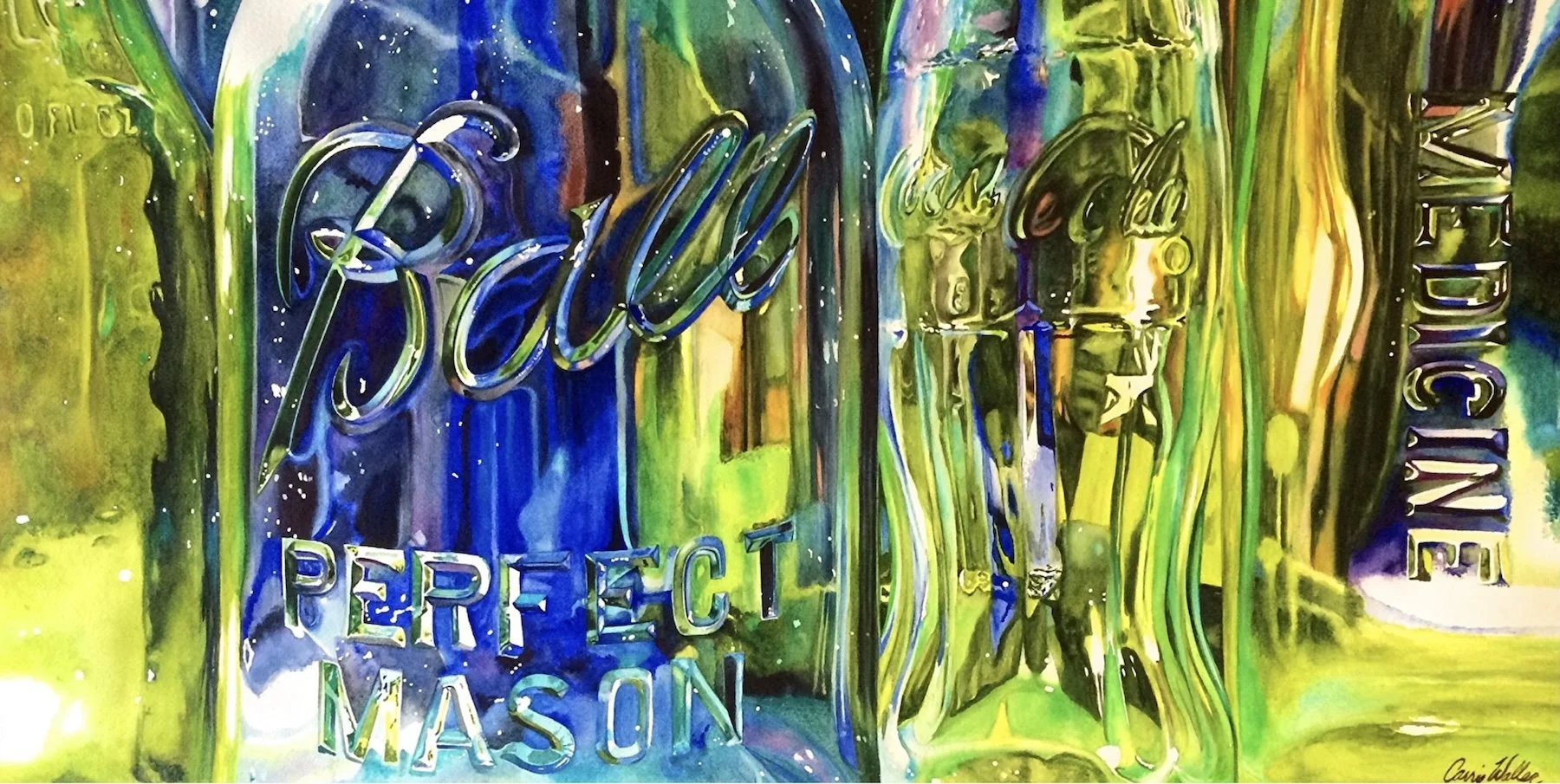
CW: As artists, it is our job to show the viewer how we see the world. My goal with my still life paintings is to take utilitarian objects and give them their moment. Show just how beautiful the form of a light bulb or a Ball jar is. I like taking everyday objects and showing that they are art. I love using dramatic lighting and often portraying them larger than life to get my point across.
AAS: Your paintings vibrate with explosive color and contrast. When I think of Asia, I think of color, especially reds and golds and neon lights. Do you think your time living there has influenced your color choices?
CW:I was absolutely inspired by the colors of Japan. Orange/vermillion was not necessarily a color that I loved before living in Asia. It is now in most of my paintings. Not only did my color choices evolve but also the juxtaposition of mixing traditional aesthetics with modern forms. I love the challenge of making traditional objects more contemporary.
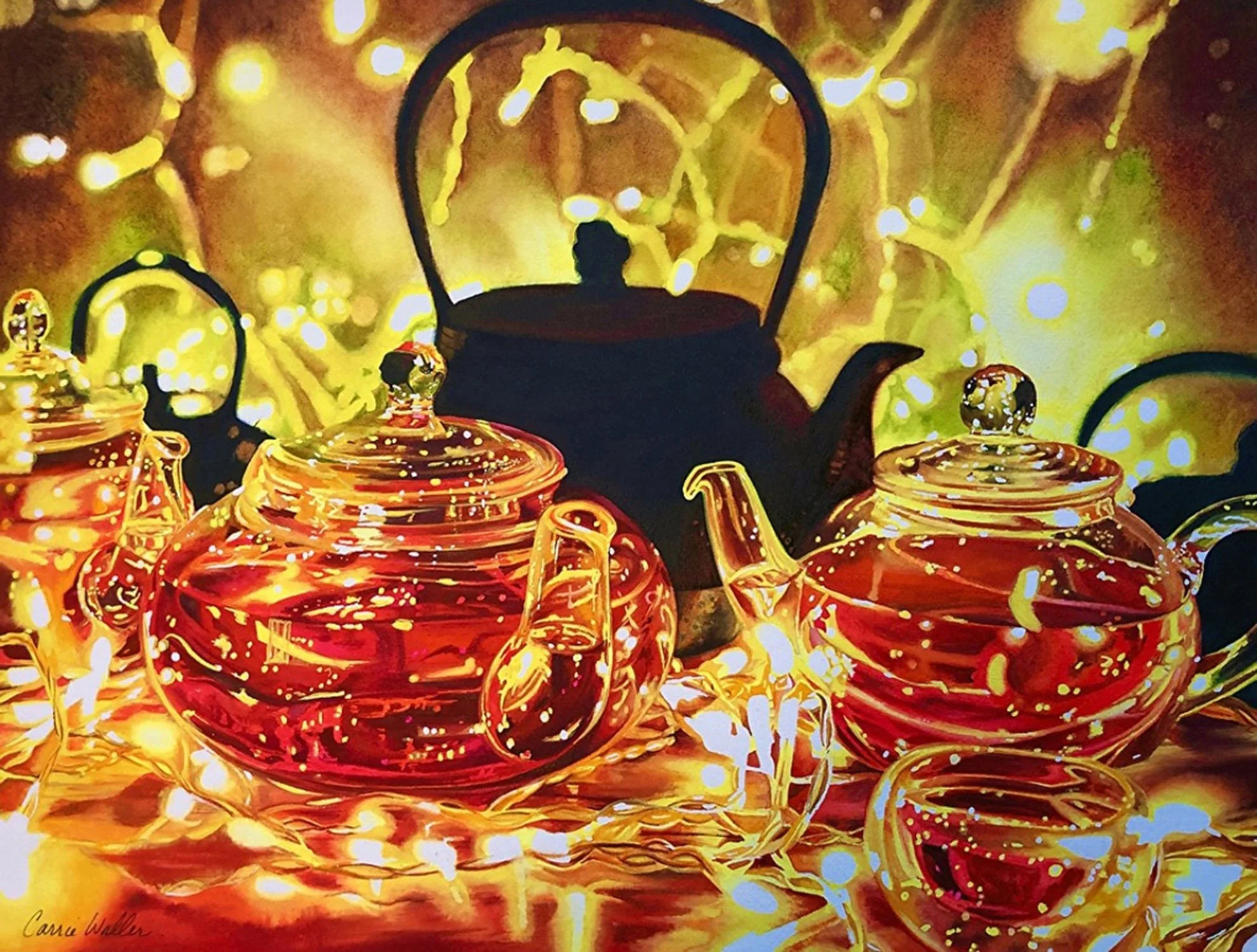
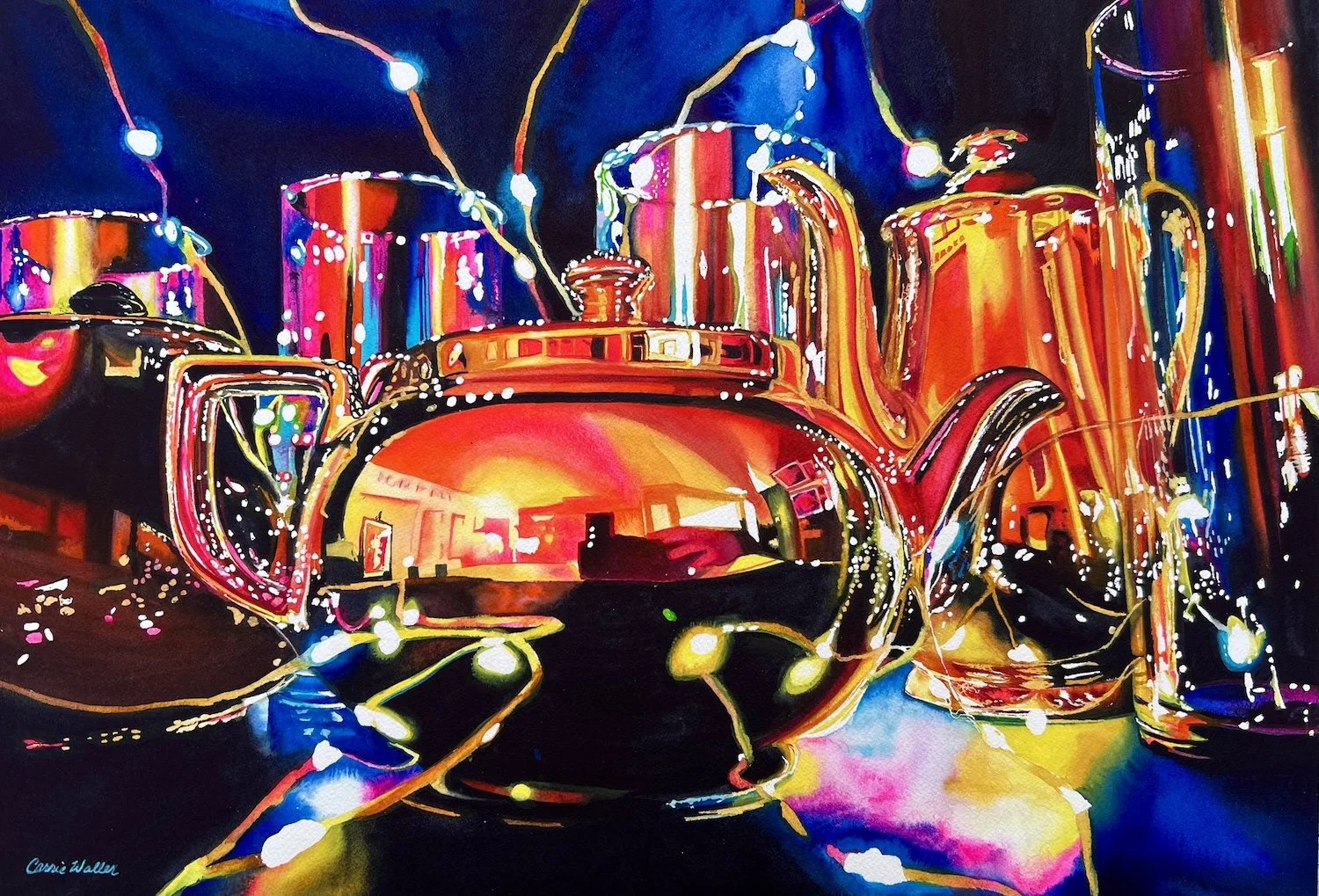
AAS: I am guessing your wonderful Tea series was inspired by your time in Japan? I love the way Abundance is filled with subtle imagery of Japan – bright lights, skyline, geisha forms in the teapot and lid. It is spectacular!
Abundance, 24” x 28”, watercolor on paper
CW: Abundance really pushed the boundaries for me. I stacked up all of these dishes and teapots and wove lights through them and took a series of photos. I loved the idea of capturing what Tokyo felt like in this still life.
Tokyo is a cacophony of senses. It is crowded, but beauty exudes from every corner. For the most populous city in the world, it is clean and orderly, but there is also chaos. People are packed into trains and elevators, and the stores have TV screens next to products where infomercials are blaring. In the middle of all of this, you can turn down a street and find a temple or park that is silent and pristinely manicured. My painting Abundance is symbolic of that sensory overload. It also utilizes some of the colors I might have shied away from before living in Japan. The whole time I was painting it I thought this painting is too much and it is crazy. I really did not how it would be received when I entered it into competitions. To my surprise it won the top award ($10,000) in the American Women Artist’s Making Their Mark exhibition. After that I thought, I think I will pursue this series, ha ha. It has gone on to win several other awards including Gold in MSW’s annual show in 2021.
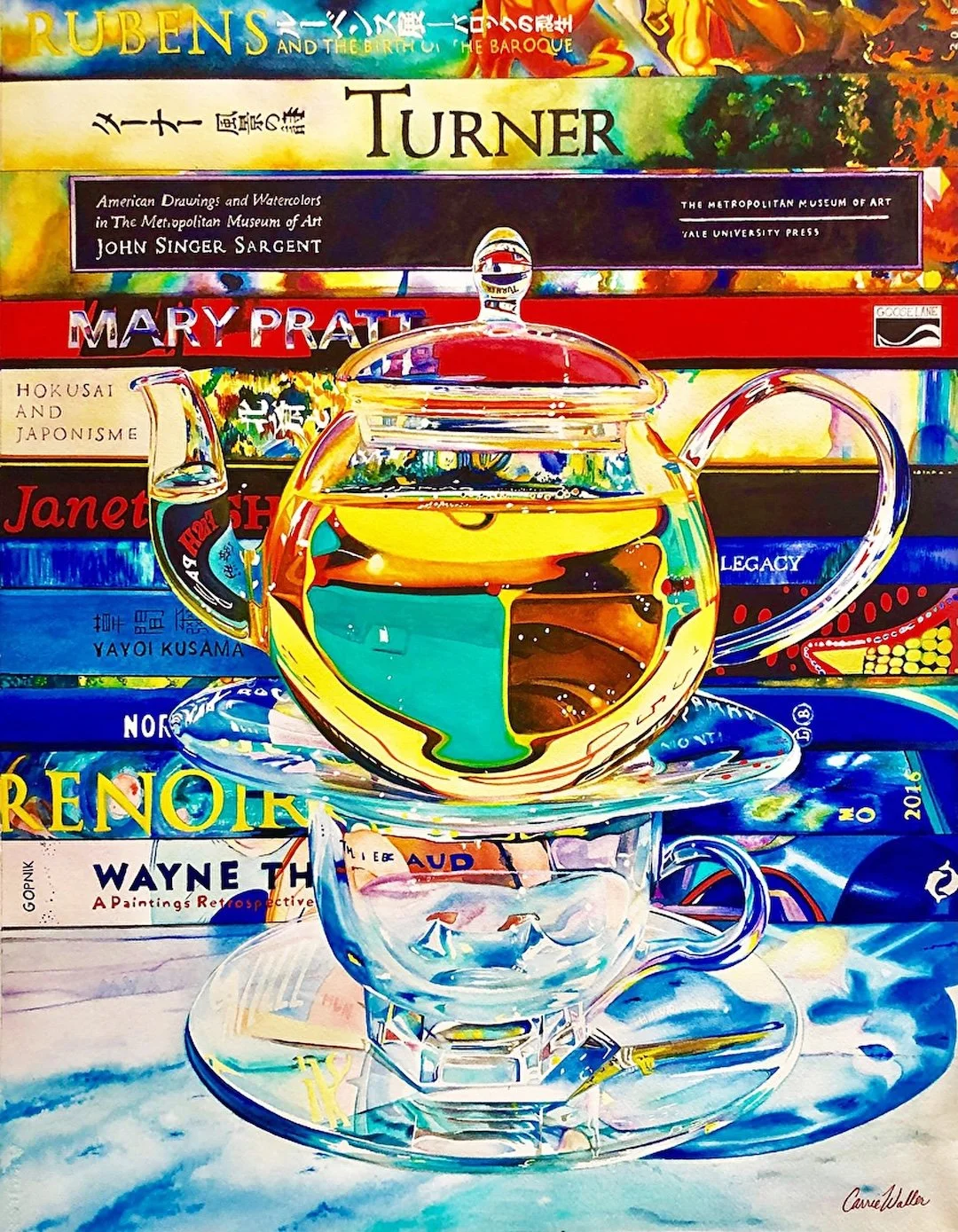
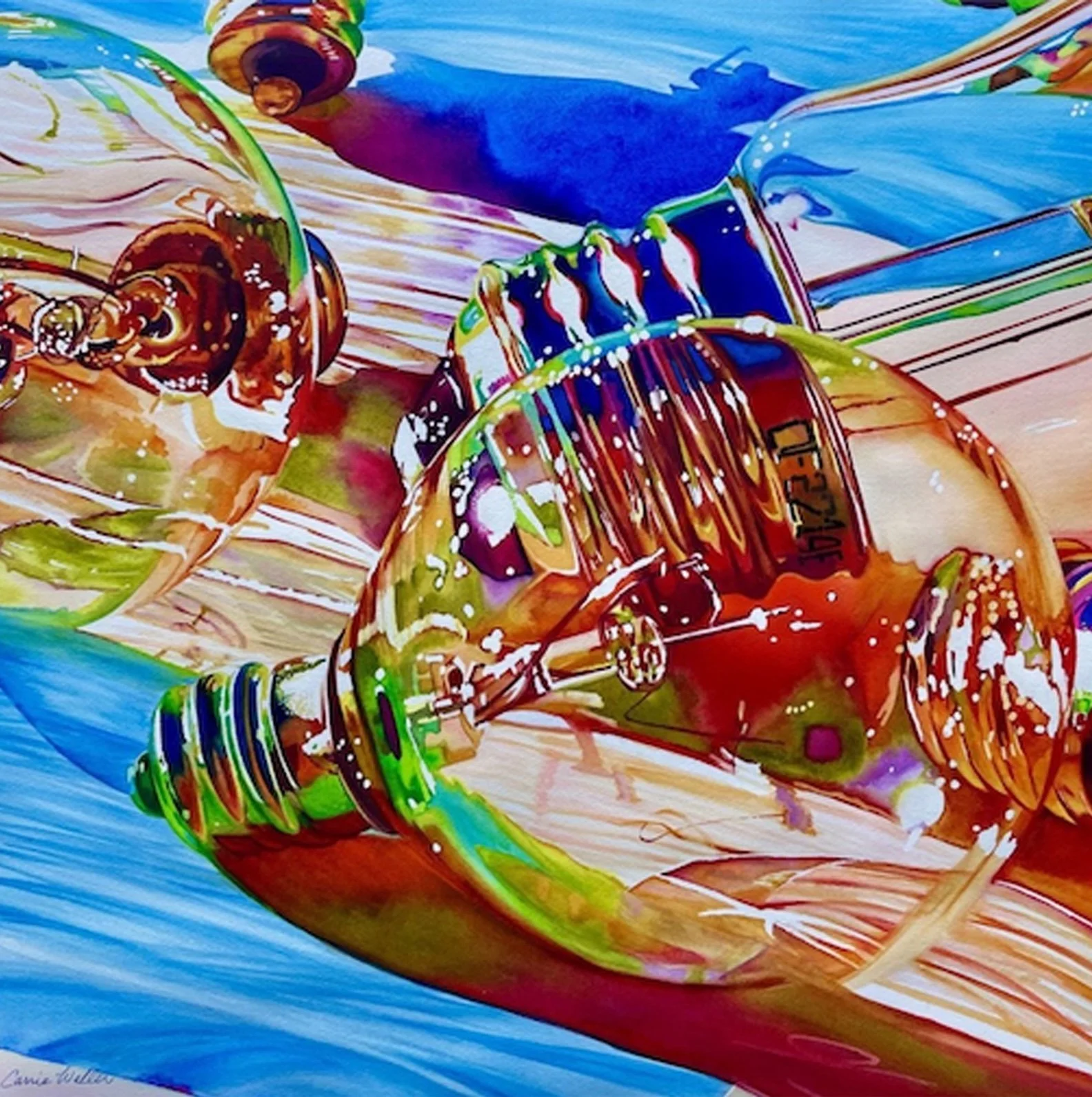
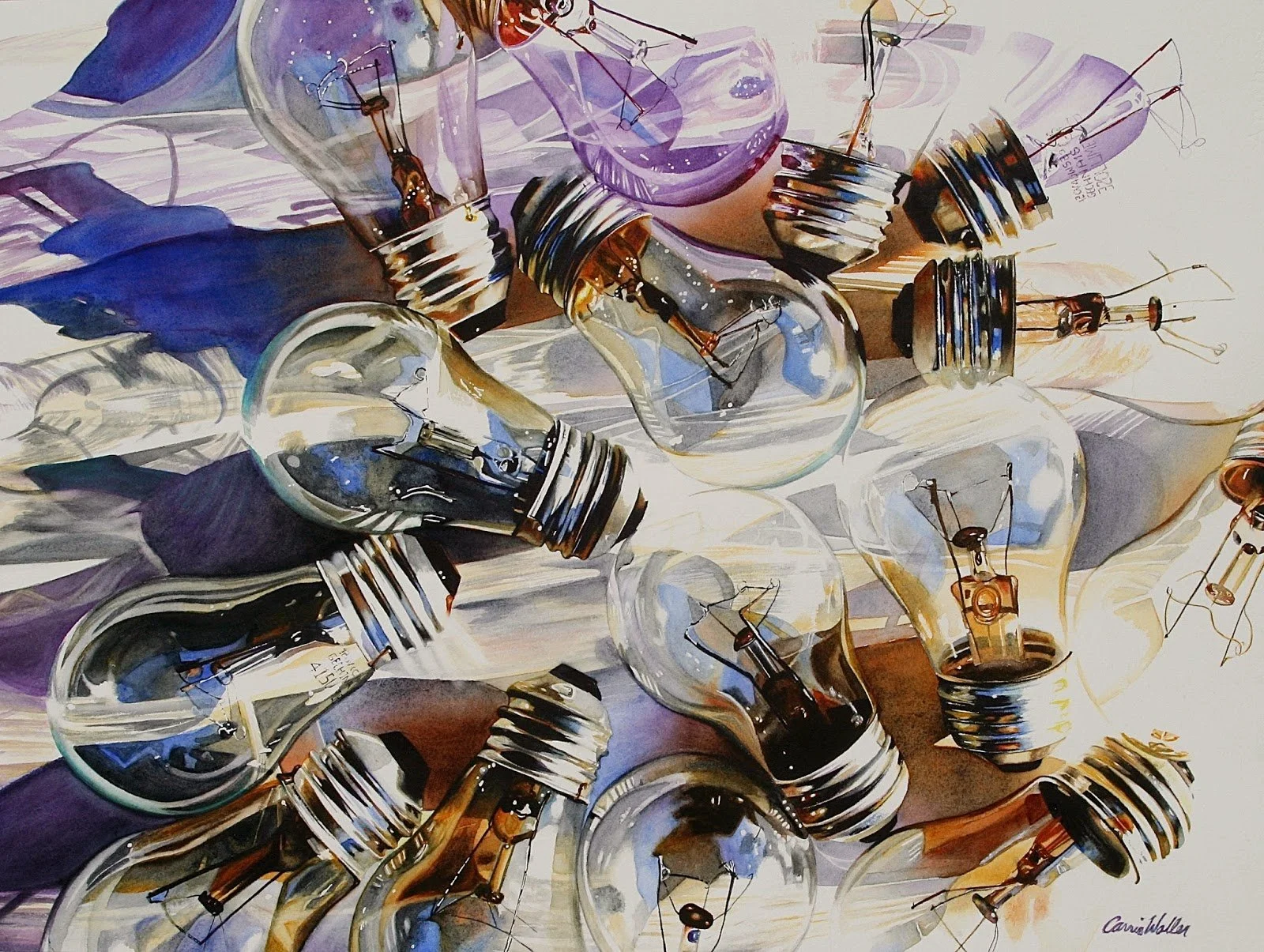
AAS: Clearly, the interplay between light and translucent and reflective objects inspires your work. That interaction is interpreted so beautifully in your Lightbulb series. One of my favorites is Denkyu. Tell me about that painting.
Denkyu, 24” x 32”, watercolor on paper
CW: My light bulb series started when I read that incandescent light bulbs were going to be banned and phased out. I immediately thought about the fact that light would forever change. As an artist light is one of my muses and I thought about the fact that since light bulbs were invented, this was the lighting that people viewed the world with. My light bulbs became my most cherished possessions in that moment, and I gathered them from fixtures throughout my house and set them up in a still life. They became a signature series for me, and I have painted countless light bulb paintings.
Denkyu was painted while I lived in Japan. Denkyu means light bulb in Japanese. This painting was a top 10 painting in the 2021 Biennial International Prize, Fabriano Watercolor, Fabriano Italy, the Escoda Gold Brush Award, in the 2023 International Malaysia Juried Art Competition, and Best in Show in the 4th Annual Women in Watercolor International Exhibition.
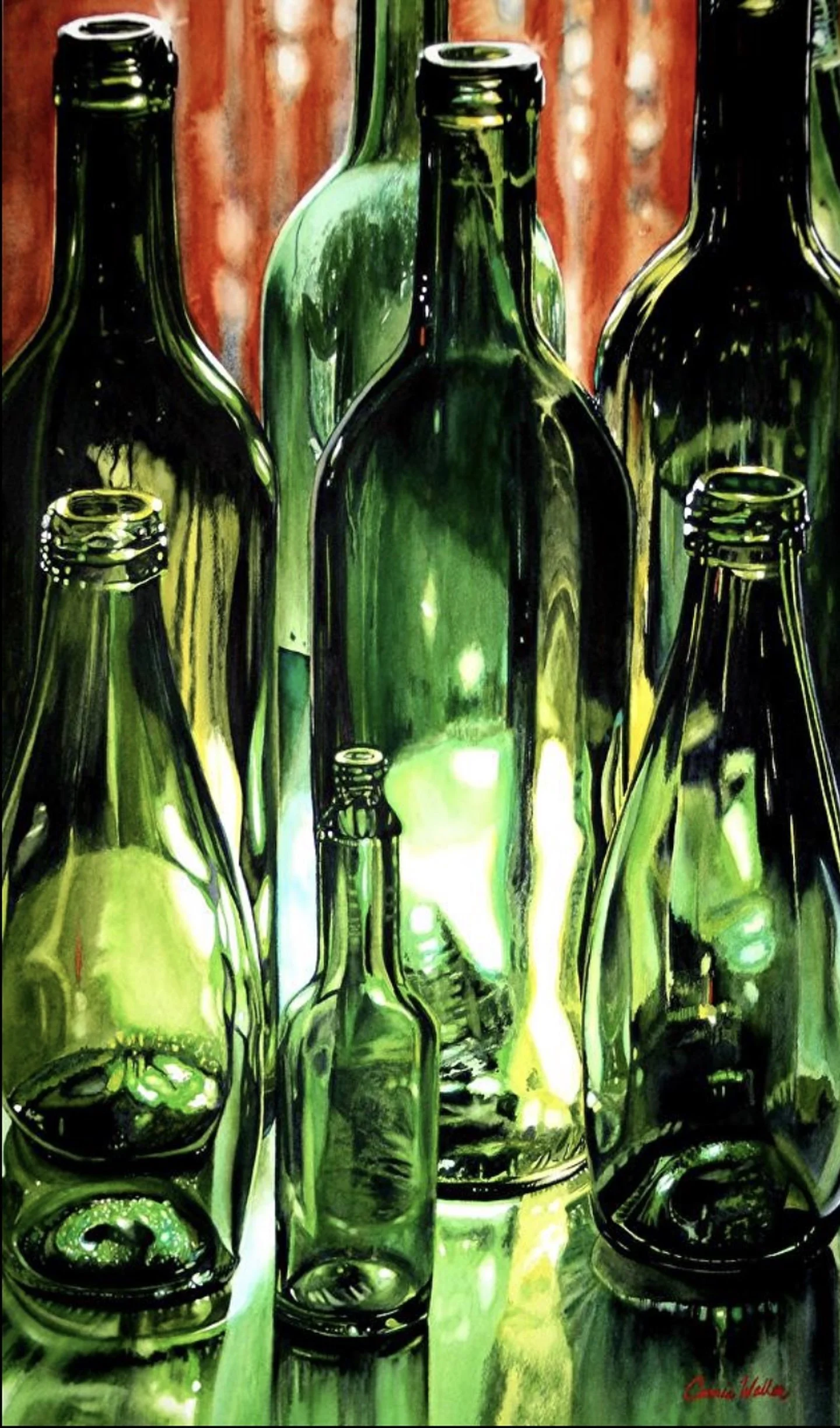
AAS: Another wonderful example of that interplay is Ready To Serve. Such a fun painting! It is like a parade of glass soldiers. Does a painting like that – so technically detailed – take an especially long time to complete?
Ready to Serve, 30” x 25”, watercolor on paper
CW:All of my paintings take several weeks or sometimes months to paint. Ready to Serve, was challenging because of all of the colors and reflections in each of the serving pieces. That painting is all about my time as a military spouse. Being ready to serve in whatever capacity I needed to. Looking polished and ready on the outside but at times being empty on the inside. The stripes are a nod to the American flag and the polka dots in the back are a nod to Yayoi Kasuma, a Japanese artist, and represent my almost decade in Japan serving as a military spouse. Ready to Serve is currently part of the American Watercolor Society's Annual Exhibition at the Salmagundi Club in New York City.
AAS: Then there is Summer Cuties. You can’t help but smile and be in awe when looking at it. The colors are so vivid.
CW: Summer Cuties is a happy painting. My inspiration came from staying at one of my best friends’ houses and enjoying our time together. She put out breakfast on the table using her Japanese dishes, coincidentally the same blue and white bowls that I use daily at my house. There were cuties stacked in one of the bowls and through my water glass on the table, I saw magnificent magnifications of the stripes and cuties. I couldn’t wait to get home and set up a similar still life and paint it. I smile when I see that painting as well because it reminds me of my friendship.
Summer Cuties, 20” x 29”, watercolor on paper
AAS: Tell me about your online and in person workshops.
CW: I teach online and in person workshops. I have them listed on my website, www.carriewallerfineart.com. I will be teaching a week-long workshop/retreat in Santa Fe, NM April 26 - May 1. I have two upcoming workshops in Kenosha, WI, June 2026, for the Transparent Watercolor Society of America. I will also be judging their annual international exhibition. Then, I am headed to North Dakota in August to teach and I will be in New Orleans in October for a workshop. I also teach for Terracotta (online learning platform) and I have an online mentoring group with Mastrius. In October this year I do have a workshop scheduled right here in Little Rock with Mid-Southern Watercolorists.
AAS: You are the current Vice President for the National Watercolor Society. Why do you think it is important or helpful for artists, especially those early career artists to be members of local and national societies?
CW: It is crucial that you find your people when you are an artist. Being an artist can be a very isolating experience. Once you plug in with a society, there are a lot of opportunities to exhibit and be part of a community. Making these connections has led to workshop and jurying opportunities. I also became a brand ambassador with Daniel Smith Artist’s Materials.
I have learned a tremendous amount from fellow artists in these societies. While I was moving all over the place as part of a military family, having memberships with societies all over the United States and some international organizations, kept me connected to the art world. I am so fortunate to have art friends all over the world.