Interview with artist Katie Bradley
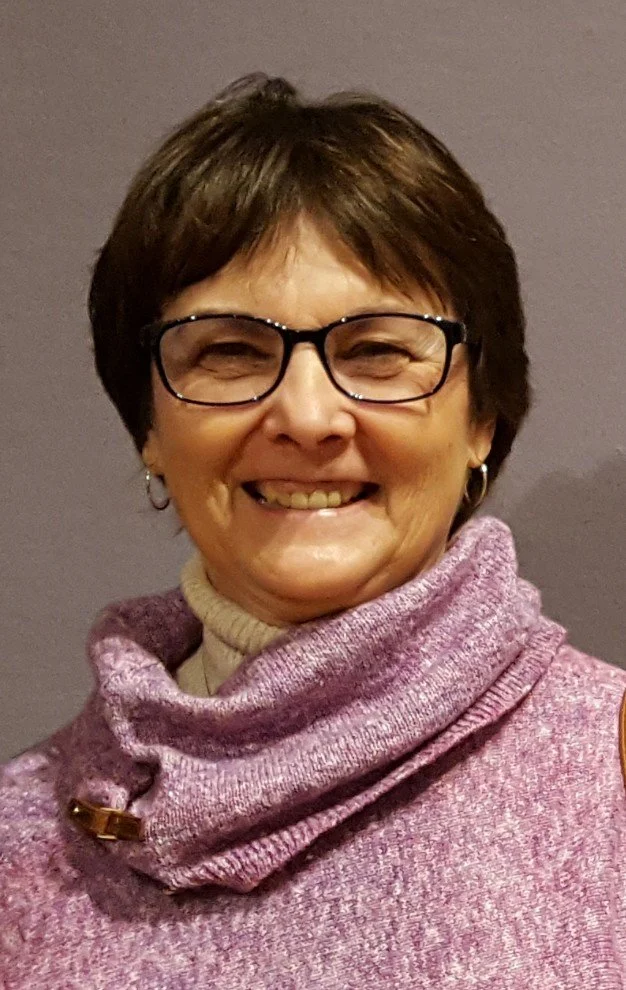
Katie Bradley is a figurative painter, and author/illustrator of children's books. In 2020, she moved from Vancouver, Washington to Central Arkansas so her family could enjoy the beauty and serenity of the Ozarks. Katie is a Member of Arkansas League of Artists, and Signature Member of Mid Southern Watercolorists. This year she was awarded a Mid-America Arts Alliance Catalyze Grant. More of Katie’s work can be found at her Instagram. —2026
AAS: Katie, did you grow up in Arkansas?
KB: I’m a recent transplant to this beautiful state. I moved to Arkansas in 2020 with my husband and three kids, after living in the Pacific Northwest and growing up in Germany. I was born in Bozeman, Montana, then moved to Germany at age two, where I lived until I was 19. My parents moved us all over Germany, but I spent most of my formative years in and around Frankfurt. I was a true city child! I rode public transport to school and spoke accent-free German.
After graduating, I moved back to the US. I earned my BS in Biochemistry from Washington State University, met my husband, Ben, and worked in cancer research. After Ben graduated, we moved to Germany for three years and lived 45 minutes from where I grew up. It was wonderful to introduce Ben to the people and places that shaped me. Our oldest son was born during this time, and I completed my MA in International Relations from the University of Oklahoma. We moved to Vancouver, WA, where my second son was born and our daughter joined our family. I stayed at home with the kids, except for enrolling in evening art classes at the community college once a week.
In 2019 we dreamed of moving to the countryside. Since my husband works remotely, we could in theory live anywhere with good internet. We made a list of what we wanted: tall trees, green, lakes, great hiking, warmer weather, diversity, good schools, affordable land, and not too far from (or close to) relatives. Somehow, we landed on central Arkansas. We had never been here, but the more we read online, the better a fit it seemed for our family.
We vacationed here in August 2019 to test if we could handle the humidity. We explored downtown Little Rock, hiked Petit Jean in 105-degree weather, ate our first hush puppies. We loved the welcoming people and the beautiful landscape. Half a year later, in the middle of Covid, we packed up our belongings and moved to our new home, nestled in the Ouachita forest. This was my 27th move! We’re putting down deep roots, and plan to grow old here.
AAS: Have you always painted?
KB: I can’t remember a time when I wasn’t drawing, and people and animals were always my favorite subjects. I was an odd child, free spirited, with a big imagination and a love for art and nature. Instead of a favorite stuffed animal, I had a pet rock, Johann, whom I lugged everywhere. I loved bugs and frogs and drove my mom to despair with all the urban wildlife I brought home (and was made to release again).
Before my siblings were born, my parents brought me along to many meetings and conferences, always with paper and pens to keep me busy. I don’t remember anyone telling me how to draw. Nobody told me to color inside the lines, or to make things a certain color. My dad gave me stacks of scratch paper from work to draw on, with words on one side. I didn’t know ‘all blank’ paper existed until I started school. I figured out how to layer crayons to look like the pastel chalk art I saw street artists drawing on the pavers outside the train station. I learned to mix paint into more interesting hues than what came in a child’s basic palette. And I constantly sketched the people around me, adults and other children.
I consider my maternal grandfather my first real art mentor. He was a botany professor, but he also illustrated textbooks and drew wonderful cartoons. Whenever we visited America, “Bapoo” always found time to draw or paint with me.
AAS: I find it interesting that you studied and worked as a biochemist, as I did. And while I don’t have any artistic talent, I do think my analytical background shapes the way I think about a work of art. Do you think your science background has influenced the way you approach a painting?
KB: I’m certain my science background has shaped my art, and vice versa. We’re often taught that science and art are opposites, that they operate in separate parts of the brain. But we now know about neuroplasticity: new connections can grow between the two brain hemispheres. I know my scientific studies benefited from my ability to visualize complex structures in my mind. My rational brain helps me find good solutions for art problems like loss of light, muddied colors, composition issues. I’ve also delved into the chemical properties of paint pigments and use this knowledge in my paintings all the time. The issue I sometimes run into is that I need to remind myself to feel art rather than analyze it.
My family modeled how to embrace the duology of my creative and scientific strengths. I grew up in a family of professors, engineers, doctors, and teachers, but as I mentioned, some were also artistic. I’m the oldest of four, and despite being busy, my mom found time to create. She made batiks, painted, sewed. She was quite good. She went back to med school when I was twelve and didn’t have time for art after that, except when she drew giant flow charts of complex biochemical processes! She encouraged my artistic endeavors but often emphasized that my interest in science would provide a more reliable career choice.
In Gymnasium (German high school) you specialize, and I focused on art and science. We had an incredible art teacher, Herr Flink, who took us to museums (One highlight was seeing an exhibit of Gustav Klimt's original paintings!), galleries, and weekend paint-ins. We had two hours of art instruction every day for three years, and my art skills grew immensely.
In retrospect, I have no idea why I didn’t study art. I remember thinking that I didn’t want to ruin my creativity by feeling pressure to compete and sell. I chose to study biochemistry, but I enrolled in one art class every semester to keep myself sane. This balance was so valuable!
In 2010 I enrolled in a watercolor class at the community college, and met my art mentor, Lee Baughman. Lee made us do “crossover” exercises (circling our arms, crossing the midline, humming, dancing) to activate our right (creative) hemisphere before painting. The final 30 minutes of every painting session was spent doing peer critique, led by Lee. Here, he encouraged us to think rationally about our paintings, to problem-solve. I painted with him and other artist friends every week for 10 years.
With our mid-Covid move to Arkansas, I became artistically isolated and grieved the loss of my Vancouver art community. I set up my art studio in the apartment above our garage after my son moved out, and I’m slowly forging connections and friendships with other artists in Central Arkansas. I still critique my art with the question, “What would Lee say?” and whenever I catch myself painting like a robot (too rationally), I close my eyes and do his crossover exercises to activate my right brain.
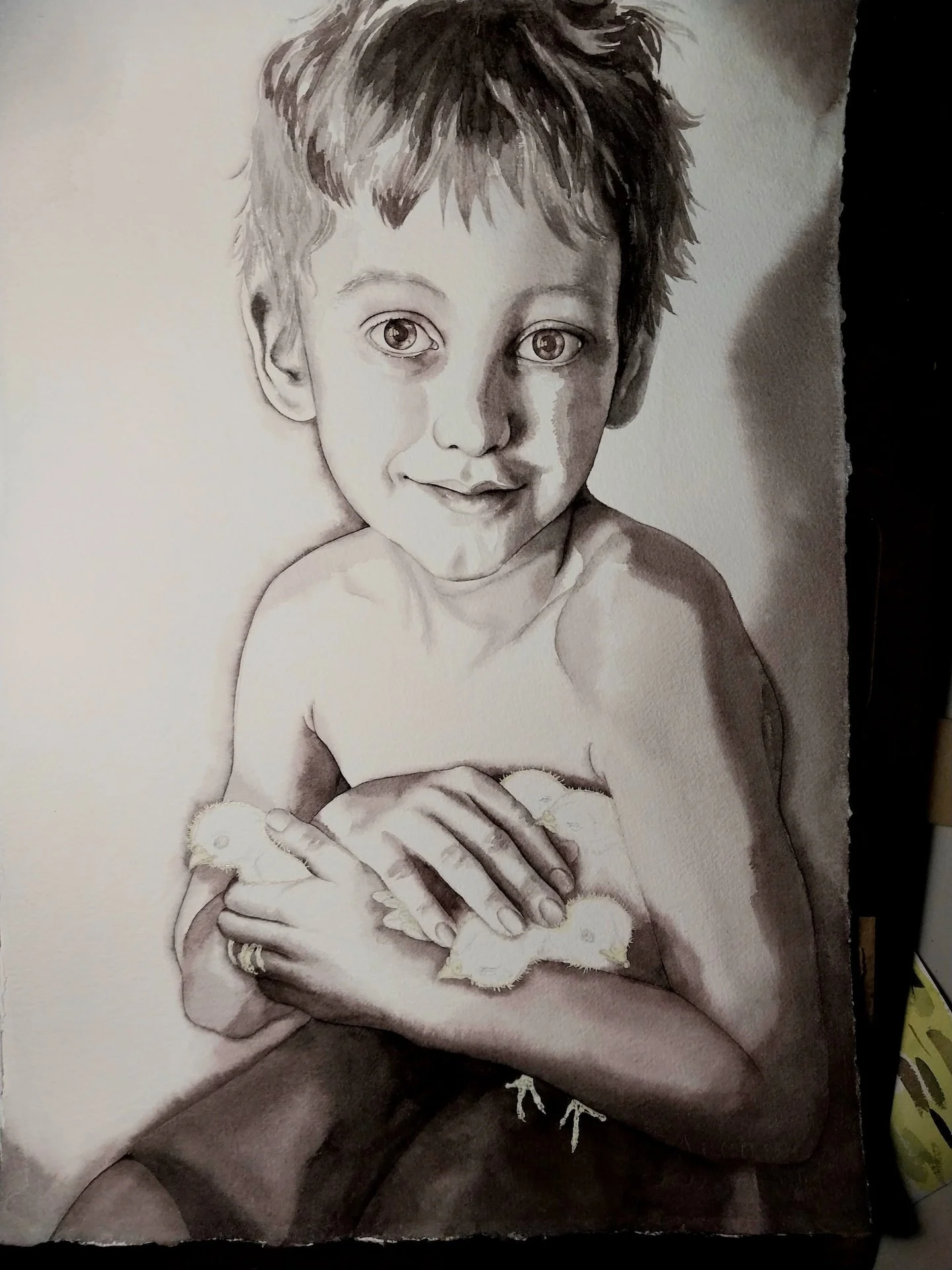
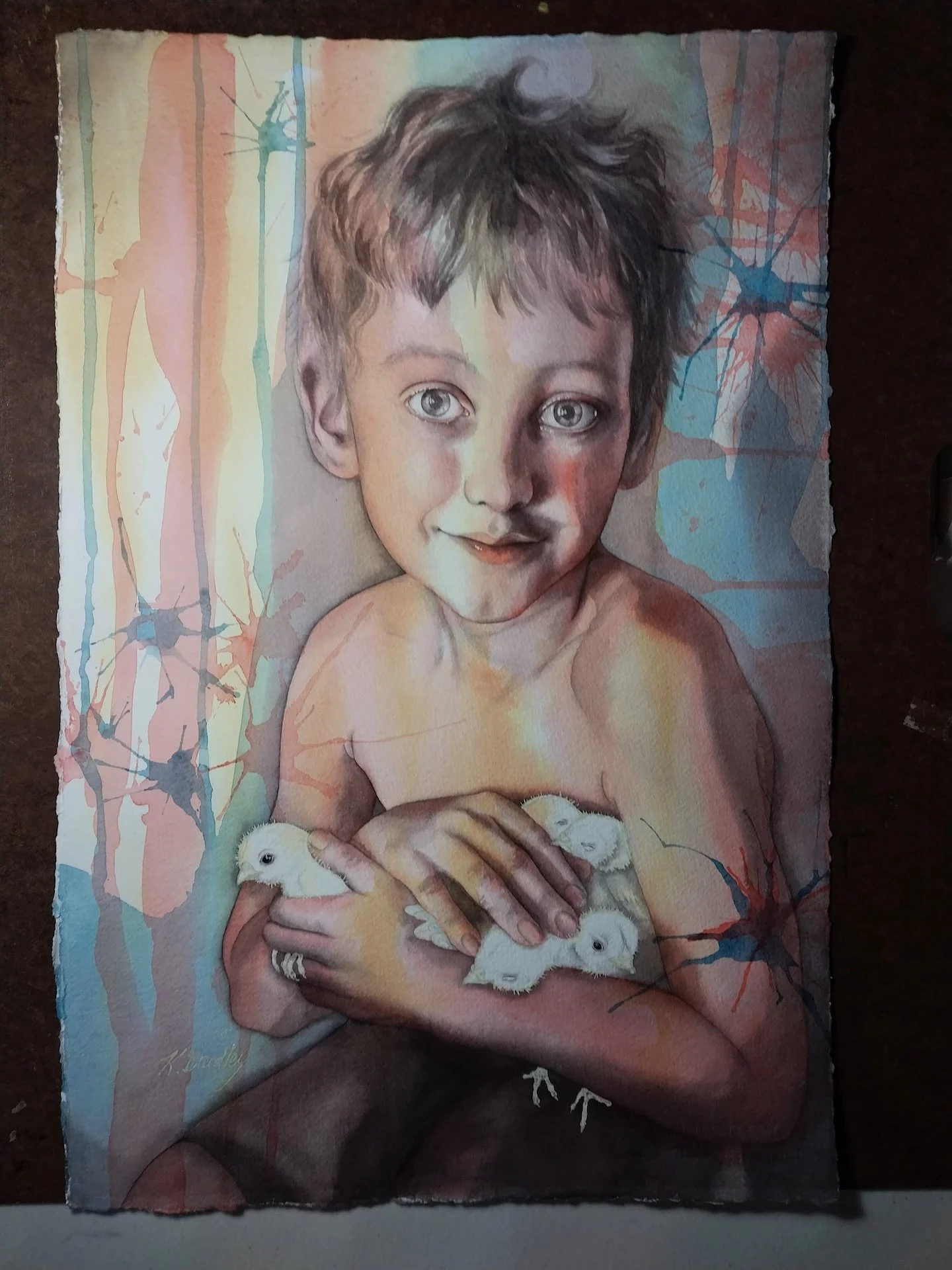
AAS: Your portraits have a great deal of depth, which I think really enhances the warmth and personality of the person. Chick Magnet is a good example of that. What techniques do you use to create your portraits?
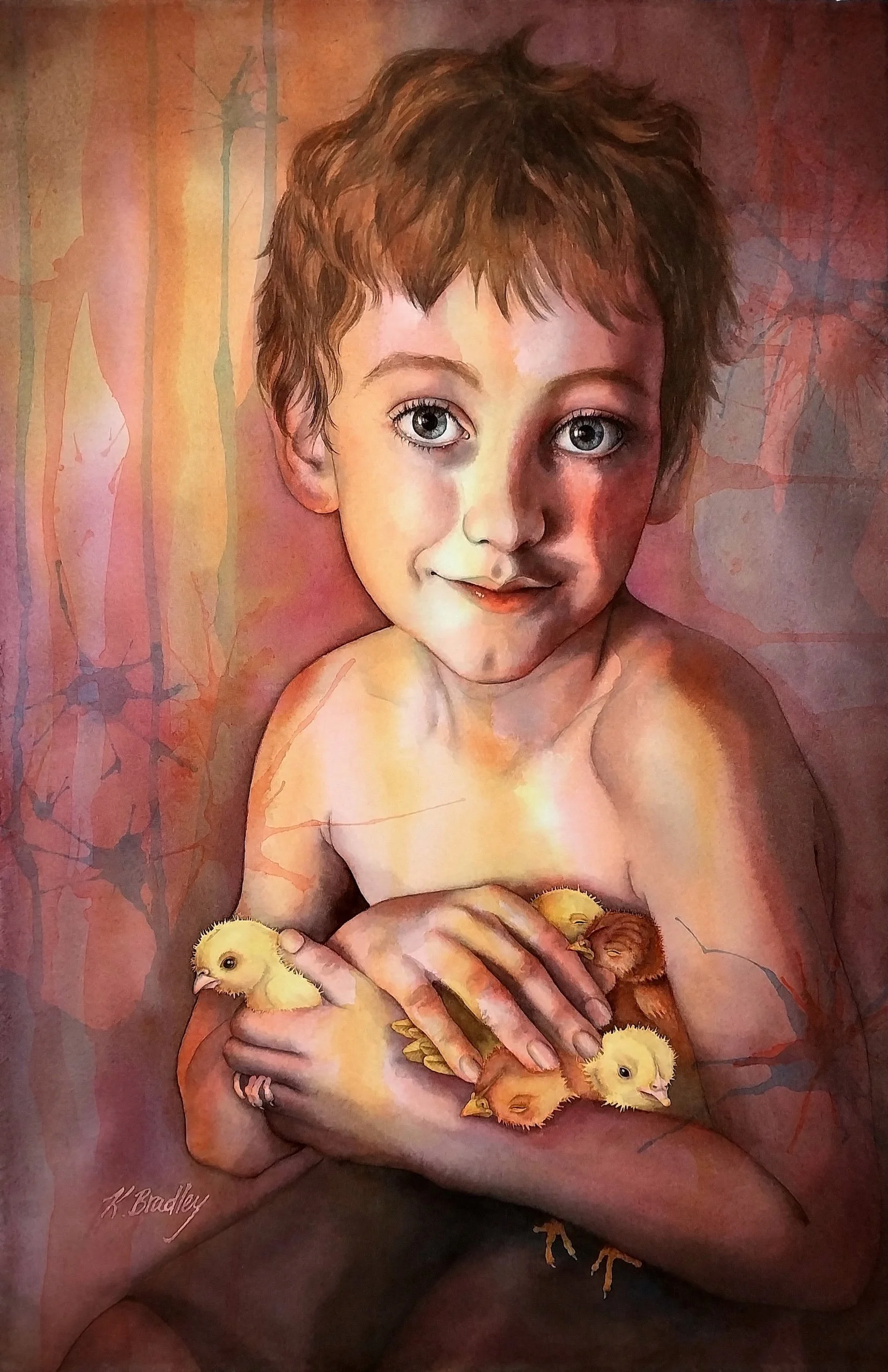
KB: Thank you! Chick Magnet is one of my favorite paintings, it won several awards and hangs in my living room. Hard to imagine this little shirtless wonder (my middle son) is now 6’5” tall! About ten years ago, I spent a lot of time nerding out about different pigments, their chemical properties, and how they interact. This led me to develop my unique watercolor method. First, I create a monochromatic, staining underpainting - like grisaille in oil. This phase provides the structure and marks the values. Over this, I pour and splatter transparent colors, allowing them to create interesting textures, hard or soft edges, drips, water blooms, and granulation. Children are messy and always on the move, so this infuses the painting with life and spontaneity. This is my favorite stage; I often play music and dance while I work. Once this layer dries, I develop some facial features in exquisite detail and add notes of pure primary color to reward the viewer for drawing near.
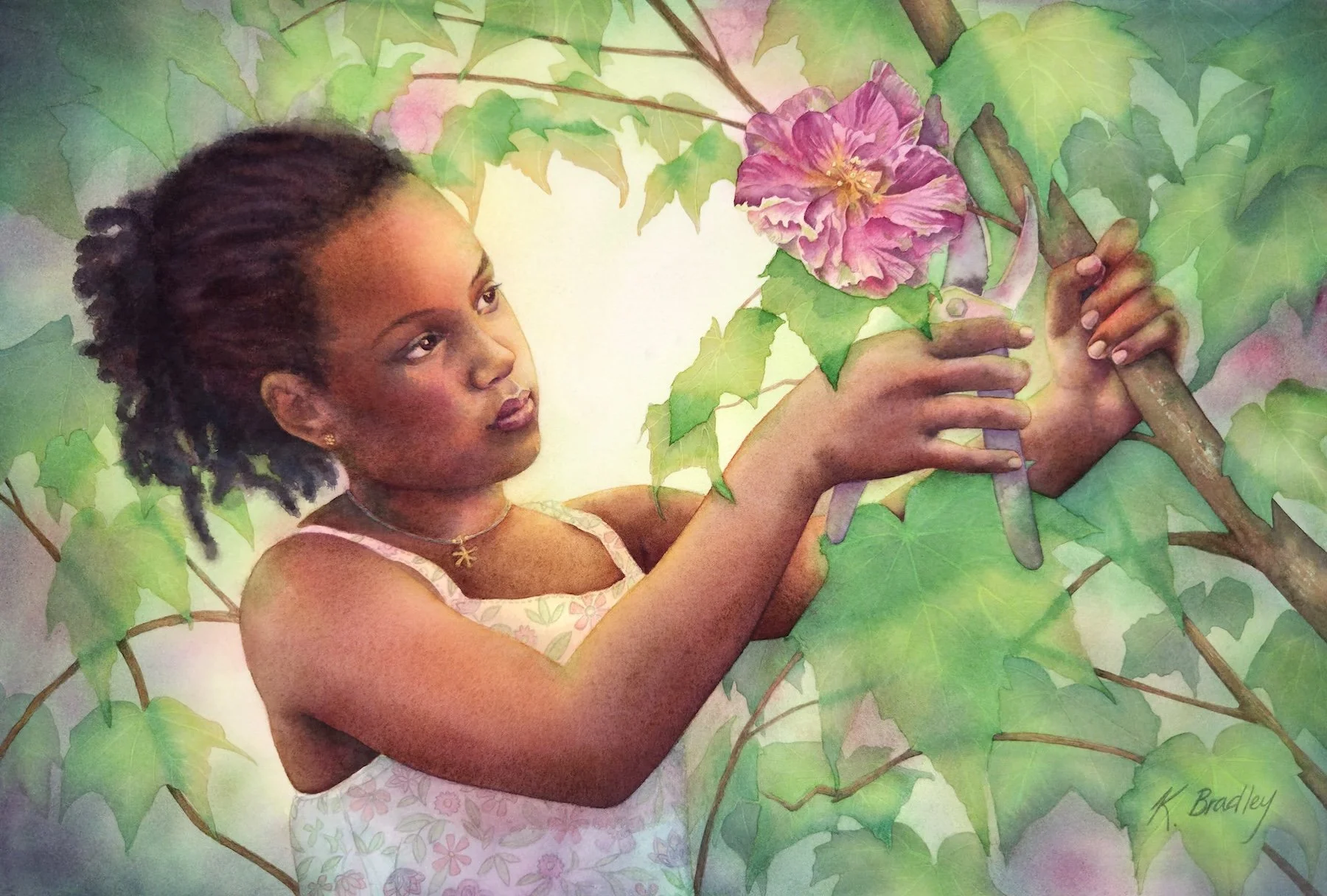
AAS: I appreciate the way you use color and composition to enhance the “story”. I Caught A Prince is a terrific painting. Tell me about it.
I Caught a Prince, 22” x 17”, watercolor on paper
KB: Thanks! I had more fun throwing and pouring paint onto I Caught A Prince than any other painting recently. I still have the green stains on my wall to prove it! I also enjoyed adding the tiny, messy details like pond scum under her fingernails.
When I plan a painting, I imagine a story that goes with it. This portrait is meant to celebrate the joy of being young, of getting messy, and of having an imagination that turns an afternoon in the swamp into a journey to a hidden kingdom. It won Best in Show in the Arkansas League of Artists Winner’s Show and was on display in Art Group Gallery for a month. It was also one of the pieces I submitted with my application for the Catalyze Grant.
The girl in this painting is my friend’s daughter, who has modeled for several of my paintings. I took a series of photos of her for a watercolor portrait workshop I taught, and on a whim asked her to cup her hands as if she was holding a cute, small animal. I think she was envisioning a baby bunny… she seemed somewhat horrified when she saw I’d given her a frog to hold, inspired by the gray tree frog I encountered in our back yard, and splattered her with (entirely imagined) pond scum!
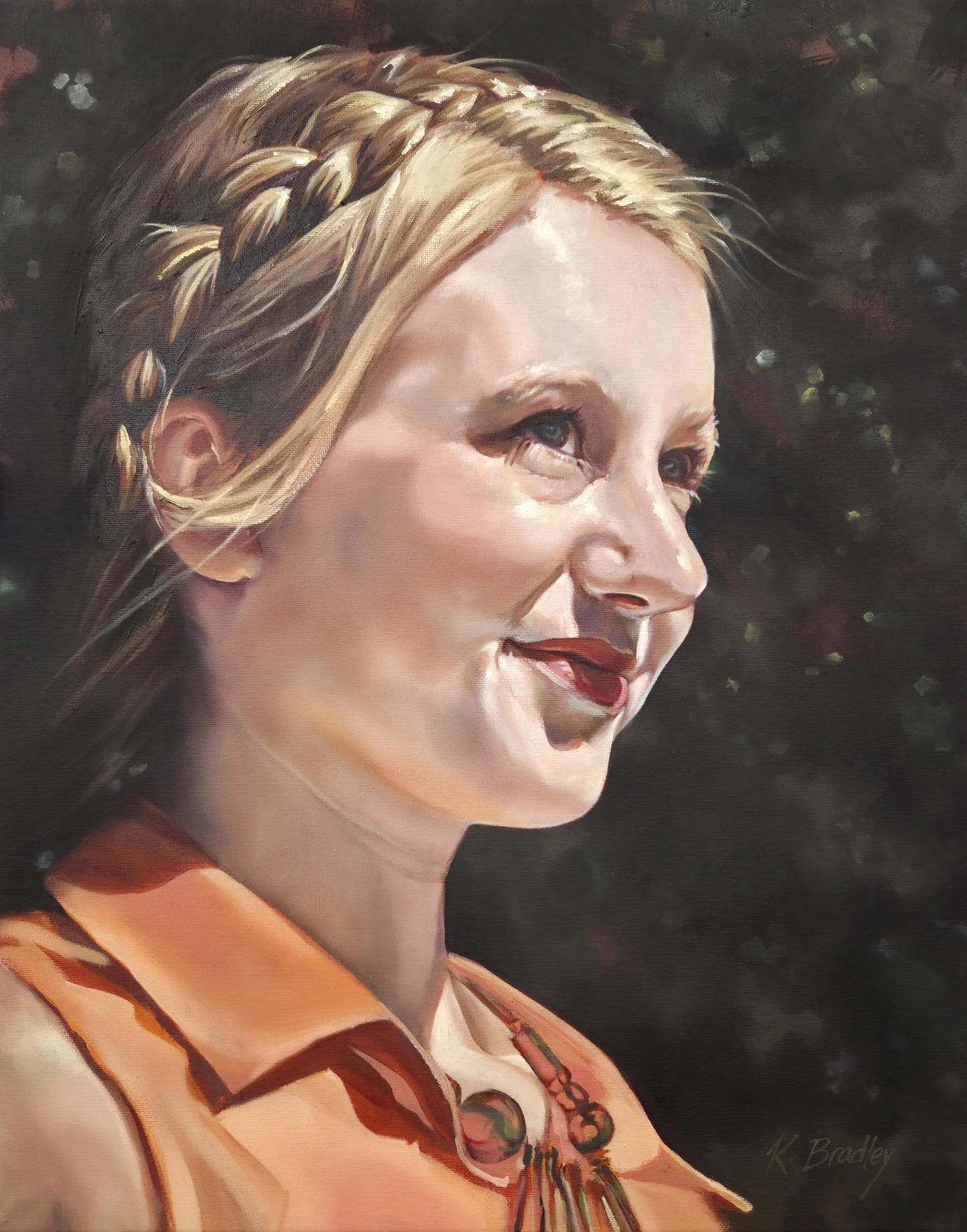
AAS: I guess Lily is what I think of as a classical portrait. One where the beautiful face is enough of a story. Did Lily sit for the painting?
Lily, 20” x 16”, oil on canvas
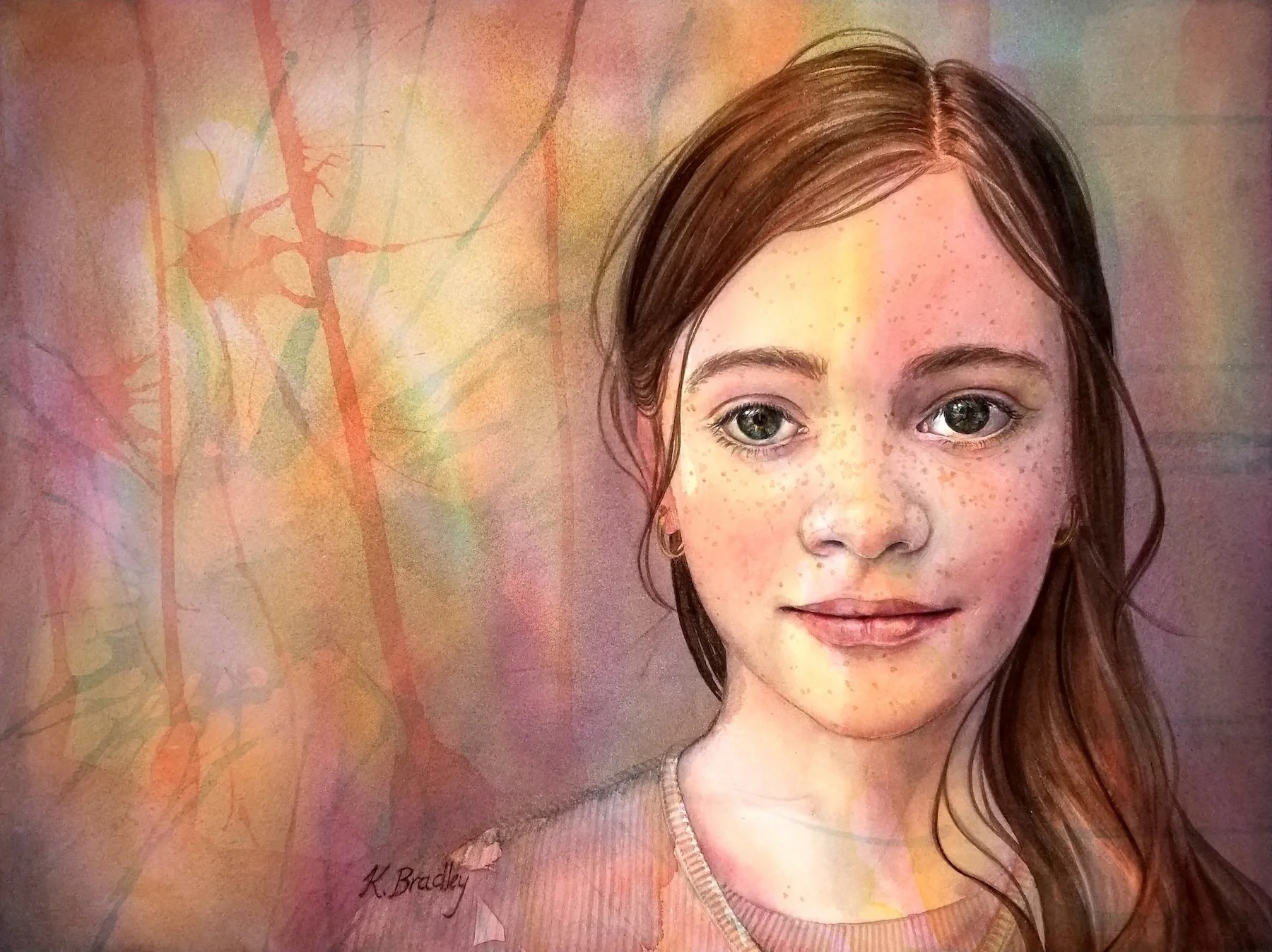
KB: Lily is my daughter, and she has been one of my muses from day one. I’ve drawn and painted her from life many times, but this painting was inspired by a quick, slightly blurry cell phone pic I snapped of her in the drop-off line before school. The sun was shining into the car window, and her pink backpack reflected up at her face, creating a beautiful array of colors on her skin. The look she’s giving the viewer in the painting was her tween attitude when I said, “Freeze! I need to paint this!” and snapped a photo of her — “Mom, you’re so weird!”
I’m newer to painting in oil. I started to learn via YouTube during Covid, and in the last year have taken oil painting classes from Holly Tilley at Art Group Gallery. Working in oil is utterly different from watercolor, and I’m enjoying the challenge of perfecting a new medium! I miss the splashing and pouring, but it feels like pure luxury not to worry about losing the white paper… and oil paints are much easier than acrylics because the paint remains workable for hours or even days!
“I give myself the freedom not to have to be excellent at everything, and this allows me to find joy in dabbling, playing.”
AAS: I love that you still enjoy trying new things. I saw on Facebook that you cast a metal tortoise with Michael LeBlanc. That looked like fun!
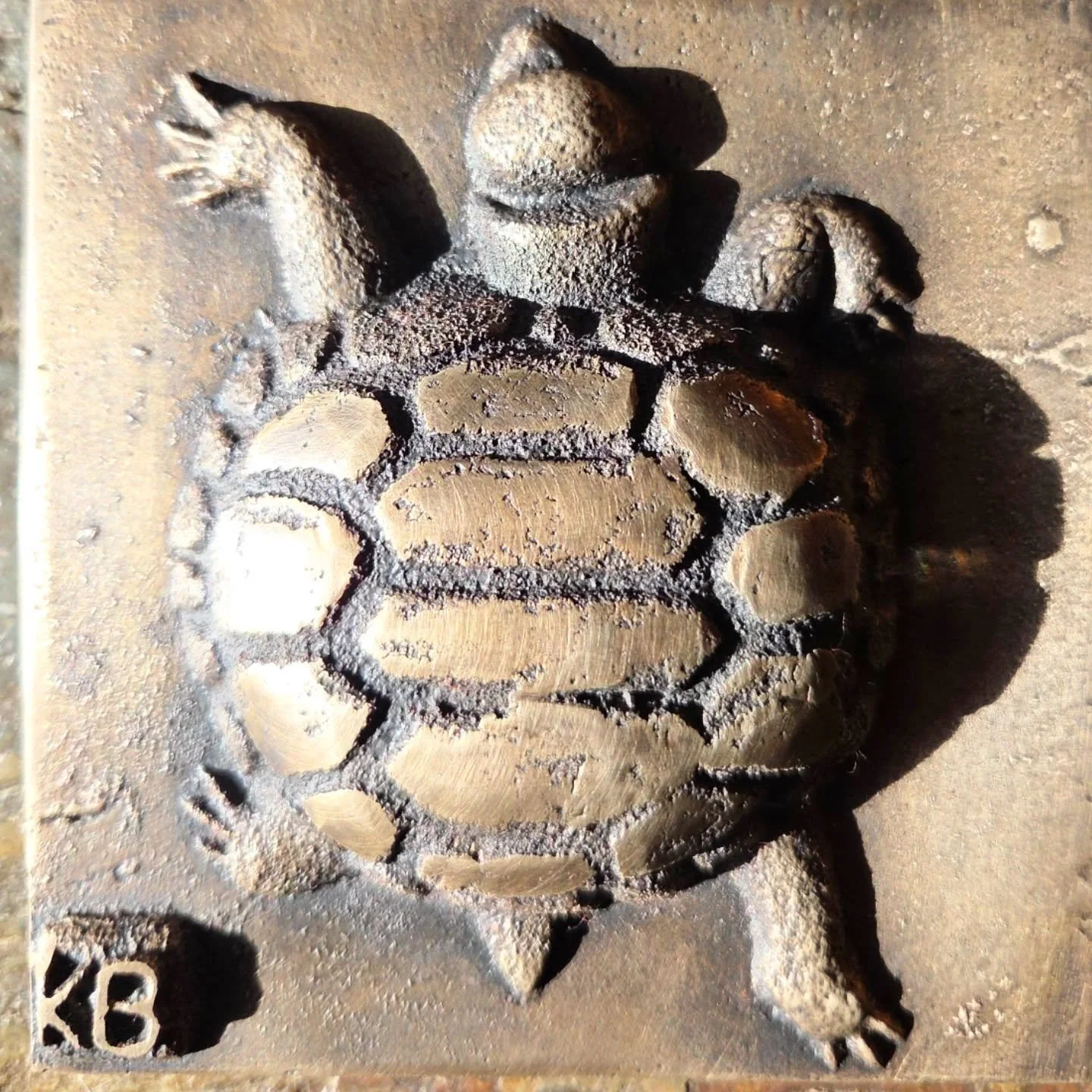
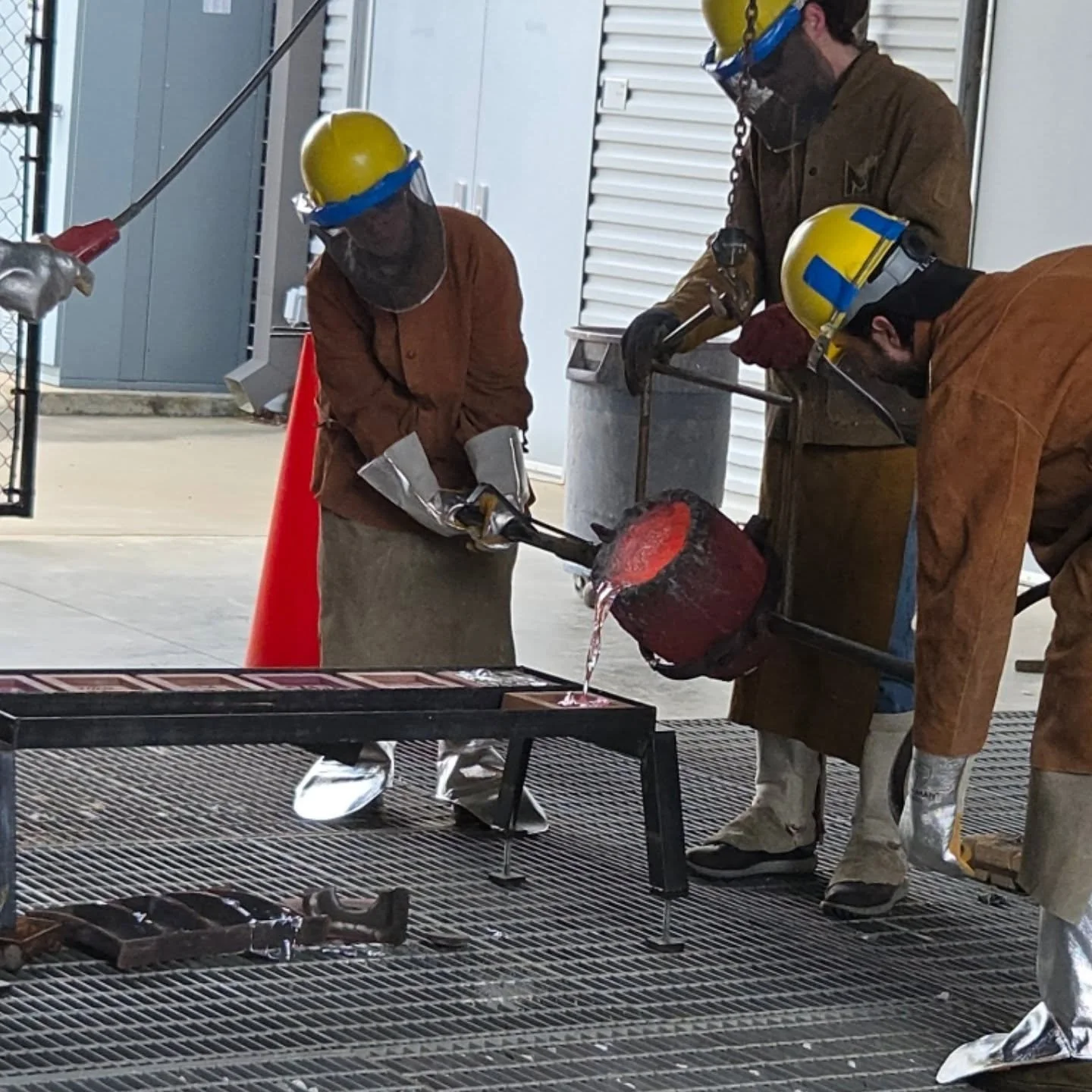
KB: Yes! It was a fabulous new adventure to immerse myself into the start-to-finish process of casting a bronze. We got messy and sweaty, and it was wonderful. Michael LeBlanc was a fantastic teacher because he allowed us to perform each step ourselves, even pouring the red-hot metal. I hope I can do something like this again in the future. I give myself the freedom not to have to be excellent at everything, and this allows me to find joy in dabbling, playing. I challenge myself to take the artistic risk, try a new method, experiment. Sometimes, something wonderful is the result.
AAS: Are you someone who is always looking for interesting faces in a crowd?
Mantis, 12” x 9”, watercolor sketchbook
KB: Yes. Human faces fascinate me, and I love sketching interesting people, especially women and children. Sometimes I’m sneaky, but often I’ll ask. If I forget my sketchbook, I draw from memory later. Sometimes I’ll snap a quick photo to sketch or paint later, but only with permission. I also sketch my kids and my friends. My sketchbook may be my most valuable art tool, because there is no pressure to be perfect.
I also have a separate watercolor sketchbook. The world only sees maybe 5% of my watercolor sketches because this is where I play. I use it to warm up before working on a painting, or to try out new methods. I’ll also give myself an assignment, e.g. to work in a specific limited palette. My watercolor sketches take less than 1 hour, so they’re looser than my finished paintings. Some of them are terrible, and that’s okay.
AAS: You are also children’s book writer and illustrator. Tell me about that work.
KB: I’ve illustrated children’s books for Open Hearts Big Dreams Fund for 9 years. I became involved with this wonderful organization via my friends Jane Kurtz and Ellenore Angelidis who invited me to help create colorful, culturally appropriate early readers for children in East Africa. Ethiopia holds a special place in my heart because my daughter was born there. I said “Yes!” because I’m passionate about literacy, and I believe children deserve to read books that represent them and their culture in a positive light. OHBD has published 194+ unique titles in 32 languages, with more in process. These 700,000+ books are read in Ethiopian schools, libraries, homes, and by the diaspora in the US and elsewhere. After illustrating several books for them, I recruited other artist friends to help create more books. I also volunteer as artistic director for OHBD, and I’ve had the honor of mentoring several young illustrators in the US and Ethiopia.
The Runaway Injera was a fun collaborative project with author Jane Kurtz. Injera is a traditional Ethiopian sourdough pancake and mirrors the story of the Runaway Gingerbread. Instead of using watercolor, I (insanely) decided to illustrate it with papercut. Cutting out all those tiny shapes took about five times as long as it would’ve if I’d painted the darn thing! But the result was stunning and is still one of OHBD’s most popular Ready Set Go books, published in 11 languages.
In A Wild Friend, two children encounter a giant tortoise in the wild. It was inspired by my experience meeting giant Ethiopian leopard tortoises when we traveled there in 2015. The words are simple, intended for early readers, but I drew the characters to be about 9 or 10, since some new readers are older and I wanted them to identify with the characters. This was the first book I illustrated digitally in Procreate (instead of by hand in watercolor). I kept the drawings true to my signature watercolor illustration style, and I’m proud of how it turned out. It’s available in 10 languages, with more translations in the works.
AAS: Congratulations on being selected for a 2026 Mid-America Arts Alliance Catalyze Grant! What will that support?
KB: Thank you! I’m thrilled to pour into my art practice this next year. I’m taking the leap: quitting my job as a Middle School science teacher to become a full-time artist. Some of my use of the grant funds will be practical: I’ll have a window in my studio replaced, purchase a professional easel that won’t shake, invest in paint, (large!) canvases and watercolor paper.
I plan to paint my heart out while my kids are in school. I’ll likely pay live models to sit for me, and I have a series of large mixed-media and oil paintings of three dancers in mind whom I sketched and photographed last year. Ultimately, I want to create enough pieces for a solo show. I also plan to participate in several art workshops in-person and online and maybe travel somewhere interesting to paint without distraction.
I’m so thankful for my husband, Ben, who cheered me on and encouraged me to apply for the Catalyze Grant. And of course, Mid-America Arts Alliance and the Windgate Foundation deserve a big thank-you for making this possible!