Interview with artist John Dyas
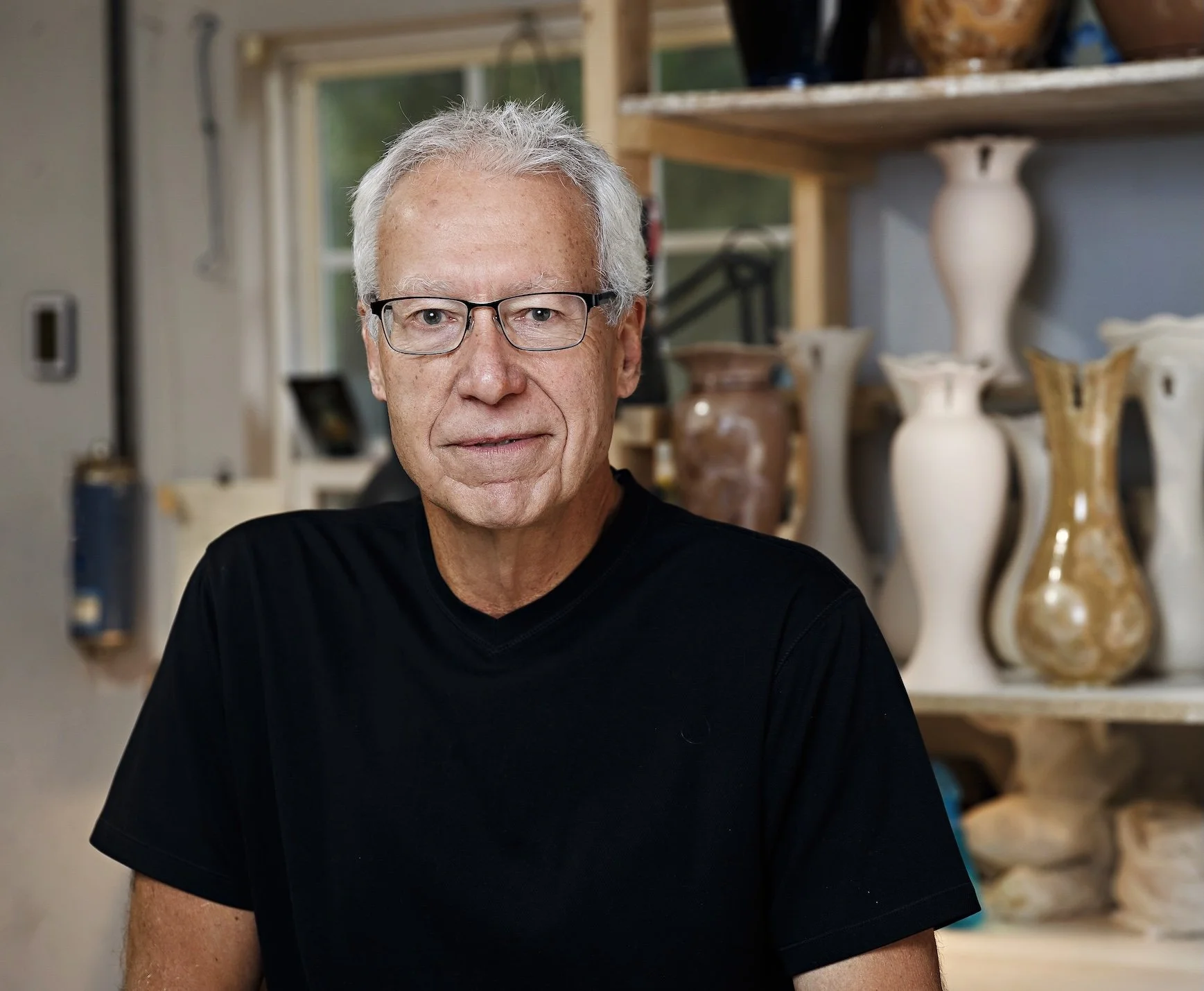
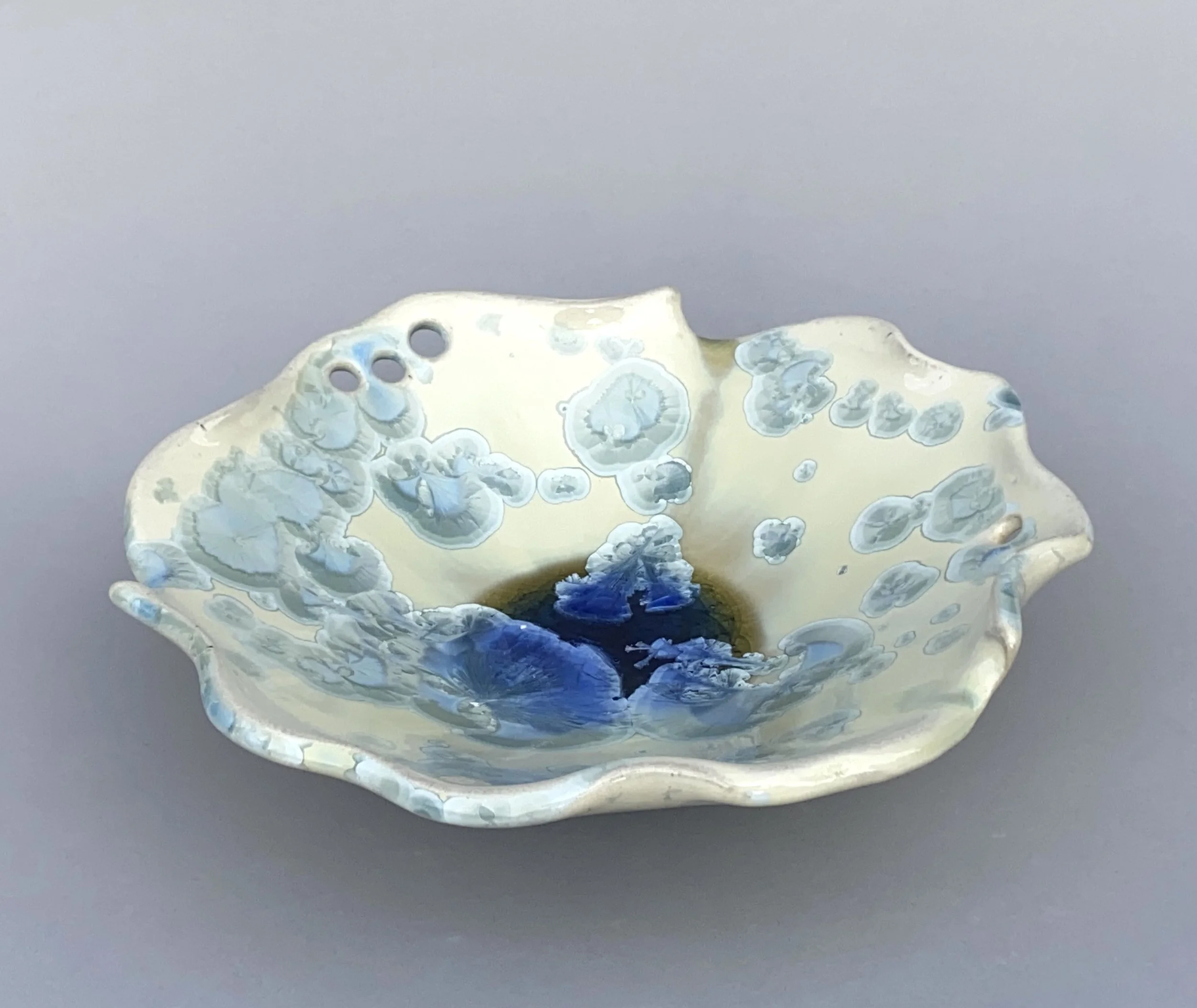
John Dyas is a potter from Bella Vista, Arkansas. After receiving a BFA in Ceramics from Pittsburg State University, John began his pottery career during the 1970’s and has now become one of only a few US potters developing zinc crystalline glazes for use on decorative porcelain — and his porcelains are breathtaking. More of John’s work can be found at Wishing Spring Gallery in Bentonville and at his website.
AAS: John, are you originally from Northwest Arkansas?
JD: I’m not originally from Northwest Arkansas, but I got here as quickly as I could! I’m a Kansas boy, born in Kansas City. Because my father was a corporate pilot, our family moved around the Midwest, from St. Louis to Denver. I graduated from high school in Wichita and attended Pittsburg State University. During college, we often came to Northwest Arkansas to hike and canoe, and that’s when I first began to appreciate what a beautiful place it is. I’ve been fortunate to call NWA home for 26 years.
AAS: When did you first become interested in pottery?
JD: My interest in pottery began during a high school college-and-career day at Pittsburg State. At the time, I thought I wanted to study automotive engineering and build race cars. It took me about 30 minutes to realize that wasn’t for me.
I wandered upstairs into the art department, where I met the chair of the department. After hearing my story, he encouraged me not to feel pressured to choose a career immediately and suggested I try some art classes. My first semester pottery class changed everything. I fell in love with clay and managed to take a ceramics class every semester until I graduated.
After college, three other potters and I started the Good Earth Gallery, a small pottery studio about a mile north of Frontenac, Kansas. We built our first kiln and made some great pots, but we had no idea how to sell them. After a couple of years, the studio fizzled. In 1980, life took us to Prescott, Arizona, where I started John Dyas Pottery, built my second kiln, and learned how to make a living selling pottery through art fairs and galleries.
AAS: But I believe you left pottery for a while. Why, and what brought you back?
JD: Yes. During that same period, Clare, my wife, and I were starting our family. When our first daughter, Codie, was born, we decided it was time to make some changes in our lives.
When our second daughter, Carly, was born, we had begun taking our faith much more seriously. We started attending church regularly and became involved in a small group. One evening, our church asked me to bring my potter’s wheel to a class and give a visual lesson about God as the potter and us as the clay. I was terrified—I wasn’t a public speaker at all—but I agreed to do it. The lesson went well, and I was invited to give similar presentations at other churches around Prescott. That eventually led to greater involvement in ministry, seminary, and ultimately ten years as missionaries in Toluca, Mexico, about 40 miles west of Mexico City.
In 2000, we moved to Northwest Arkansas to continue working in ministry. We did that until 2020, when COVID brought that chapter to an end. It seemed like the right time to retire and begin something different. That’s when the 2.0 chapter of my pottery journey began: crystalline glazes in the twenty-first century.
AAS: I first saw your vessels and the effects of your beautiful crystalline glazes at the recent AMFA Art Market. How did your fascination with glaze chemistry develop?
JD: My pottery journey has been a lot of fun. In the 1970s and ’80s, I learned a great deal about clay and the craft of making vessels. In 1981 I needed a style that would set my work apart. I found an article in Ceramics Monthly about zinc crystalline glazes, and I was hooked from the first photograph.
The process fascinated me, especially the challenge of growing large crystals. At the time, there were only a handful of potters working with crystalline glazes in the USA, and information was difficult to find. This was long before the internet, so I spent a lot of time in libraries and communicating with other potters by letter.
I eventually found a workshop in Seattle on formulating crystalline glazes and making frits. I returned home and began experimenting with growing crystals. With the primitive kiln controls we had at the time—basically low, medium, and high switches—it took about six months to achieve any consistency. By the end of 1981, things were progressing quickly. Over the next several years, we had good success at major art markets and galleries throughout the Southwest.
I made thousands of crystalline-glazed pieces, many of them beautiful, but I didn’t really understand why the crystals developed the way they did. I understood the basics, but not the nuances. And, again, our kiln had only low, medium, and high settings!
I read everything I could find, which wasn’t much at the time. I could never have imagined the amount of information that would eventually become available through the internet. That brings me to the 2.0 chapter. Two years ago, I took an online glaze chemistry course specifically focused on formulating zinc crystalline glazes through Matt Katz and the Ceramic Materials Workshop. It dramatically expanded my understanding of how each material contributes to the glaze as it melts and crystallizes. And, kilns have programable computers on them now… mind blowing! Also, extremely important due to the required precision in firing control needed to develop interesting characteristics in crystal growth.
I now feel that I have a strong intellectual understanding of the material science behind these glazes. I understand how the different minerals contribute to melting and crystal growth. But turning that knowledge into experiential knowledge is another matter. I’m still experimenting and learning. I’ll never claim to have complete control over my glazes. I don’t think any potter can. But I love the process. Opening the kiln after a glaze fire is like Christmas every time!
AAS: Tell me about some of your crystalline glazes.
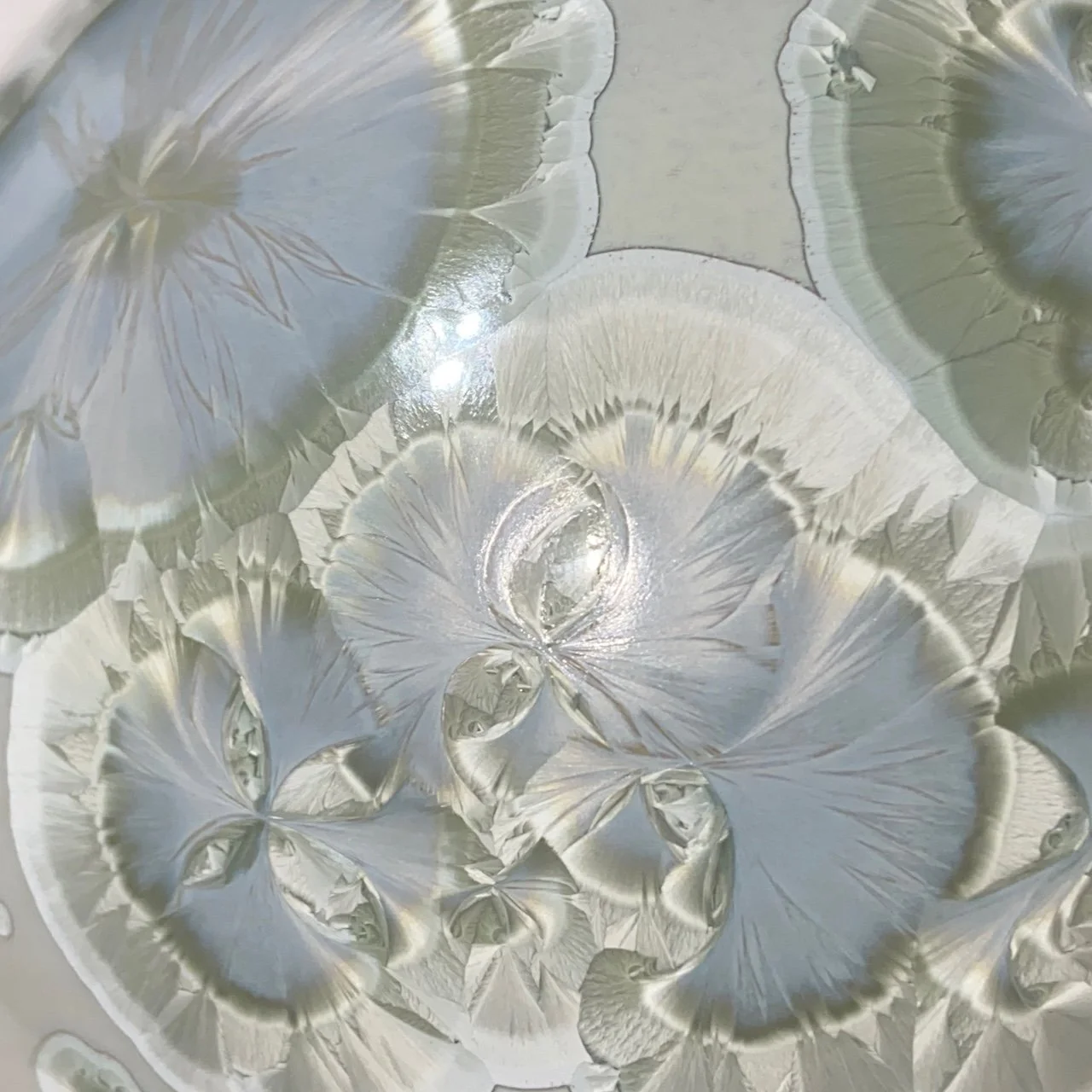
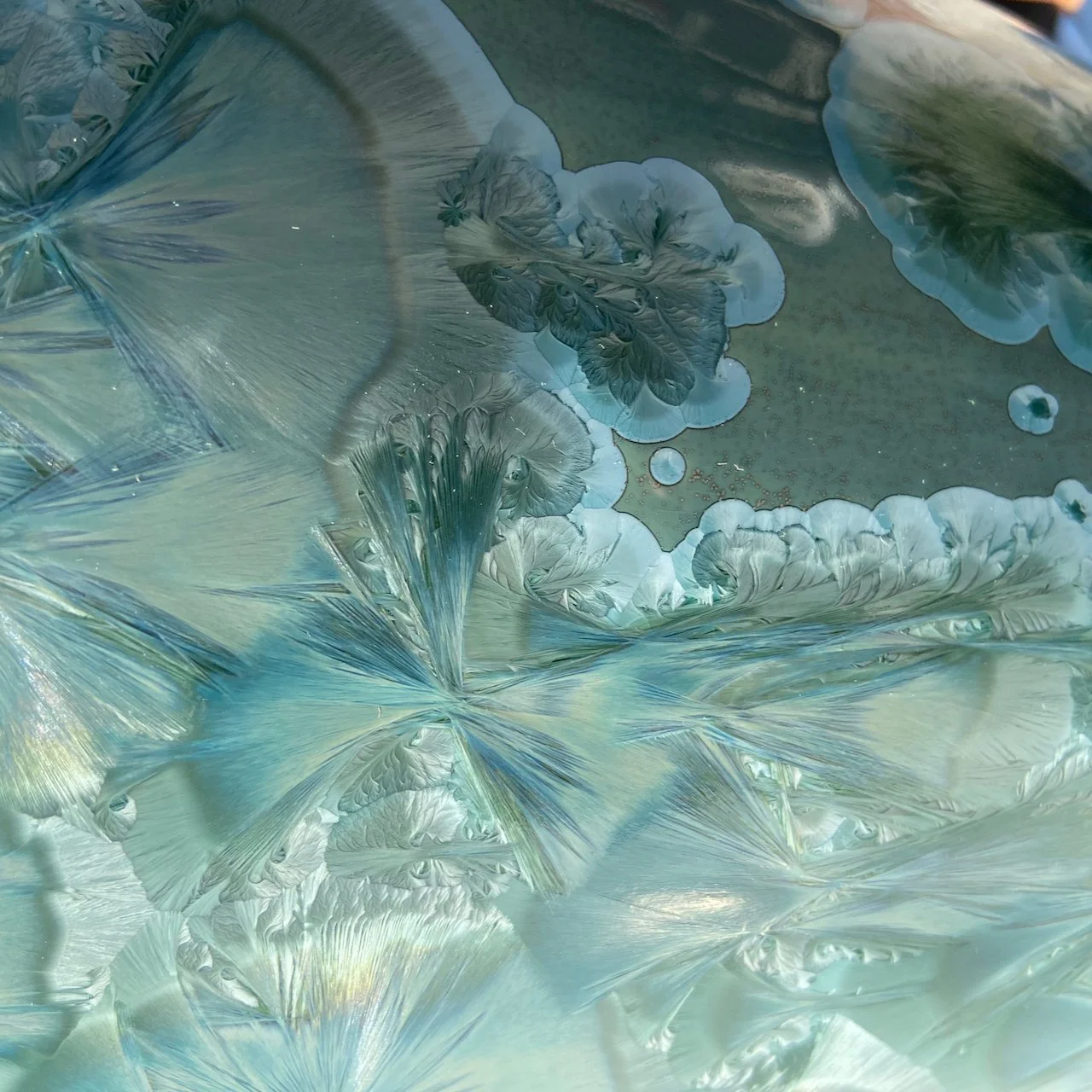
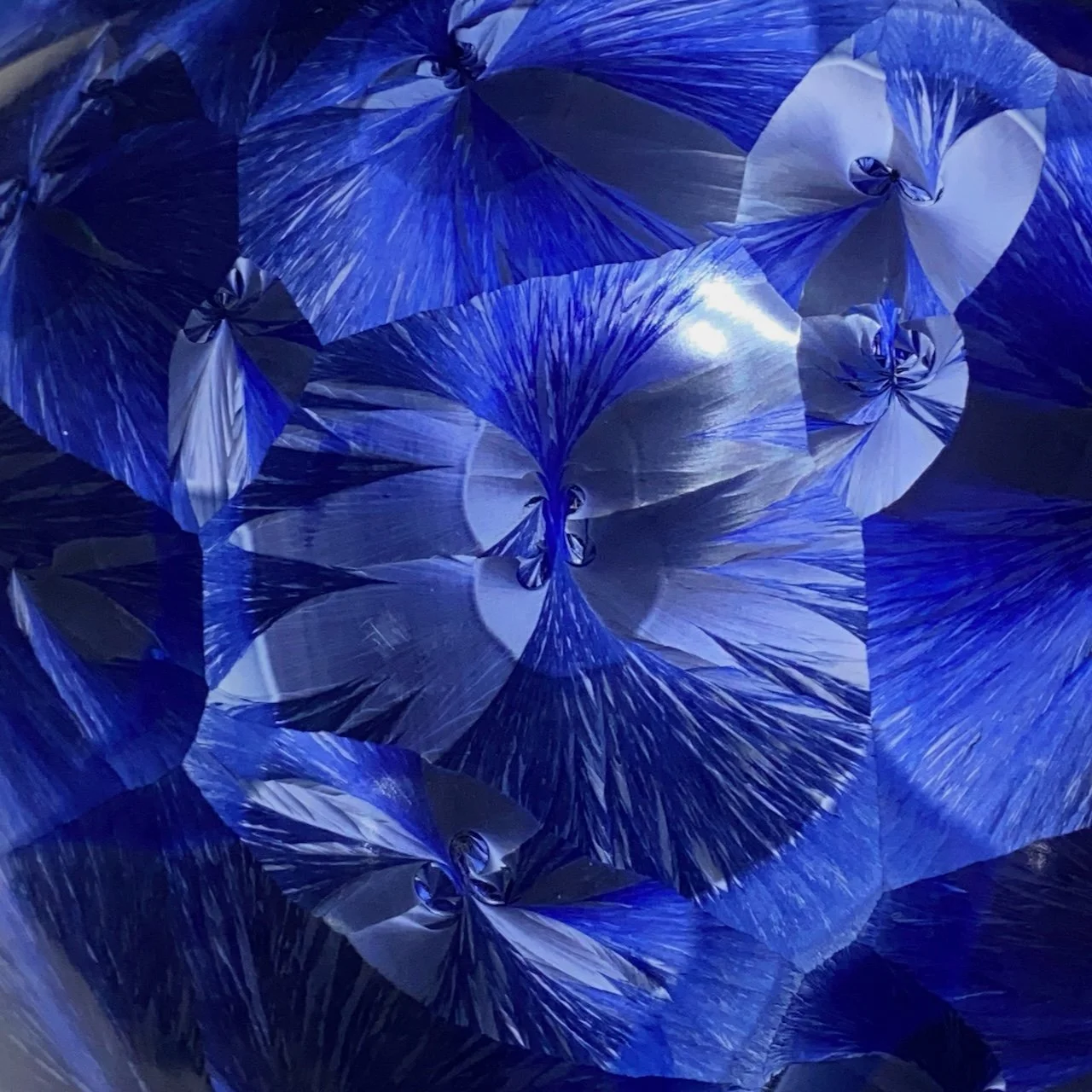
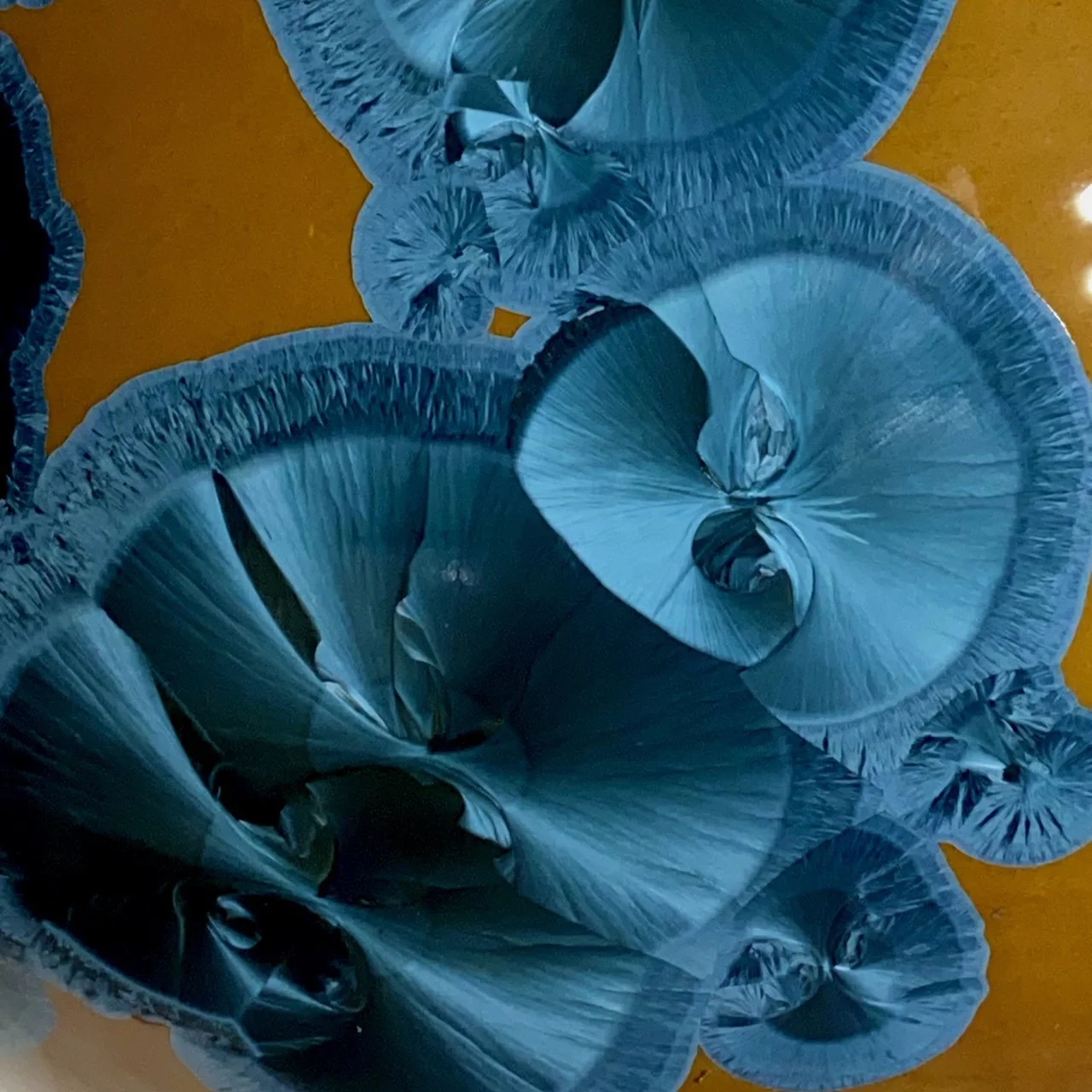
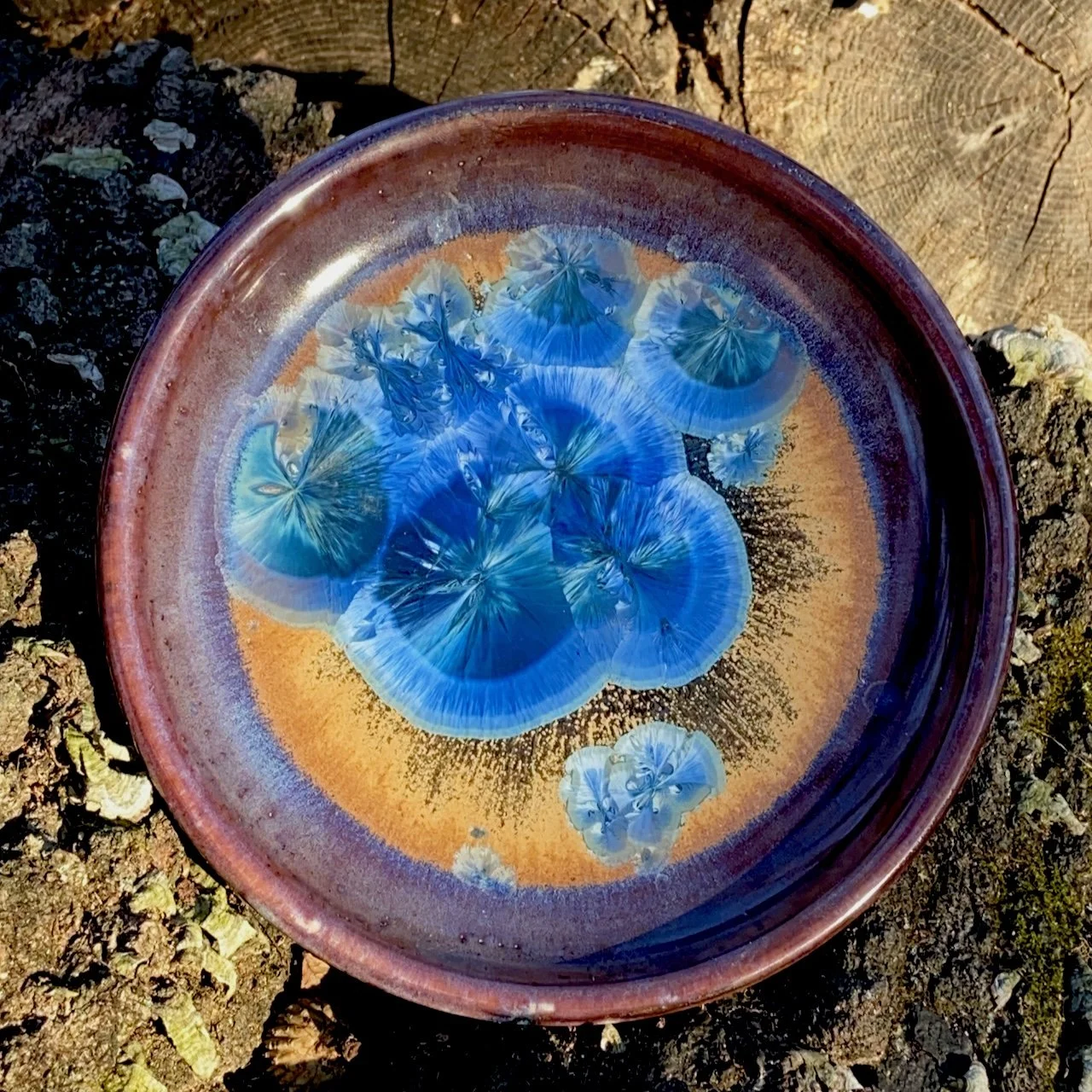
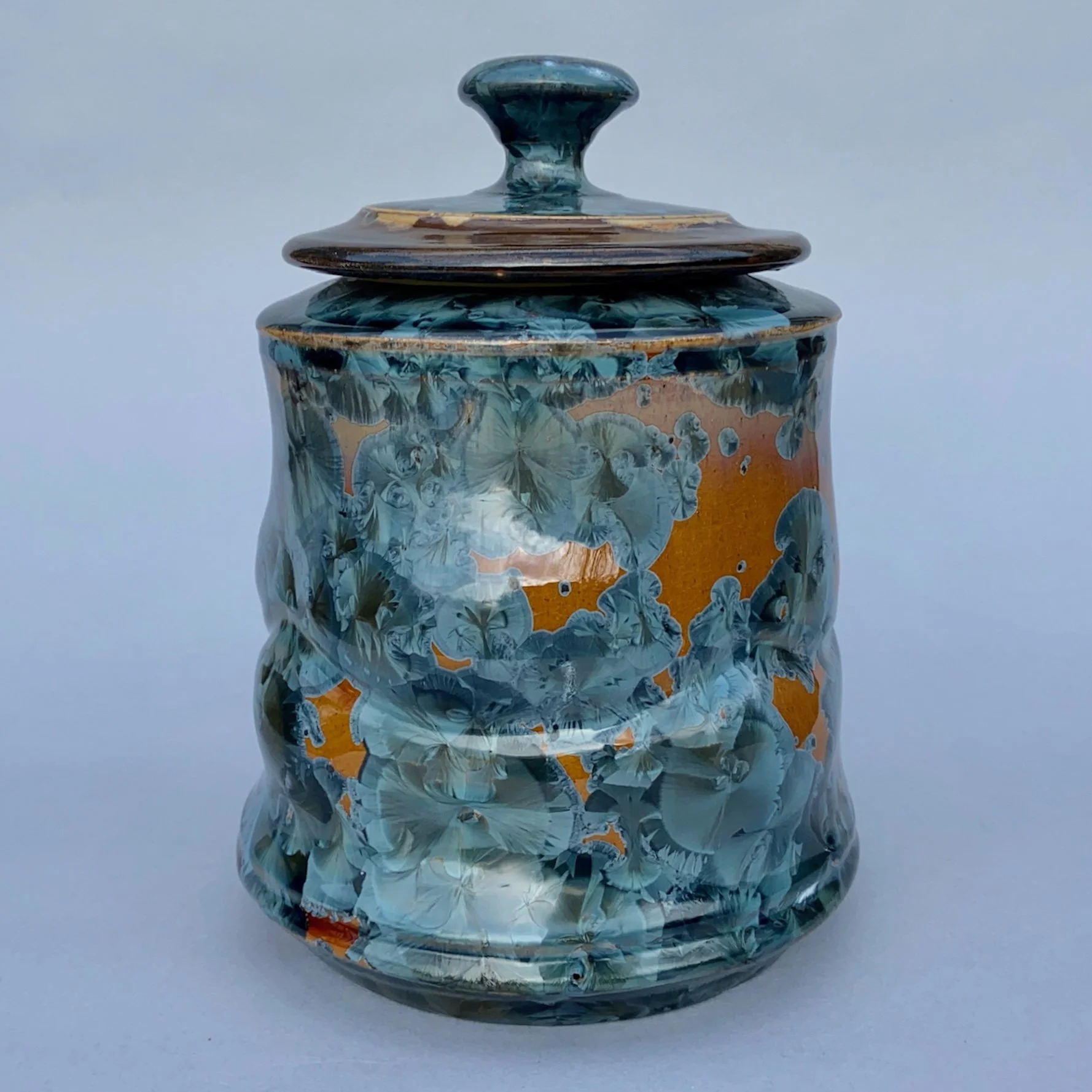
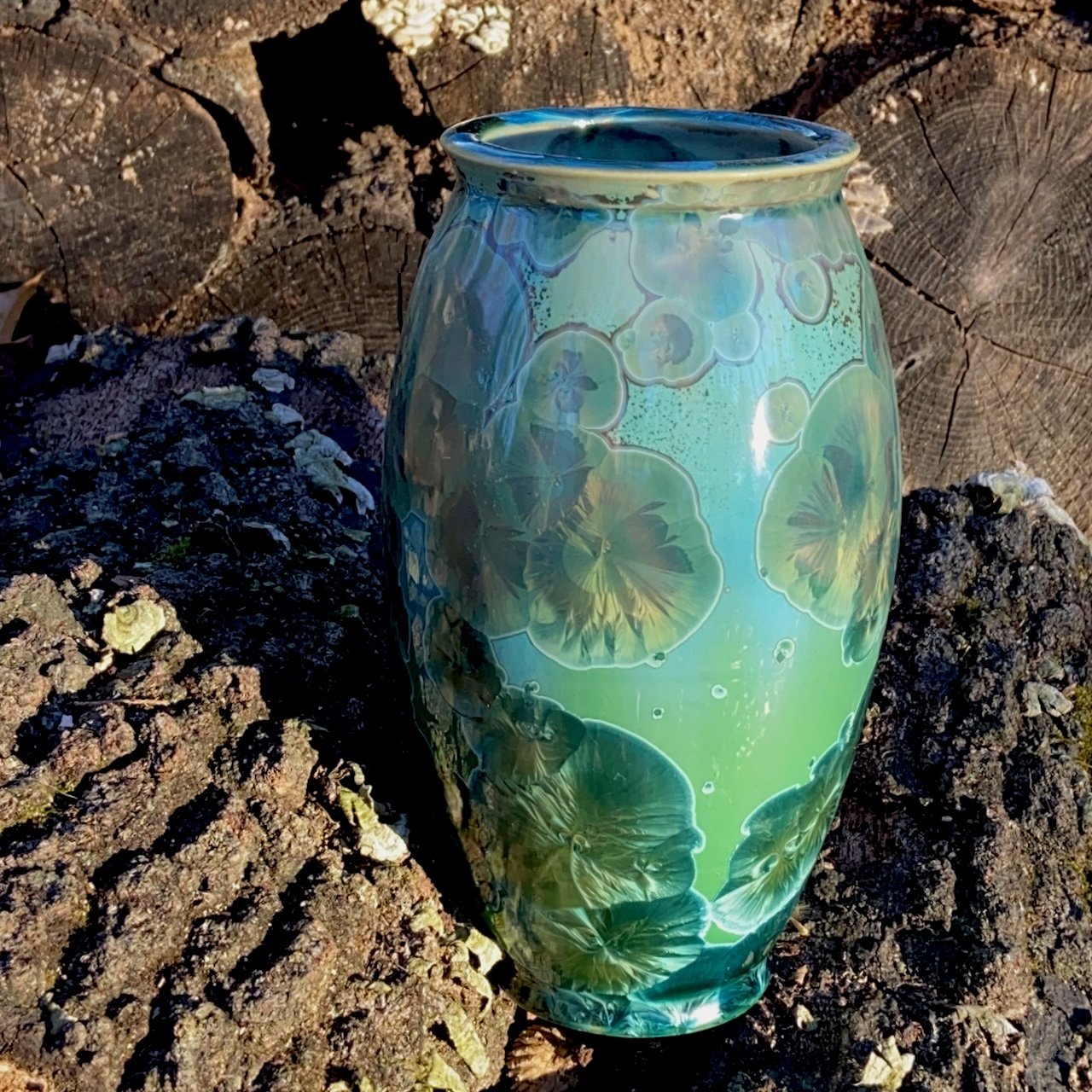
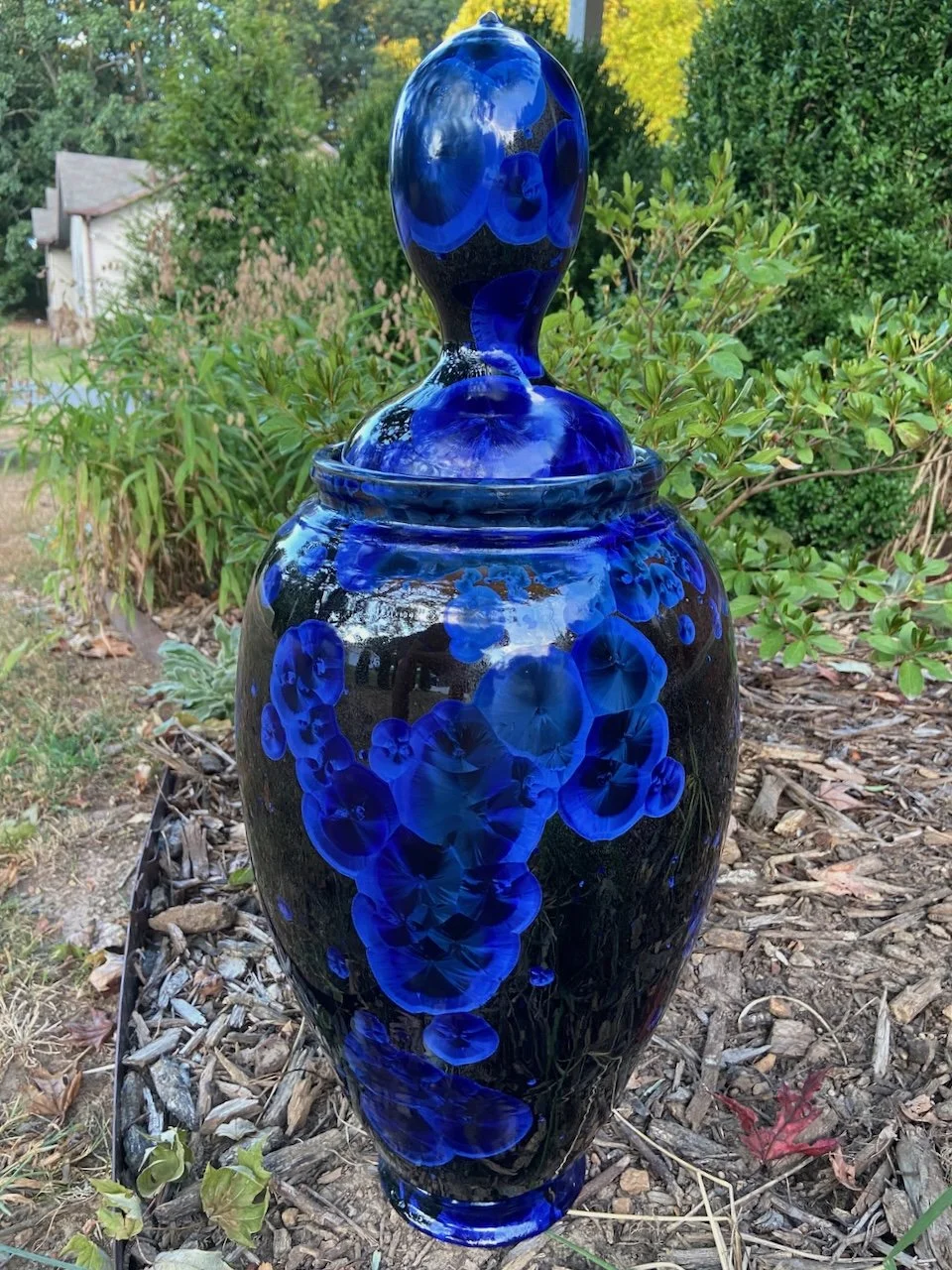
JD: Like most crystalline-glaze potters, I have several base glazes that I use. They are built around the relationship between zinc and silica, which is why they are called zinc silicate crystals. A commercial frit, such as Ferro 3110, helps the glaze melt at a reasonable temperature—around 2,350°F. The base glazes fire white, but different metal oxides create different colors and effects. Titanium can make the crystals glow. Copper produces green crystals. Cobalt turns them blue. Iron creates rich brown and gold tones and can also produce secondary crystals in the background.
The firing schedule is just as important as the glaze chemistry. Zinc and silica don’t really begin to work their magic until the glaze reaches high temperature and melts. As the glaze heats, zinc begins forming nuclei throughout the glaze. These nuclei become the starting points for crystal growth.
The real magic happens during the controlled cooling period. As the kiln cools slowly through specific temperature ranges, the zinc and silica organize themselves around those nuclei and form crystals within the glaze matrix. Sometimes the crystals grow as large, individual forms. Other times they overlap and create fascinating conglomerates. That unpredictability is one of the things I love most about crystalline glazes.
“Whenever I throw a piece, I’m thinking about the form and how the glaze will move across its different surfaces.”
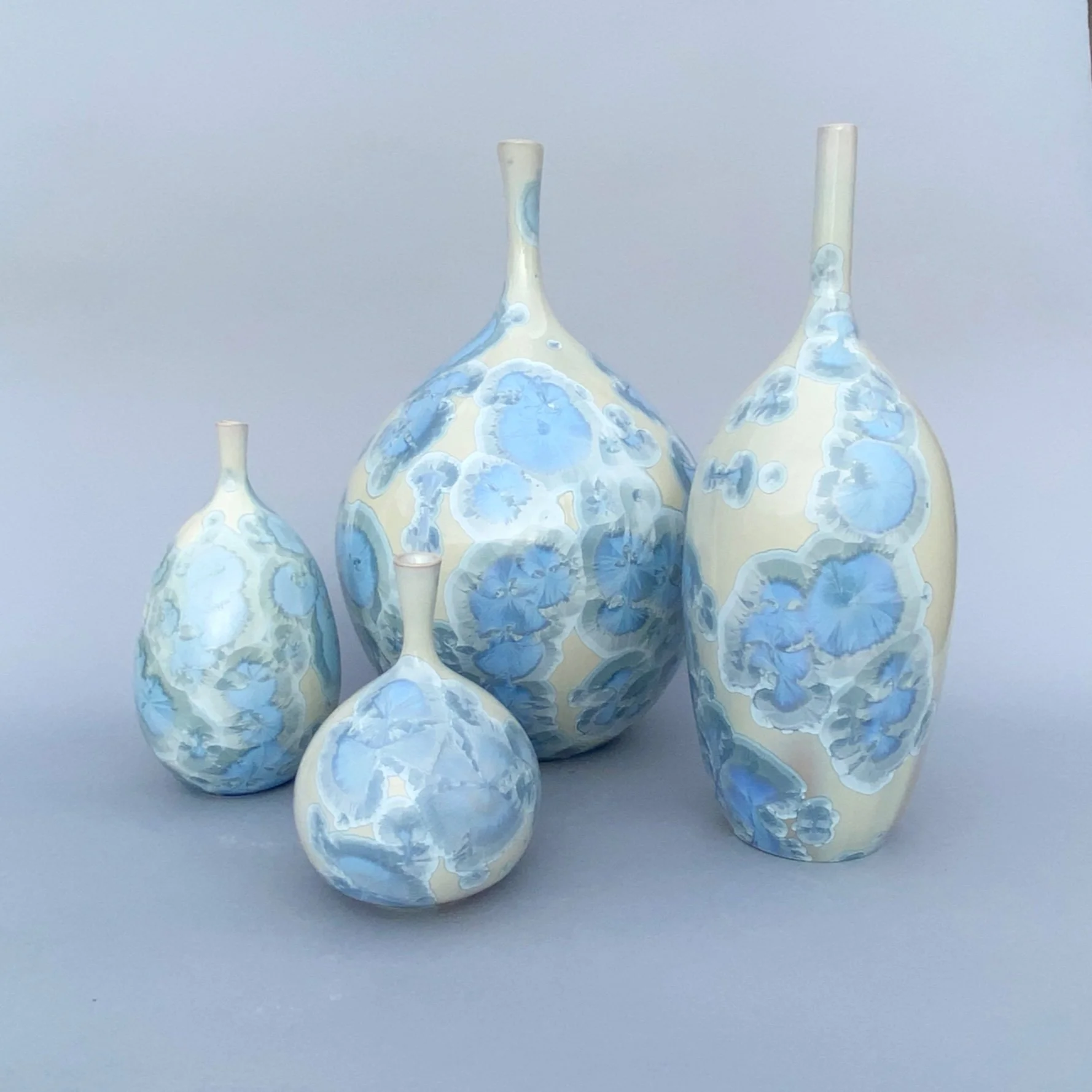
Light Blue Bottle, porcelain, 12” x 6”
AAS: It must be fun to experiment with these glazes on different shapes. I love the light blue bottles with the thin neck. The structure and shapes of the crystals make the bottom of the bottle explode with color.
JD: This is a great question, because the shape of a vessel really does affect how the crystals develop. Most crystalline-glaze potters love pencil-neck bottles because the shape creates a perfect plane where crystals can hang out and grow. Whenever I throw a piece, I’m thinking about the form and how the glaze will move across its different surfaces.
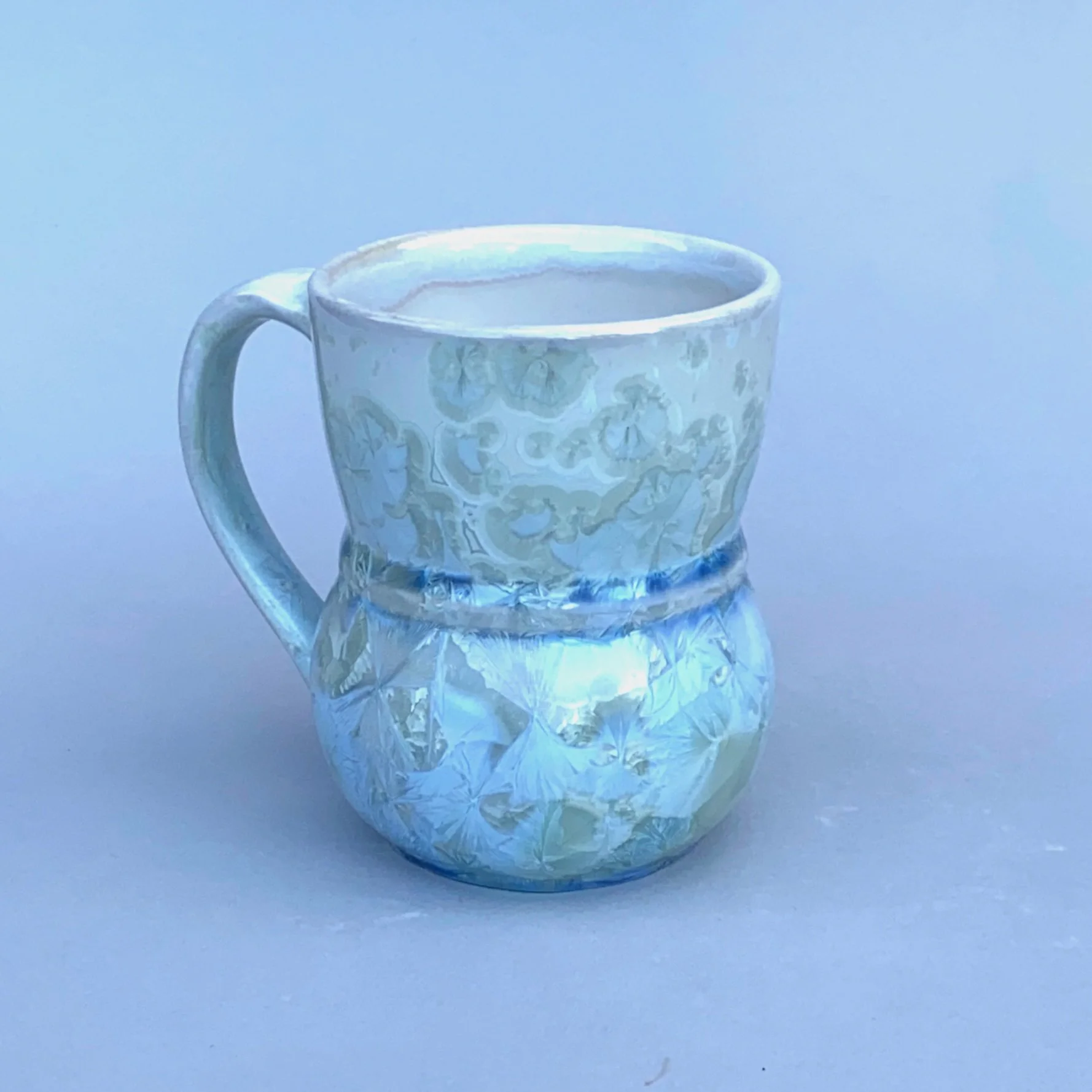
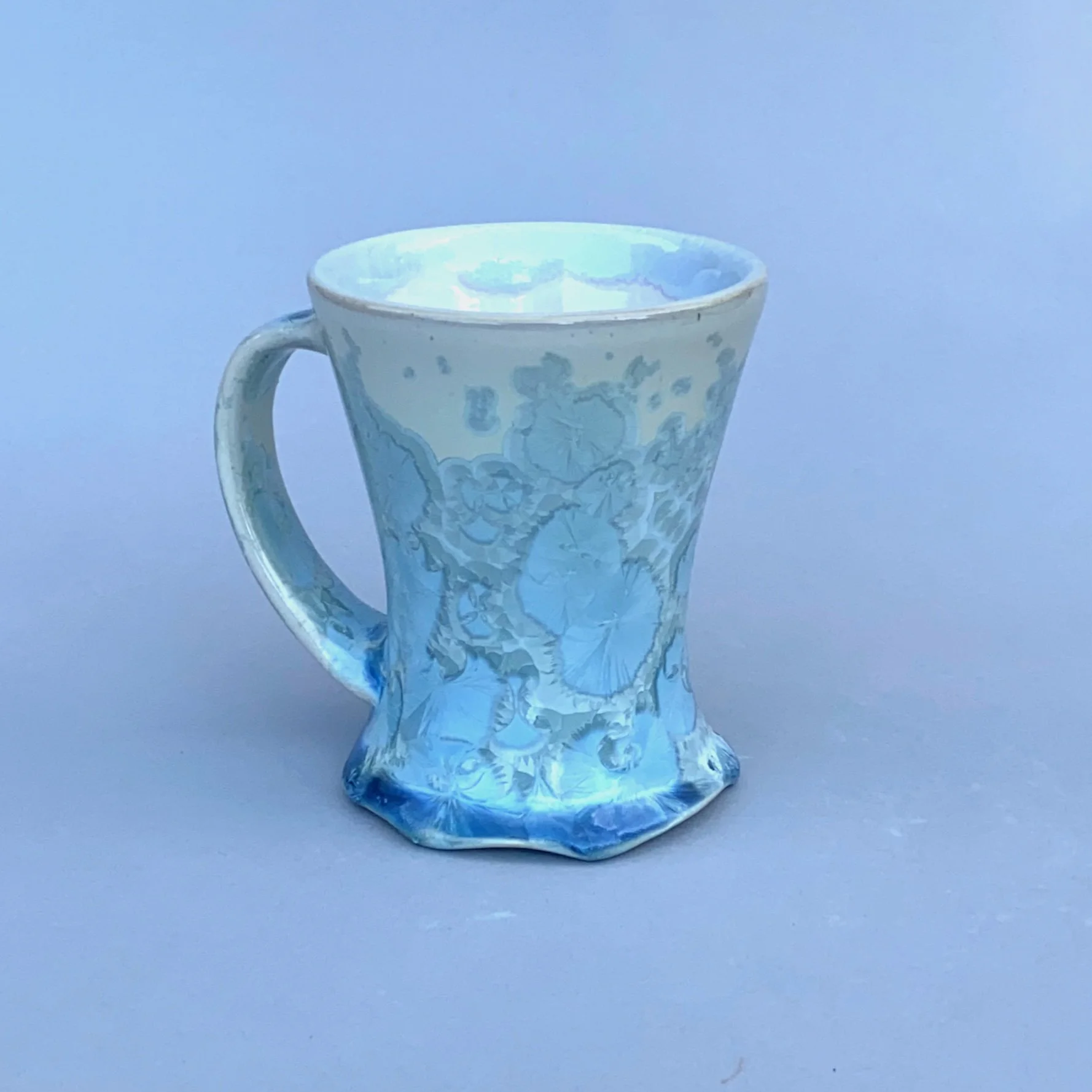
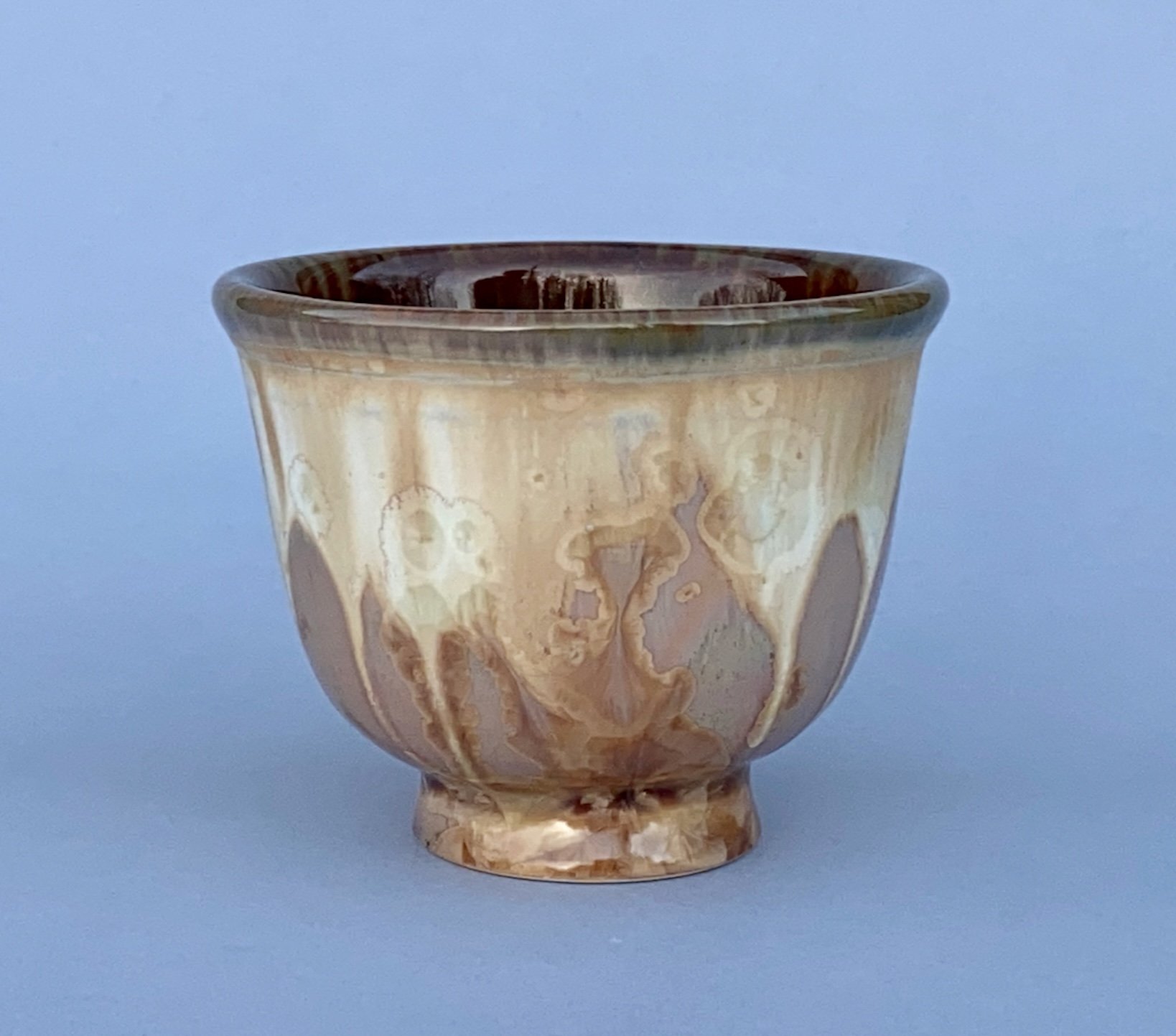
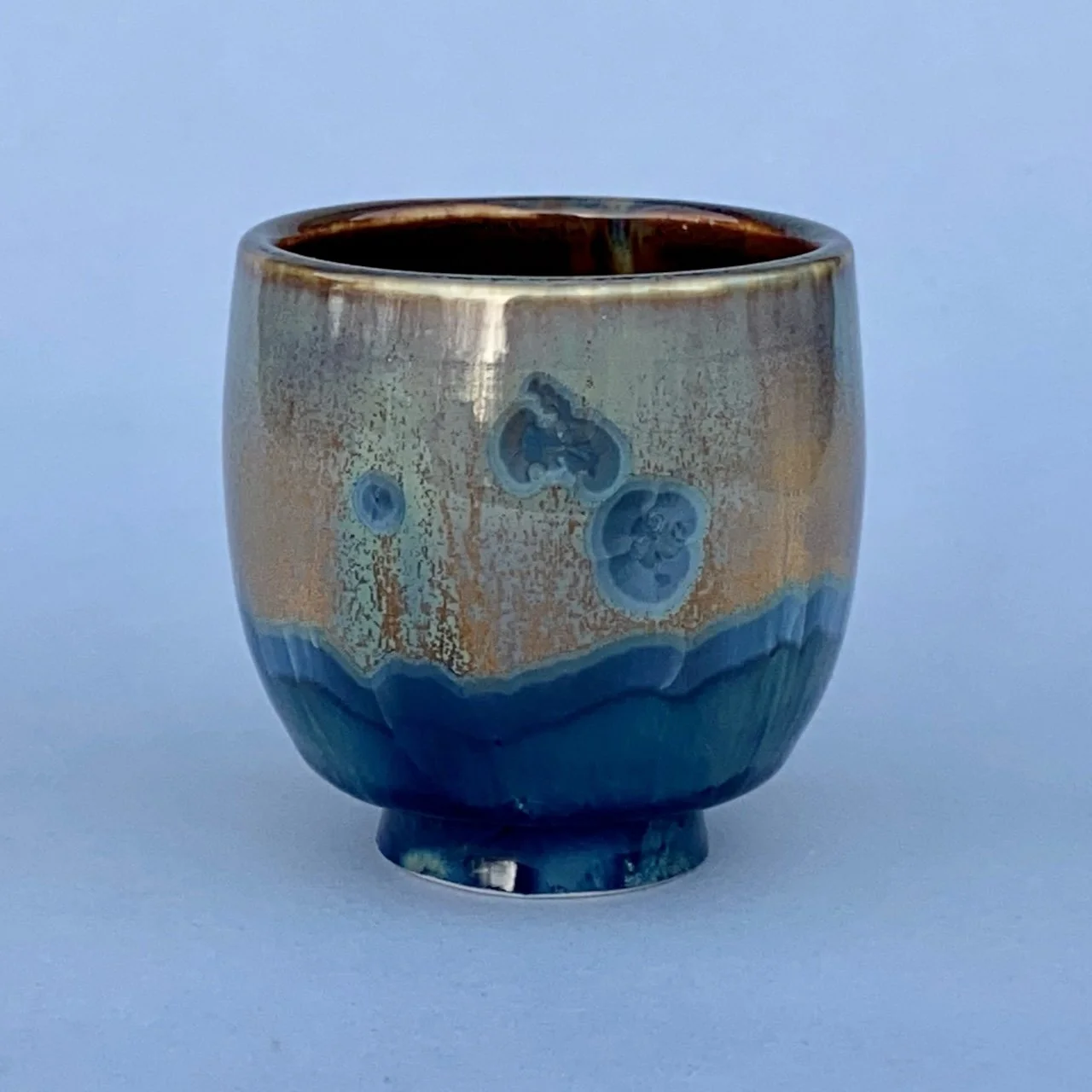
My two cup forms are a good example. One has two bulging surfaces with a break in the middle where crystals can collect. The other has a long, concave surface running from top to bottom. The crystals can move down that surface and eventually settle around the floating foot. The glaze is never completely predictable, which means the shape of the vessel becomes part of the process.
AAS: I guess my favorite color combination is the nickel, which you call Aegean Rust. Again, your classic shapes accentuate the complexity of the crystals. Talk about the glazes.
Aegean Rust Vase, porcelain, 12” x 5”
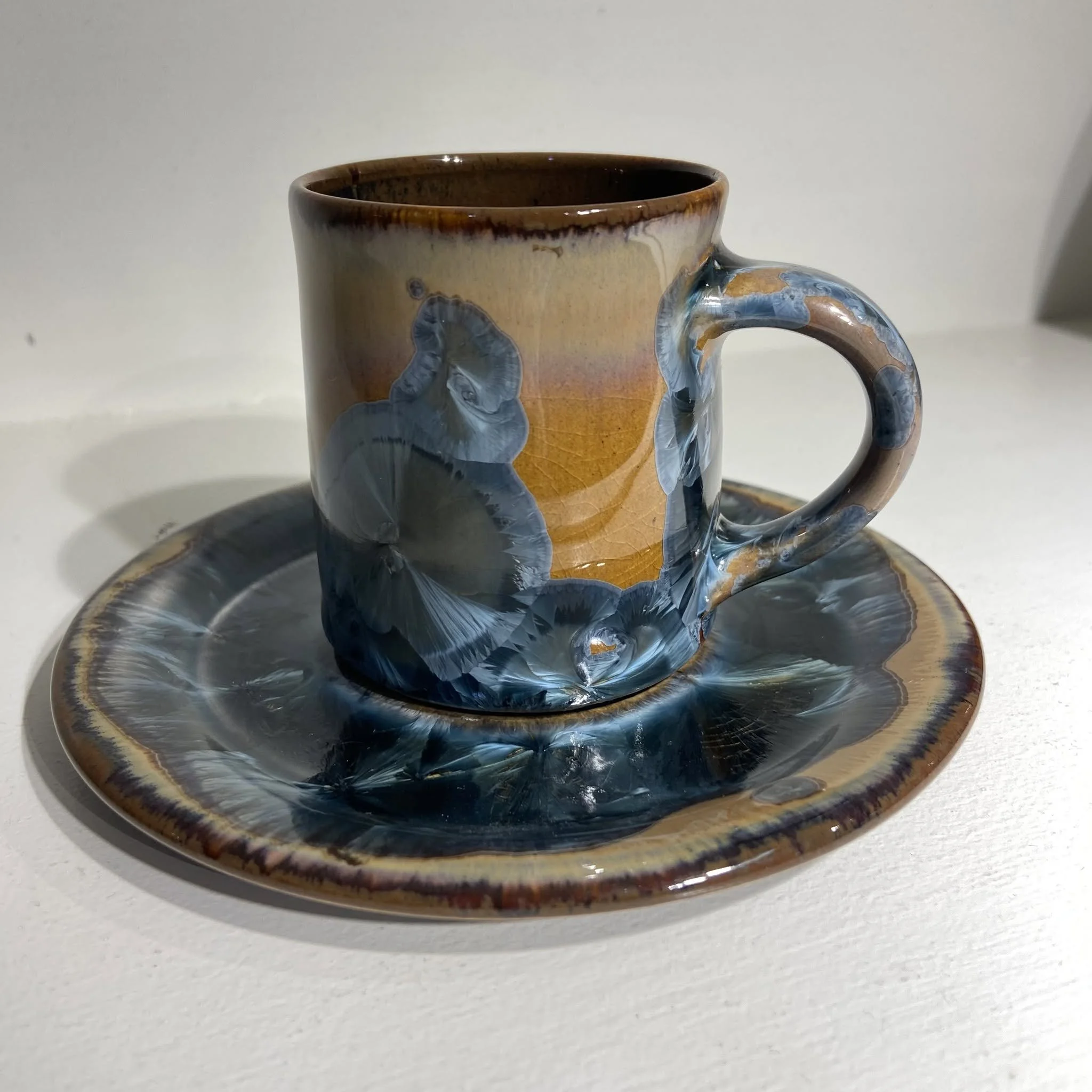
JD: The blue and rust-orange combination created by nickel oxide is definitely one of the stars of the show. It’s a striking combination, and its exact cause is still not completely understood. The generally accepted explanation is that nickel ions enter the crystal lattice and give the zinc silicate crystals their distinctive blue color. The rust-orange background develops in the surrounding glassy matrix, where the chemical environment is different. I don’t pretend to understand every detail of the chemistry, but I absolutely love the result.
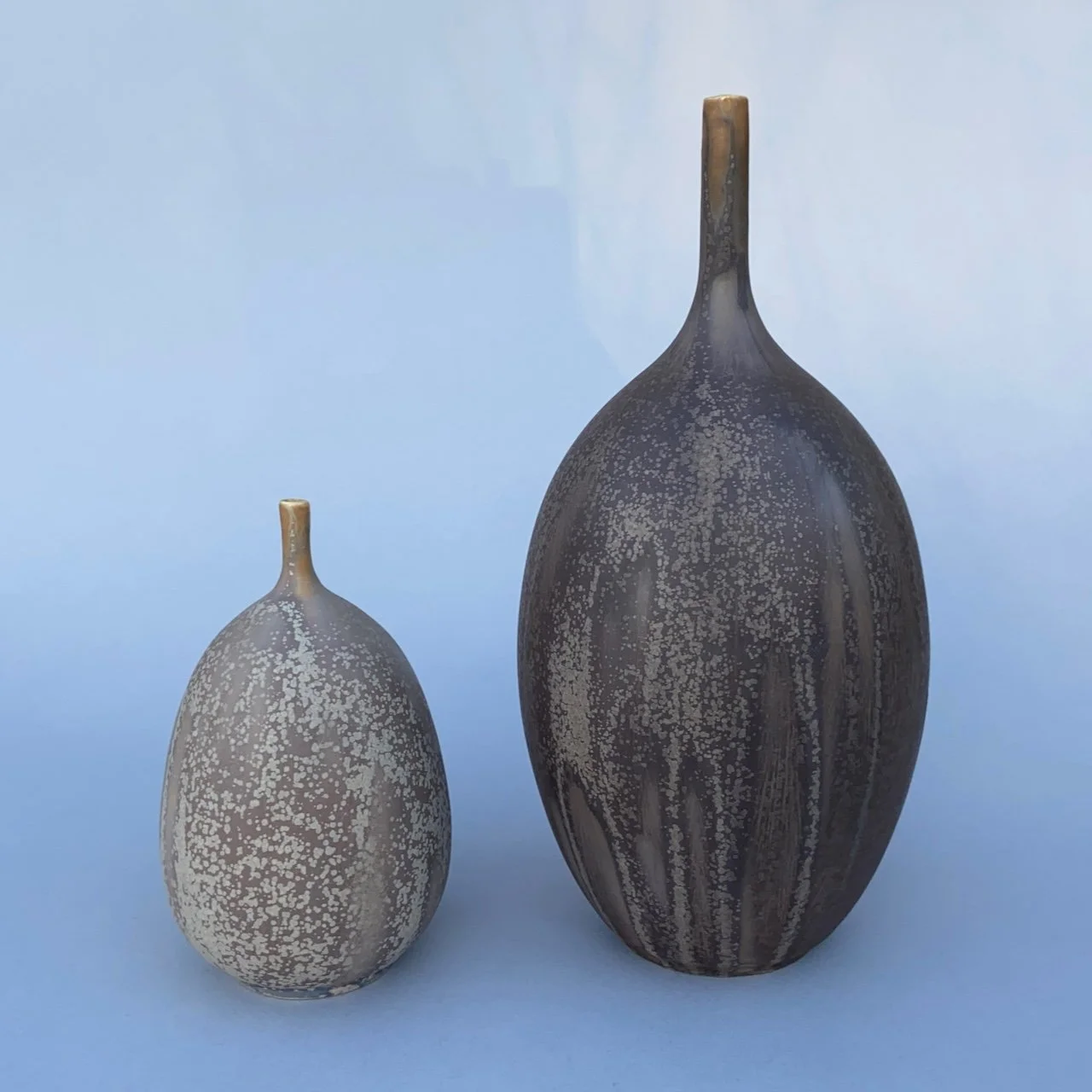
AAS: You have pieces glazed in gold and brown, and the surface looks almost like the rings of a tree. They are very striking—almost like wood turnings. What is the process here?
Gold Brown Cut-Out Vase, porcelain, 12” x 9”
JD: The gold and brown colors come from iron oxide. Iron is incredibly abundant—it makes up roughly one-third of the Earth’s mass—so it’s not surprising that it has been one of the most widely used ceramic colorants throughout the history of pottery. Depending on its concentration and how it is fired, iron can produce everything from pale blue and clear green to a wide range of tans and browns. In zinc crystalline glazes, it typically produces brown and gold tones.
What I especially love about iron is that it can also create secondary crystals in the background, adding incredible depth and complexity to the surface. The growth rings are something different. They are created by the different hold or soak temperatures during the cooling cycle.
Many ceramic glazes benefit from what potters call a “slow cool,” where the kiln cools gradually rather than simply being turned off. Crystalline glazes require a more precise approach. The kiln is often dropped quickly to a lower temperature and then held there for an hour or two. The rings you see are actually formed by the growth character of the crystals at different holding temperatures.
AAS: You are also making more abstract pieces. I think with these pieces, the crystalline glaze works so well to create an object that is both organic and inorganic. Are you planning to continue with this style of vessel?
Medium Green Mini, porcelain, 5” x 3”
JD: Absolutely. That’s my dream, although it’s challenging. Crystalline glazes emerged in the late 1800s and have traditionally been developed on classical shapes with smooth curves and broad surfaces that allow the crystals to grow. The crystals are so spectacular that they naturally want to be the star of the show. As a form becomes more abstract or complex, it can begin competing with the crystals, creating a tension that doesn’t always work.
I have plenty of pots in my studio that were attempts to push that boundary and ended up being, frankly, pretty ugly. It’s tempting to retreat to the tried-and-true shapes that people respond to and buy. But I’m still trying to push boundaries to find new forms and glaze combinations that make my heart happy when I experience them! I’m especially happy with my new “Floating Foot” design for small vases and coffee cups. It feels like a small step in the right direction, and I love the way the glaze collects around the foot.
AAS: What is your studio like in Bella Vista? Do you teach any pottery classes? And how much time do you spend preparing for and traveling to art fairs and markets?
JD: I love my studio. We live in a three-bedroom house in Bella Vista on about half an acre, with a three-car garage. My wife graciously gave me half of it to turn into a studio. It’s only about 50 feet from my kitchen to the studio, so I can walk out there in my Birkenstocks and pajamas whenever I want. It doesn’t get much better than that!
I have two wheels, two electric kilns, and all the glaze materials and equipment I need. We also have grandkids running around a couple of days a week, and my daughter Carly works with me whenever she can. It’s a very satisfying situation, and I’m extremely grateful for it. Five minutes down the road is the Wishing Spring Gallery, where much of my finished work lives between art fairs. Behind the gallery is The Clay Studio, a small community studio where I have taught a wheel class every Tuesday evening since 2022.
When I was working in Arizona in the 1980s, about 80 percent of our income came from art fairs, with the rest coming from seven galleries that carried our work. We traveled almost every weekend during July and August throughout Colorado, and again every weekend during October and November throughout Nevada, California, and Arizona. It was quite an adventure for a young pottery family.
Now that I’m a little older, I don’t do nearly as many shows. Carly and I especially enjoy the AMFA Art Market and the Crystal Bridges Art Fairs each fall, along with a few smaller shows. We’ve also been blessed with strong gallery support, and we’re working to develop more direct sales from the studio.
AAS: What does the next chapter look like? Are there any exciting projects coming up?
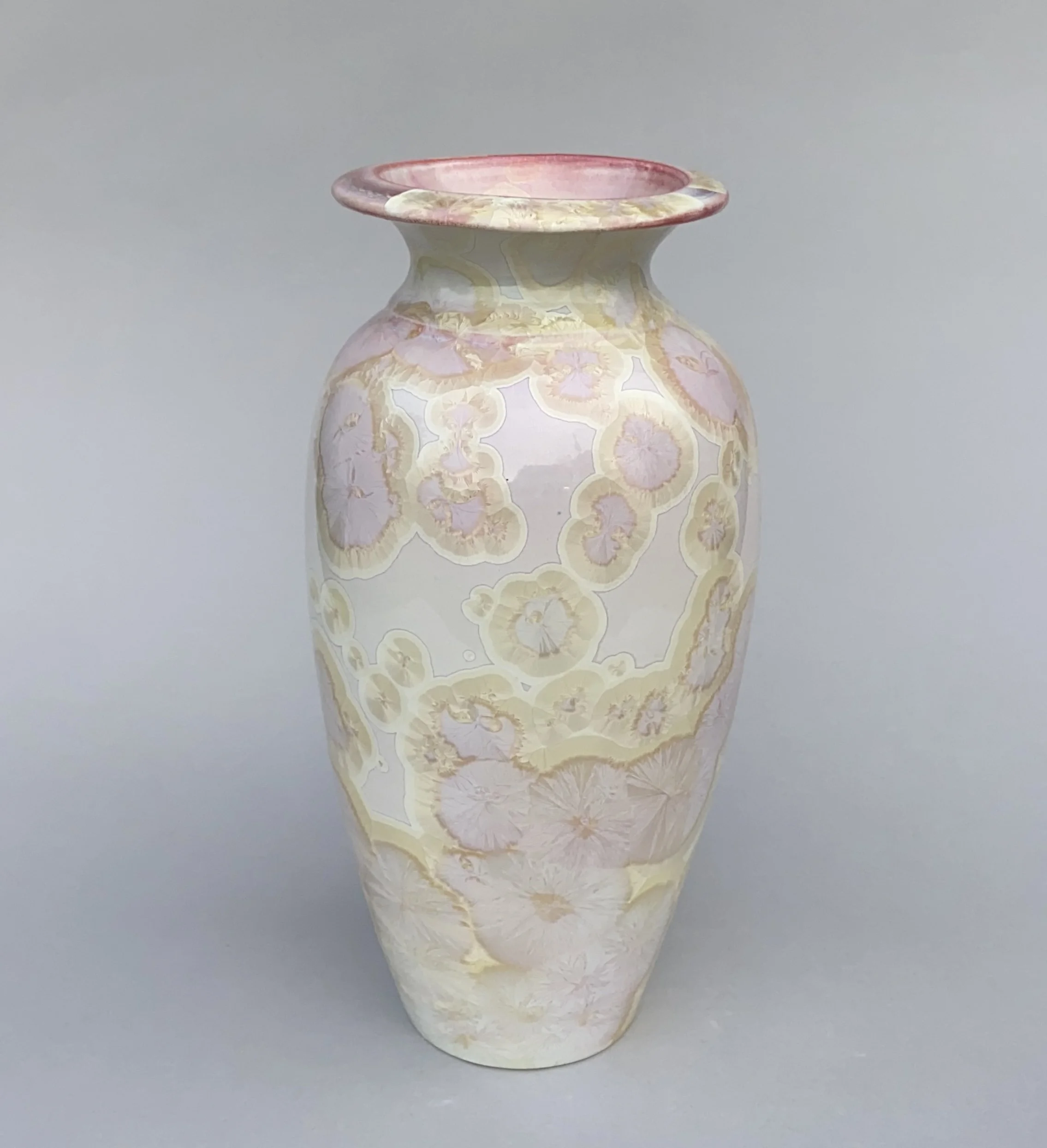
JD: I’m exploring more crystal matte glazes, which have a luxuriously soft look and feel. They are very different from the shiny zinc-silicate crystalline glazes I’m known for. The crystals in the matte glazes are much more understated, which opens up some exciting new possibilities for the relationship between glaze, form, and texture. I’m enjoying the challenge of seeing where that can take me.
White Matte Vase, porcelain, 3” x 2”
There’s also a funny story behind one of my old glazes. Back in the 1980s, I had a matte glaze I absolutely loved that used Kingman Feldspar, a material that is no longer available because the mine closed more than 30 years ago. When I returned to pottery, I tried repeatedly to recreate the glaze with modern materials but could never quite get it right.
Then, about six months ago, I reconnected with a dear old potter friend. When I closed my pottery in 1985, I had given him many of my materials, including 50 pounds of Kingman Feldspar. He had kept it stored in the corner of his studio for nearly 40 years. He gave it back to me, and—voilà!—I have my old glaze again. Now I just have to figure out what I’ll do when I run out!
Beyond the glazes and the pottery itself, I’m excited about the possibility of passing some of this along. I would love to teach my daughter more and watch her develop her own style. And maybe, someday, I can put a few of the grandkids to work in the pottery so they can earn a little extra money. There are still plenty of things I want to explore, and that makes this next chapter especially exciting. I’m looking forward to seeing where it takes me.