Interview with artist Robbie Brindley
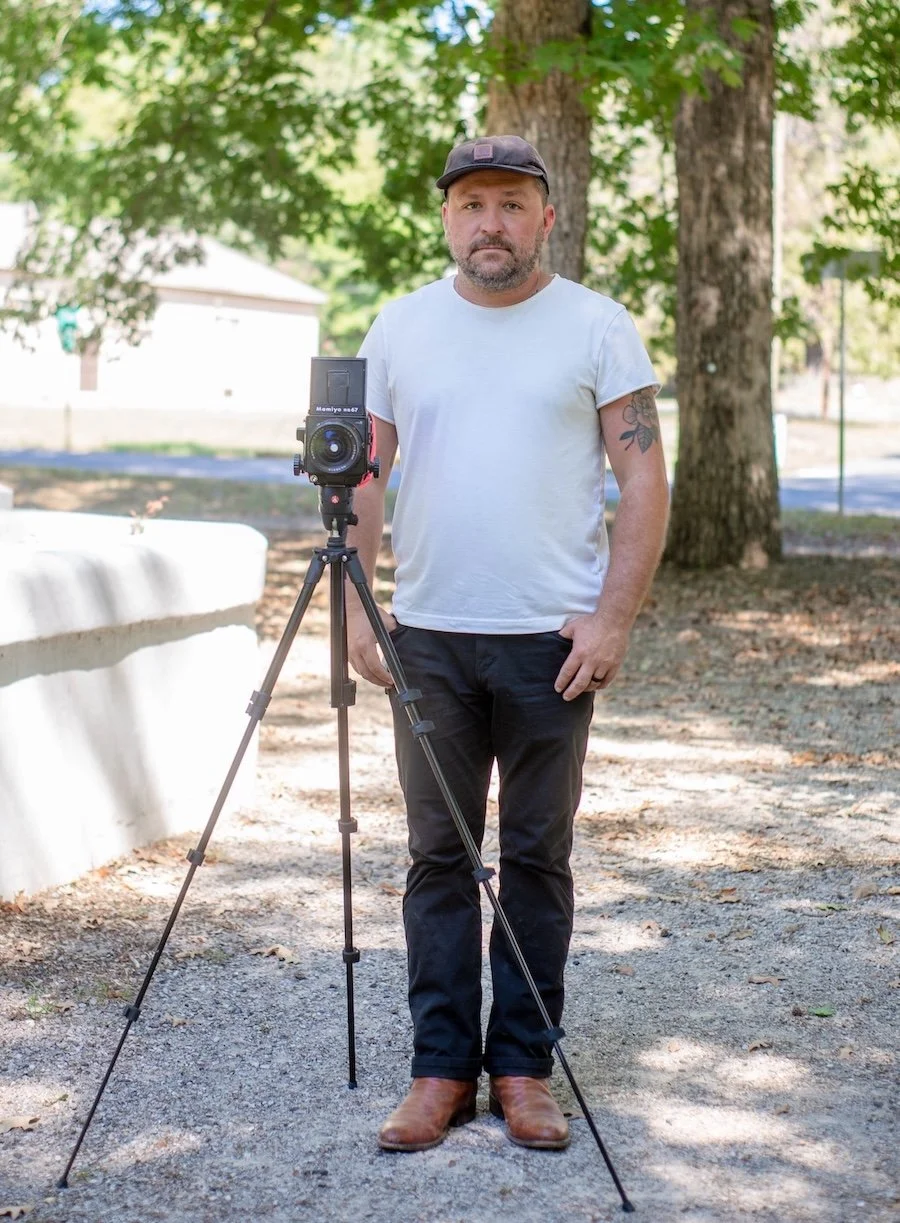
Robbie Brindley is a Hot Springs, Arkansas photographer who enjoys capturing the area landscape. He believes his photographs are a celebration of the unique places and people where he grew up and now lives. His photographs are poignant, emotional, and introspective. More of Robbie’s photographs can be found at Justus Fine Art Gallery in Hot Springs and at his Instagram. (Profile photo by Jando Martinez)
AAS: Robbie are you an Arkansas native?
RB: I was born and raised in Hot Springs. I went to a tiny grade school in a small logging town called Mountain Pine, just on the outskirts of Hot Springs until I got home schooled around the 6th grade. I think those formative years in a logging town definitely shaped the things I’m interested in and have greatly influenced my work and love for nature.
AAS: When did you develop an interest in photography? Did you have any artist role models growing up?
RB: I’m not really sure. I didn’t really have any role models in my family. The only artist I knew was a cousin who played in a few indie bands like Modest Mouse and others, but he lived in Seattle. I’d see him every now and then, and it kind of showed me that artistic side of the world, something other than blue collar people or sports. So, I was exposed to creativity, in that sense, when I was fairly young. When I was 16, I got in trouble for skateboarding and my probation officer had gone to school for photography. Oddly, we hit it off and liked each other. He took a portrait of me with a peel-apart Polaroid for my juvenile record file, and he encouraged me to go to school for photography or some kind of visual arts. I enrolled in a few darkroom classes at National Park Community College and enjoyed my instructors and the tangible side of learning about shooting film. One of my instructors, Ted Felton, was probably my first artist role model. He was really into 4x5 film and that process. He seemed familiar to me in the sense that he wore flannels all year, hunted and fished, but also knew a lot of technical stuff about photography and equipment.
He really pushed me hard to have a work ethic as a photographer. I remember one time he rolled his Toyota a few times on the way to teach class and was still the first person in the darkroom before all the students got there. That sort of work ethic and attitude reminded me a lot of my childhood in Mountain Pine and the people there, but it also mixed in this new photography and art side of the world I’d never really been part of. So, I felt a connection, and I looked up to him and listened closely when he spoke of photography.
AAS: You capture images on film using a medium format camera. Tell me about that camera.
RB: I use a Mamiya RB67 medium format camera. It’s the only camera I have. We’ve been through a lot together. A few years ago, while I was shooting in East Arkansas, the wind blew it over while it was sitting on the tripod and smashed the lens into a rock. That basically welded the filter onto the lens. But I busted the glass out with a wrench and rolled on. These models have a rotating back so the exposure can be vertical or horizontal, but mine, of course, has severe light leaks. Once I put in a new roll of film, I have to tape all around the back so no light gets in and ruins the film. This also dictates the composition of my work. I wanted it in a certain position for one shot, but couldn’t rotate the back for a different shot, so the big sky accidentally became a thing associated with my work, I guess. Out of habit, now it’s the position I lock it in when I put in a new roll of film and before I tape it shut. I let my daughter choose which color the tape on the back should be. Right now, it’s pink.
“You can feel the film wind and feel the mirror slam. I think it just has a little more soul to it than digital photography. Taking the time to do what I’m doing, makes me appreciate it that much more.”
AAS: Did you ever use digital photography? What is it about the larger format film and the set up process and developing that you like?
RB: I used digital for a long time after getting out of school. I used it for commercial or editorial work. I also filmed music videos and shot album covers and stuff like that using digital. One time, I was shooting a music video for a musician, and we got caught in a thunderstorm up on a mountain. Basically, all my digital gear got ruined up on that mountain that day. I took it kind of as a sign from God. At the time, I wasn’t all that happy and wasn’t really producing work that spoke to me. I was just trying to use it as a means to make money and scratch some creative itch. After that, I really downsized my life and a lot of the gear I used. I landed on this one camera, and I’ve been shooting with that ever since.
I like shooting medium format because it’s close to what I learned to use in school. The image is backwards when you look in the viewfinder. That can be disorientating so I need a tripod. But I like setting it up on the tripod and really taking my time. It’s all a much slower process. I suppose it’s the difference between taking a photo and making a photo. It feels much more like an art form in that way. You aren’t just snapping a photo. You’re really taking a moment and composing a photo. It just feels more meaningful as far as that goes. You can feel the film wind and feel the mirror slam. I think it just has a little more soul to it than digital photography. Taking the time to do what I’m doing, makes me appreciate it that much more.
AAS: In 2021 you published a book of photographs under the title Kudzu and the Usual Erosion. I was raised in south Louisiana and know kudzu well. Where did the idea for that series of photographs originate?
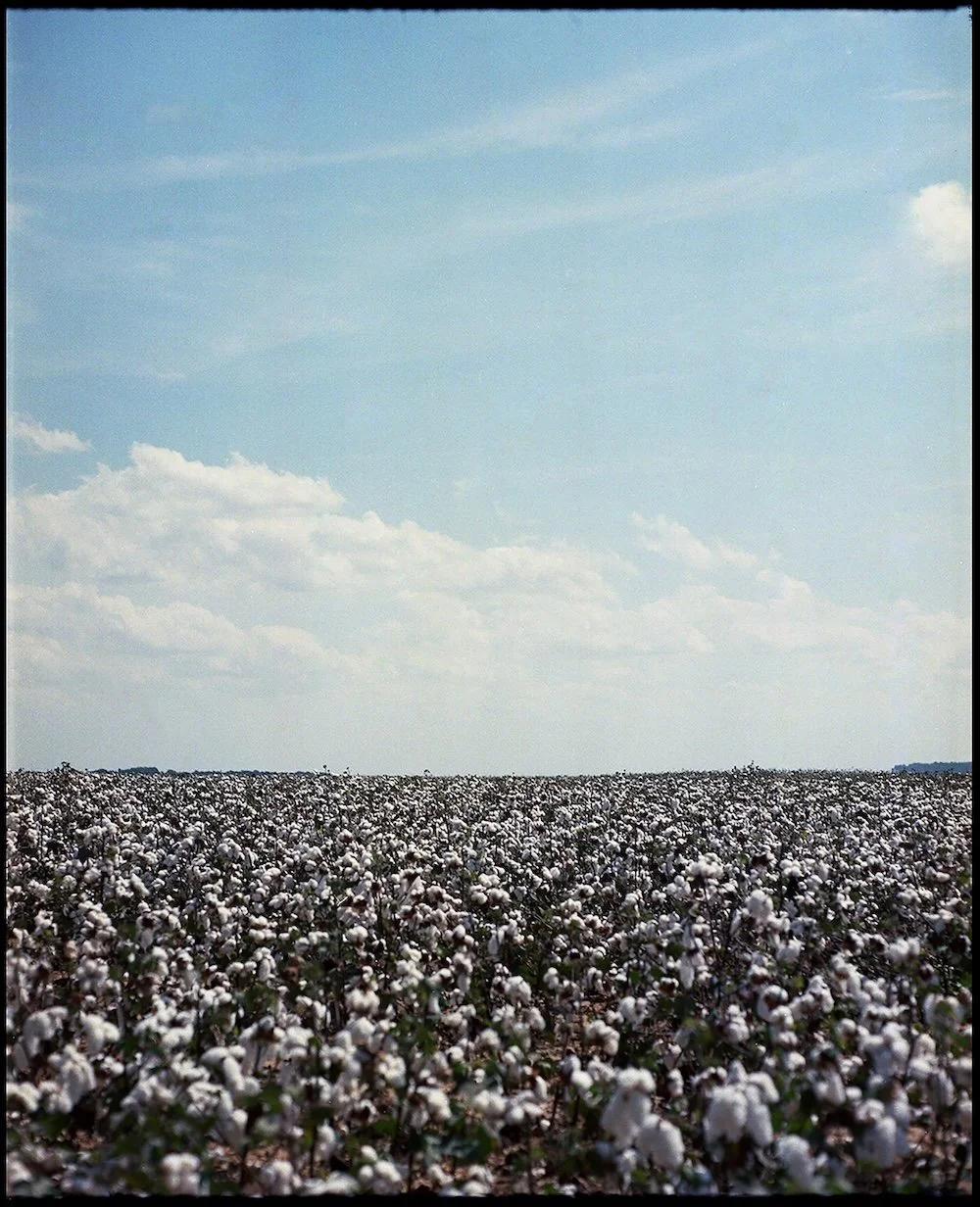
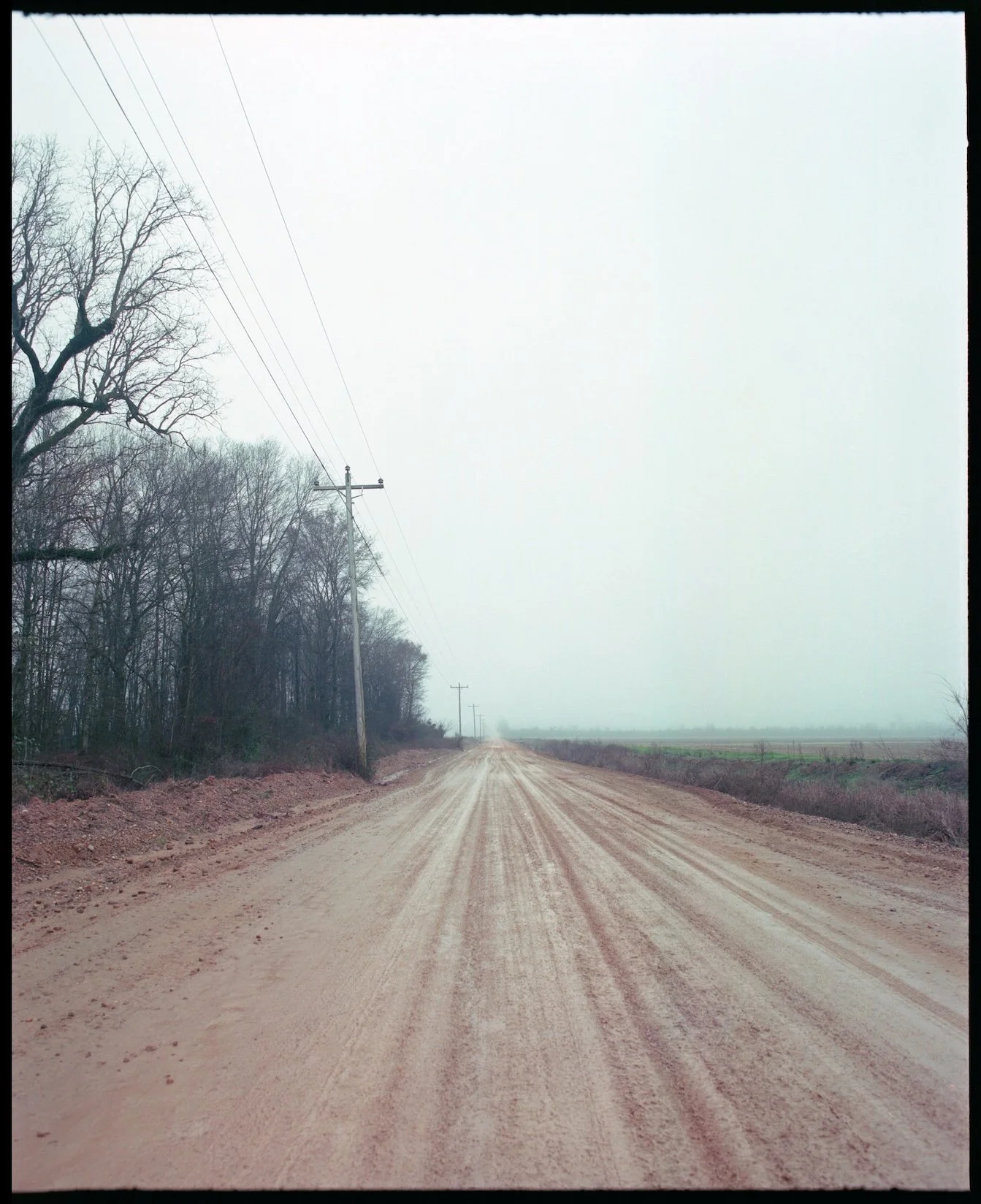
RB: I was probably just inspired by what Matt White and Beverly Buys were doing. I’ve always been drawn to the Delta. Being from Hot Springs, we have a lot of trees and mountains, so the distance you can see is limited. I remember being a little kid, riding in the car on the way to Florida for family vacation and seeing that for the first time. That area of the South is the closest thing we have to the desert here. The horizon just goes on forever. It’s an area I’ve always been drawn to.
For Kudzu and the Usual Erosion, I was exploring that land and, in a way, the people who live there. I was exploring myself and why I am what I am because of locality. They live a very simple and quiet life, something that we all know to a certain extent. I am of these people, and these photos are always a celebration of these people and basically small-town American South. I try to make photos of what exemplifies the things I find beautiful about where I live, where I am, and where I’m from. There are a lot of things across the South that are unique to this landscape, and I want to capture that and pay homage to these people and places. I know these people and these places, I see these people at my sewer job every day and am friends with them. Not too many people recognize these people or places, but to me it’s everything. It is who I am and what I find endearing about living where I do.
AAS: You have exhibited your photographs widely and in fact I remember Gethsemane, AR, the book cover photo, was in the 62nd Annual Delta Exhibition. Tell me about that dramatic photograph.
Gethsemane, AR
RB: I set out on a day I knew there was a chance of strong storms. I feel like thunderstorms are a special part of being in the south. Not unique to it, but part of something we live with. I knew a decent storm photo was something my project needed because of that. It also felt like a storm was a good addition to my southern theme in the project. There is also an underlying feeling of violence in the Delta. Its history is complicated. As beautiful as it is, the history of racial violence connected to a political struggle of land and rights, seems to haunt it. In the foreground, you have a thriving field, a commodity, someone’s life work. Behind it, this big storm, lightning hitting the ground with the threat of it all being erased or at the least, damaged. The fragility of life felt really represented in that particular photo to me. The entire idea that we succumb to mother nature and are taken back by the land is visually represented especially in that part of the state. It’s a fascinating part of the country, and I felt like I had to spend time with it to try and better understand it.
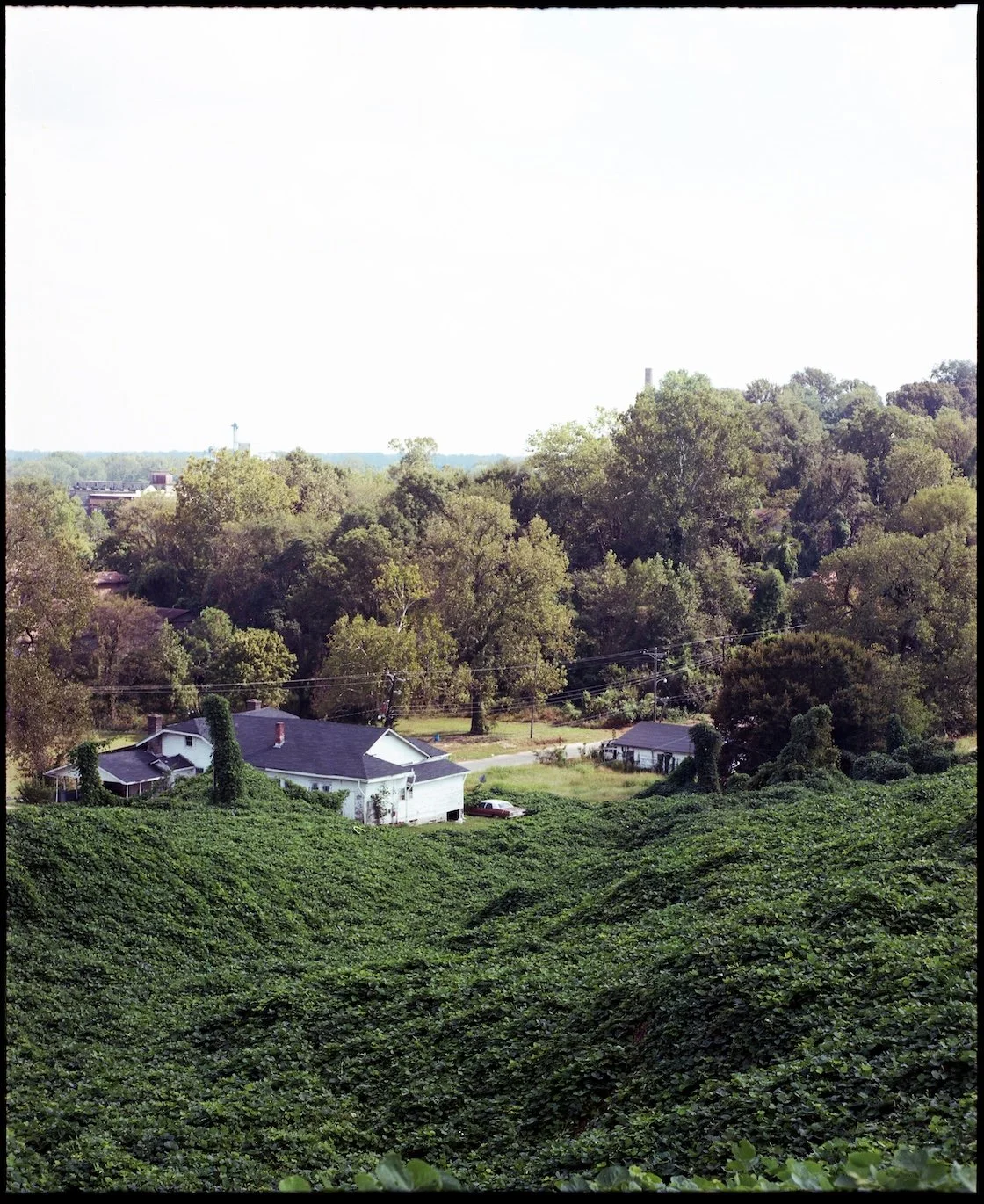
Black Springs, AR
AAS: I have to say that in the photograph Black Springs, AR the kudzu elevated what must have been an ugly old silo into a beautiful sculptural totem.
RB: I’ve always loved when someone has a car parked in their yard, or another object. It’s sat there for decades, and nobody moves it or anything. They still mow and weed-eat around it. Some of this stuff almost just feels like yard ornaments to a certain extent. In the Black Springs photo, it’s a similar situation. Everything is pretty maintained around it. It almost seems intentional to me, and that makes it very odd and funny to me. But at the bottom of the silo, you can see that they recently cut it, as if to make a last stand against nature.
US 165, AR
AAS: In contrast, US 165, AR shows more of the stark, parasitic nature of kudzu. I love the way the color enhances its evil, almost vampiric, nature.
RB: That's right. I took that photo late in summer. A very hot August day. With these photos, I tried my best to incorporate the weather of the Delta in it as well. You can see the haze and how thick and hot the air is. I remember taking that on a day I hadn’t really pulled over to shoot a ton of photos, but this caught my attention. A completely flat landscape, but one telephone pole completely taken over, demanding your attention in this bare landscape.
AAS: I do love the way you use exposure to transform what might be an interesting but conventional photograph scene into fine art. I am thinking here especially of Clark County, AR as a good example of that.
Clark County, AR
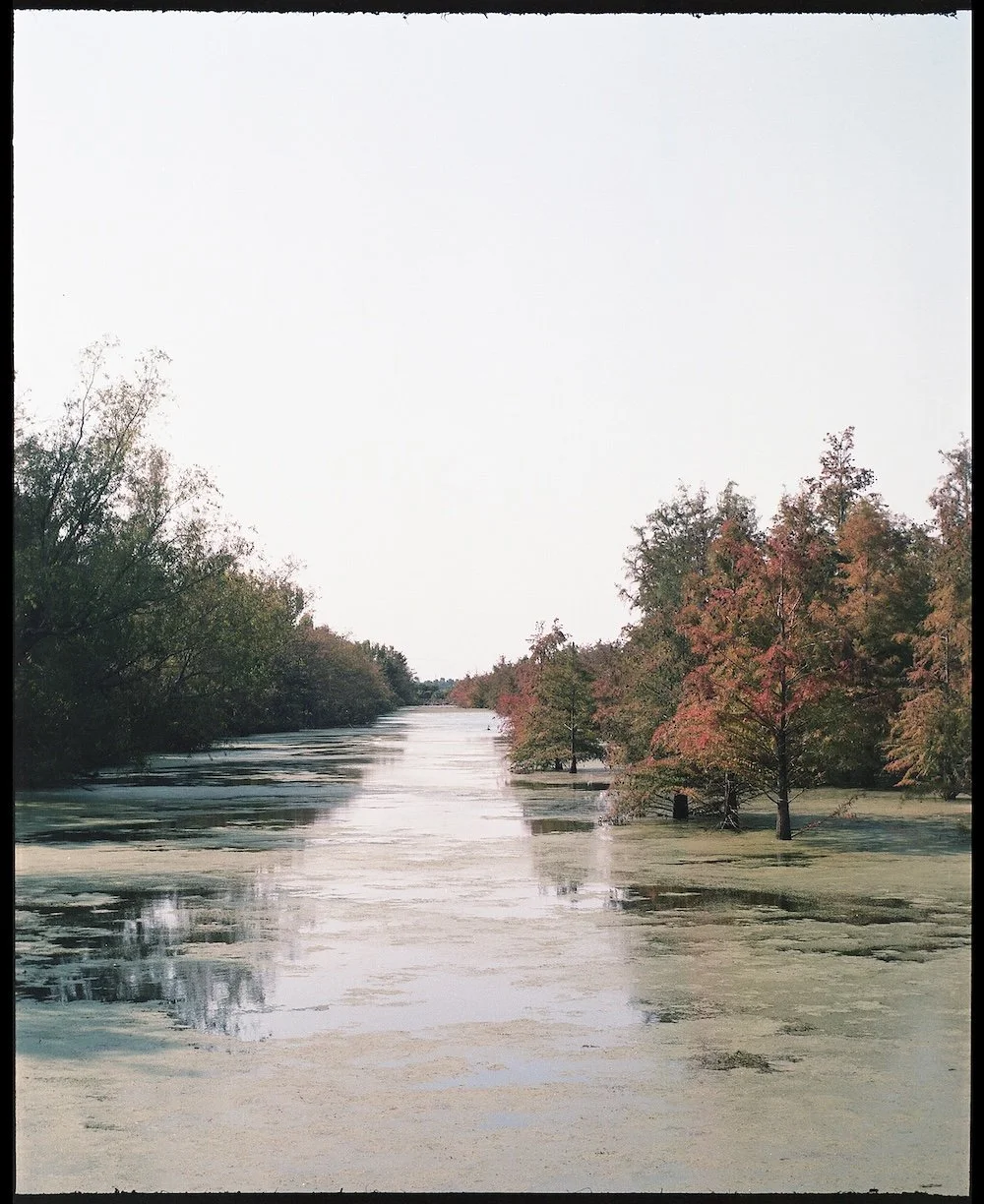
RB: That is kind of you to say. My exposures are usually one or 2, maybe 4 stops overexposed, especially if I’m shooting in Arkansas. I think it helps me represent the heat and humidity that we live with day to day. I also like shooting on expired film because you get a little less color, and it’s kind of dull. I try to take a reading on my light meter in the shade, then I’ll take one in the sun and meet somewhere in the middle of those in order to not blow out the highlights and not underexpose the shadows. I like some contrast, but I’ve been drawn to flatter exposure across the board. I’m not all that technical, though. I don’t know that much about photography. I just sort of do the exact same thing over and over usually. With Clark County, that actually is a spot I return to randomly. It’s just at a campground on lake De Gray. I overexposed it by a few stops to make the fog more apparent, and to blow it out a little more. I don’t like my photos that much usually, but I’m pretty proud of the minimalism in that one.
AAS: Are your shots mostly spontaneous or do you do most of your scouting first then return later to shoot?
RB: My photos are usually spontaneous. I know I went back to a few locations a few times when I was doing my first book, but that was mostly due to my mistakes. I was usually setting out with a destination in mind and drive. I’d pull over if I saw something, but sometimes there were a few things I knew about. There are also times where I am out driving and don’t take a single photo. A lot of my work is just stumbling forward, finding something unique along the way that I feel represents what I like about where I am.
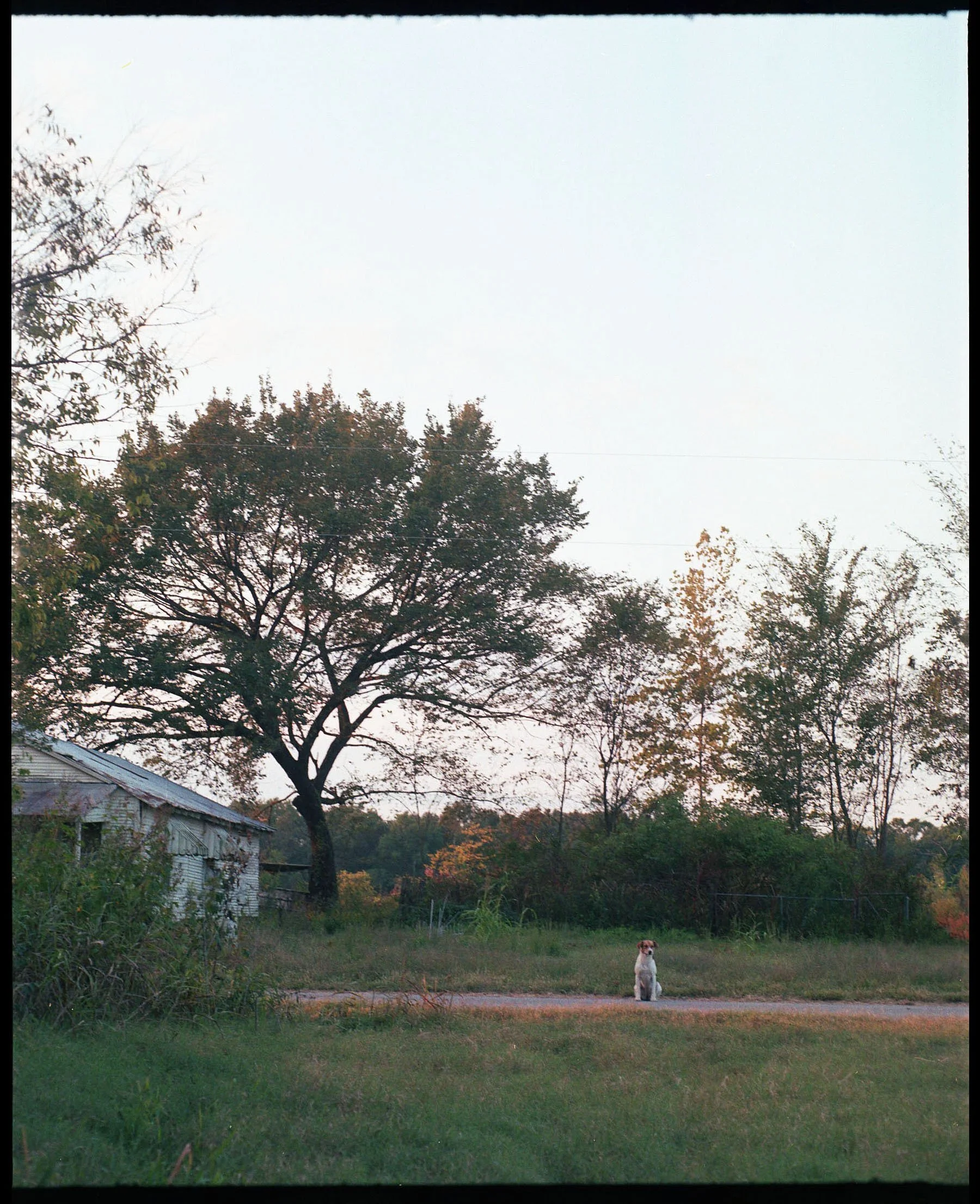
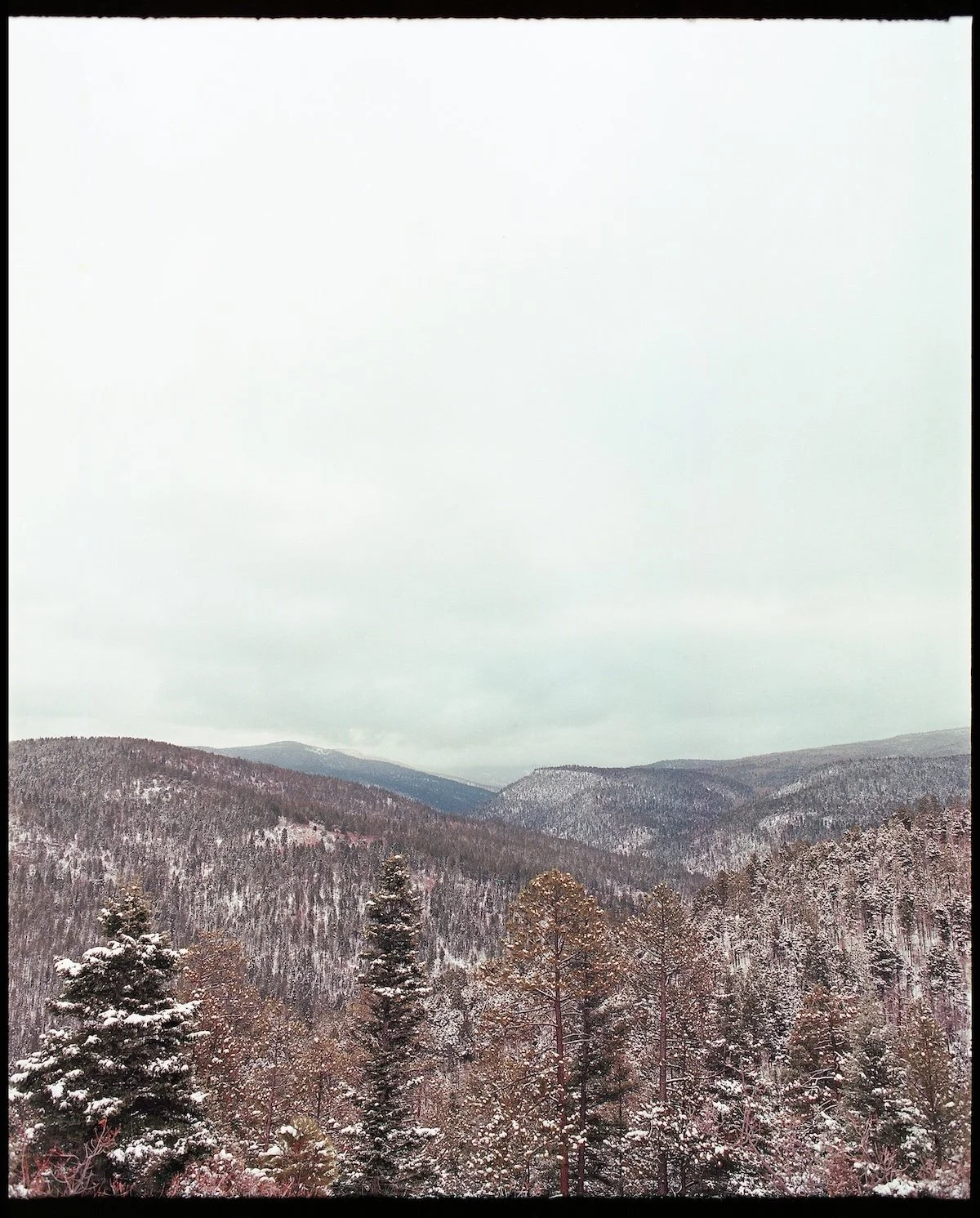
AAS: Of course, the Delta landscape is not your only subject. You have some wonderful photographs of the mountains in New Mexico. Taos, NM is one of my favorites. That dog!
Taos, NM
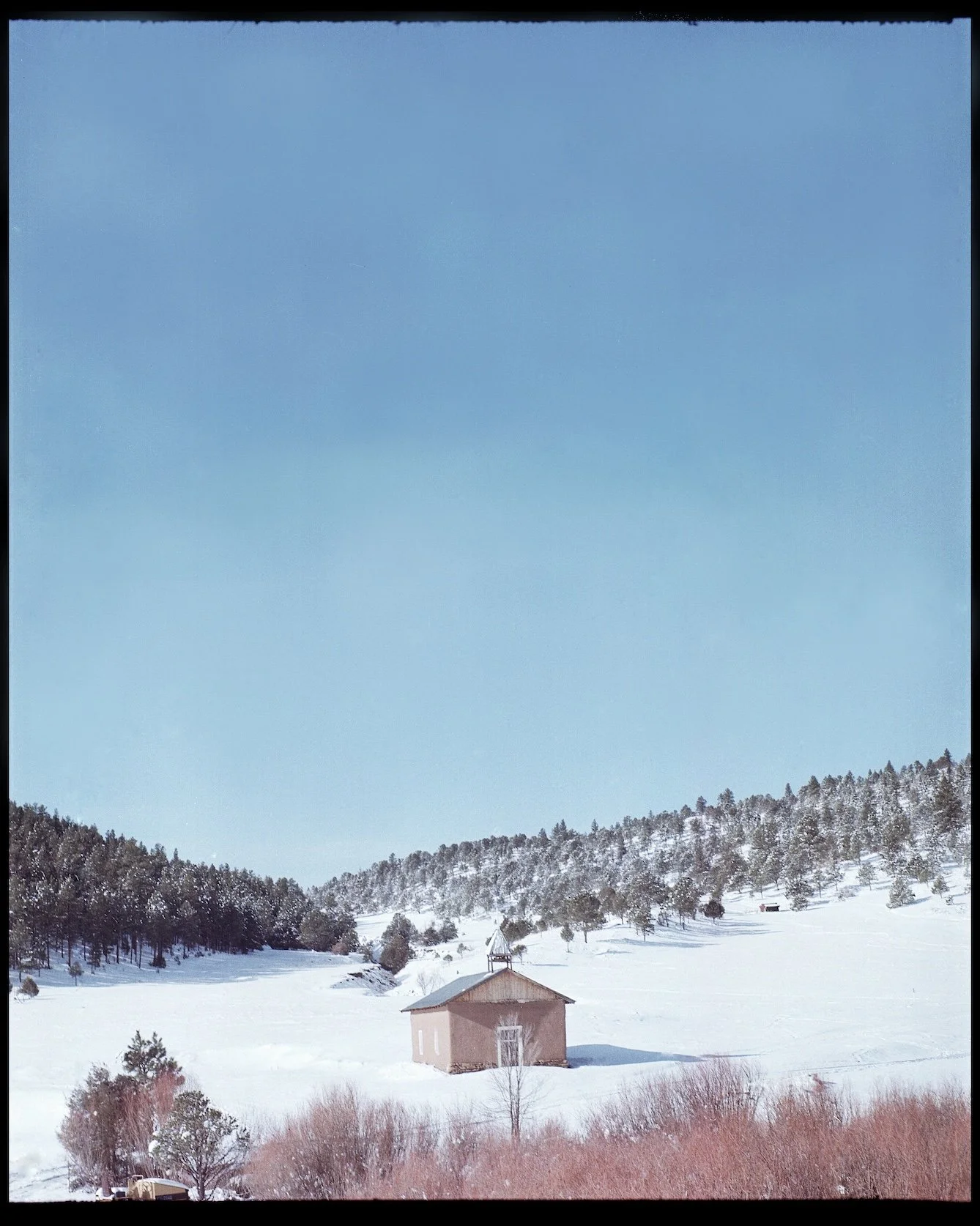
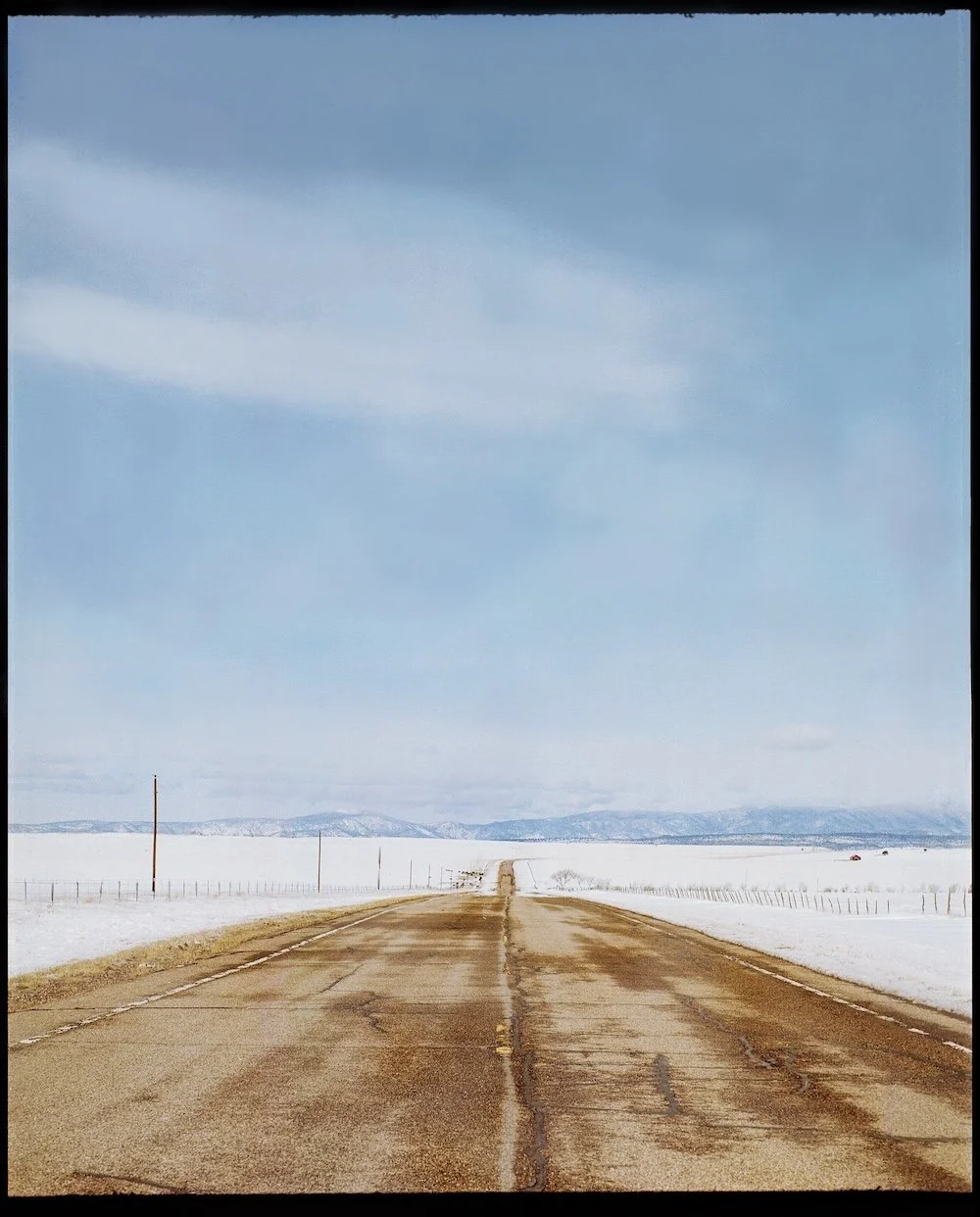
RB: Thank you! I have an infinite love for New Mexico. New Mexico just has a certain color palette and definitive landscape that I’m drawn to. The big sky and endless horizon is something I just can’t seem to shake. It’s just not something in my day to day life where I live. The composition of my photos really helps with the hyperbolic idea of a big sky. Personally, it represents loneliness too, feeling small. It’s hard to not feel tiny when you’re surrounded by vast desert and sky that just goes on forever. Exaggerating that has been useful and something that’s normal in my work now.
AAS: Robbie, do you have any projects in the works you can talk about?
RB: I’ve been slowly working on a project that incorporates all of Arkansas. I plan on it being another book. I’m going to parts of the state I’ve never explored and trying to expand on what I’ve already been shooting. So, when I’m able, I've been setting out to North Arkansas and some areas like that. It’s been a slow go of things though. My daughter just turned 3, I’m trying to spend as much time with her as I can while she’s still willing to spend time with me. So, the road trips and taking photographs has taken a backseat a little bit. Photography projects will always be here, she won’t. I’ve been really taking my time on it and trying to have fun again.