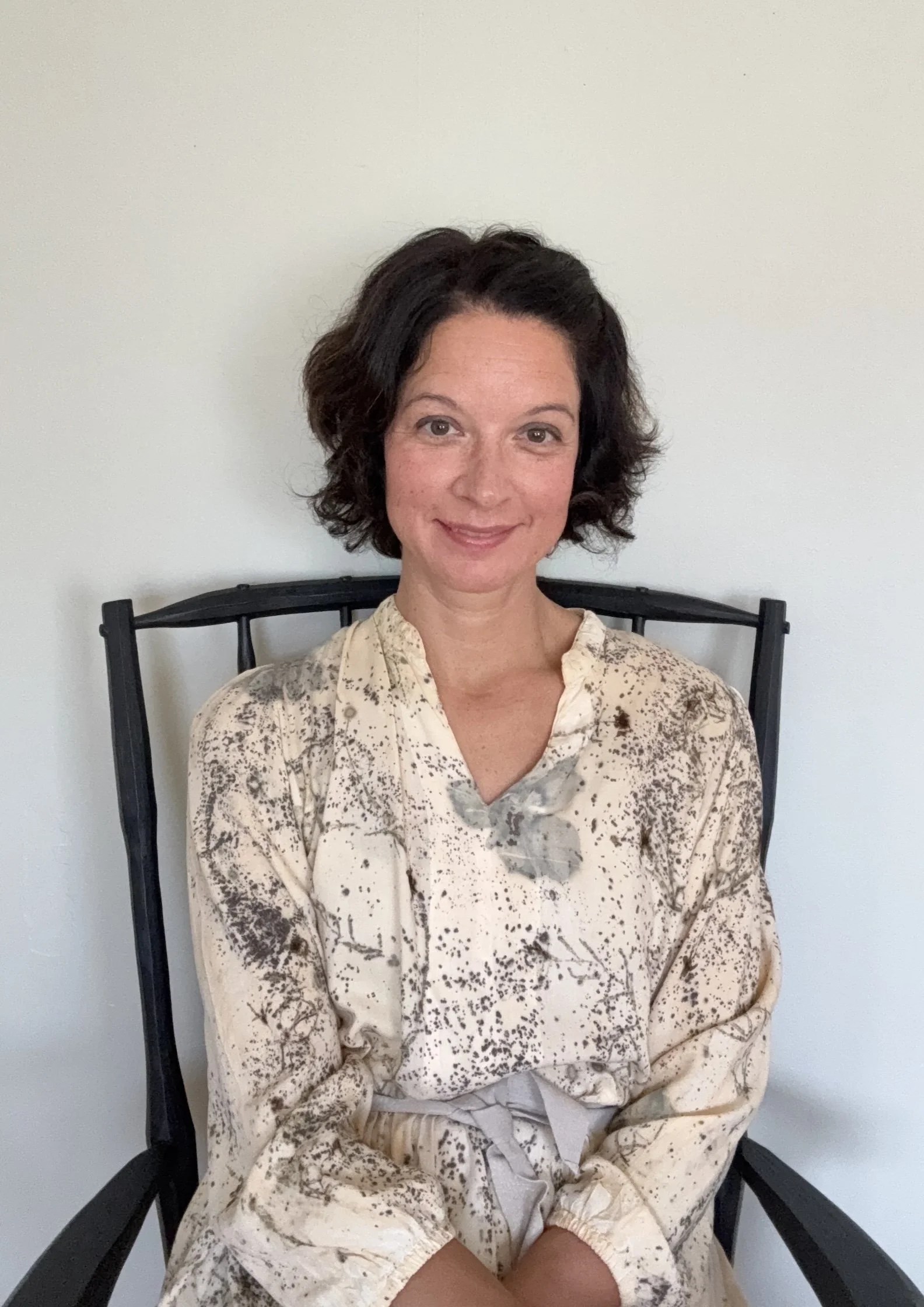
Interview with artist Caroline Millar
AAS: Caroline, are you an Arkansas native?
CM: I grew up in Indiana but have lived in Little Rock most of my adult life. I attended the University of the South for my undergraduate degree and moved to Little Rock in 2002 to join the editorial team at the Oxford American. When the magazine lost funding, I worked as a freelance writer before taking a position as assistant director of the Main Street Arkansas program. During that time, I earned my master’s in Public History/Museum Studies at UALR. For the next 15 years, I worked as a curator and researcher, mostly for the Arkansas Made Project at the Historic Arkansas Museum.
AAS: When and how did your interest in printmaking develop?
CM: I came into this mid-life. Although I’ve researched and studied Arkansas art and craft most of my career, I never saw myself as creative. But life circumstances pushed me in a different direction a few years ago. During COVID, I hit a rough patch that involved state funding cuts, family losses, and a host of health problems.
During a low point, I started learning traditional block printmaking from Melissa Gill and cyanotypes with Margo Duvall. Both Melissa and Margo influenced me a great deal, and I will never forget the first time I made a cyanotype. I was recovering from surgery in the dead of winter and wanted to make a print of flowers I’d pressed from the farm where I grew up, which was slated for demolition at the time. I hoped to make a memento of a place that was soon to vanish. But what emerged during that first wash transcended any personal attachments I had to those plants; the print was like a portal into an underworld. The feeling that I’d tapped into something, along with the adrenalin rush, hooked me instantly.
After working with cyanotypes for a year, I began exploring other methods of printing with organic matter. I enrolled in an online botanical printing course with Irit Dulman, an artist and designer from Israel. Her work and teachings inspired me to leave my job and practice botanical printing full-time.
AAS: Tell me about botanical printmaking.
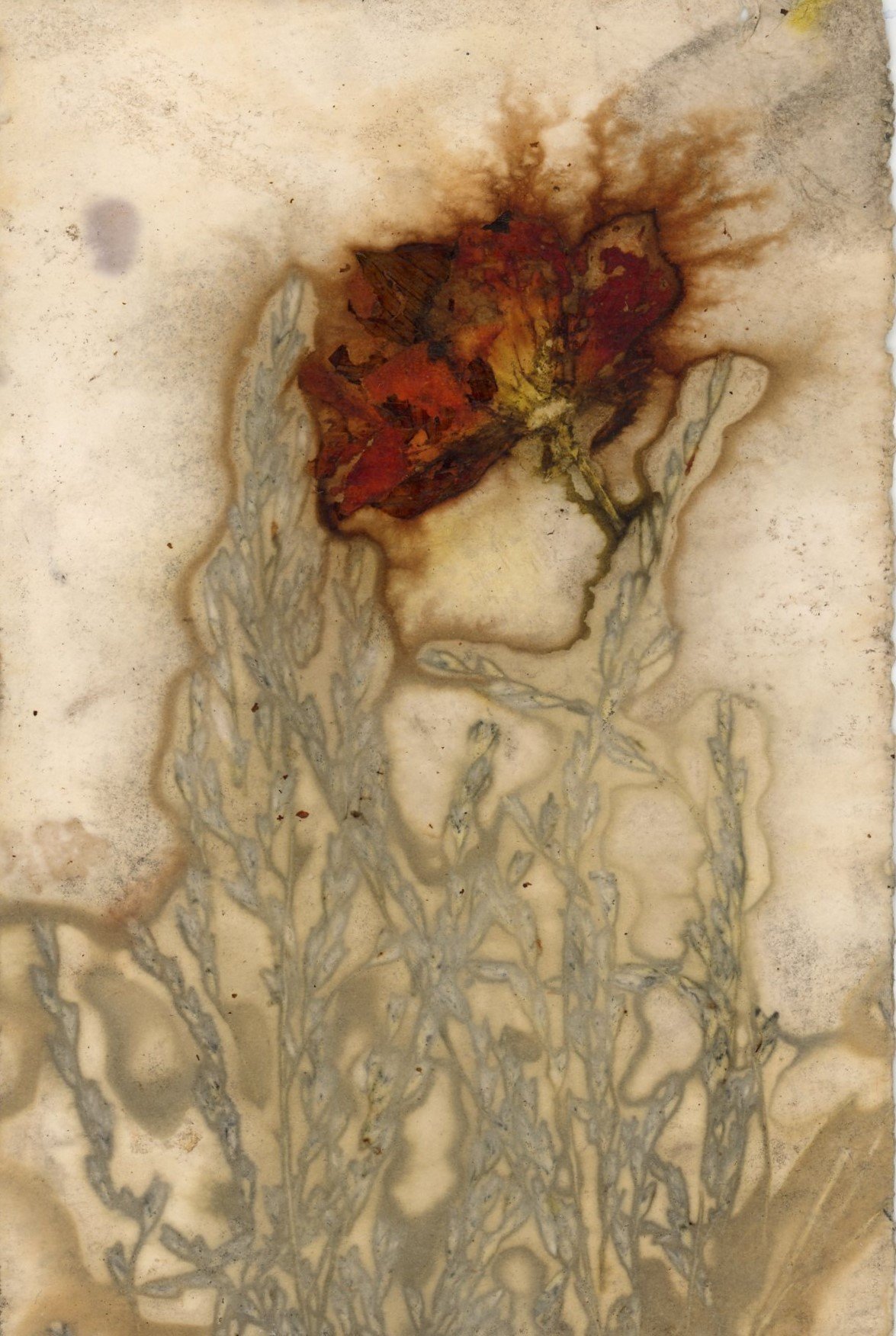
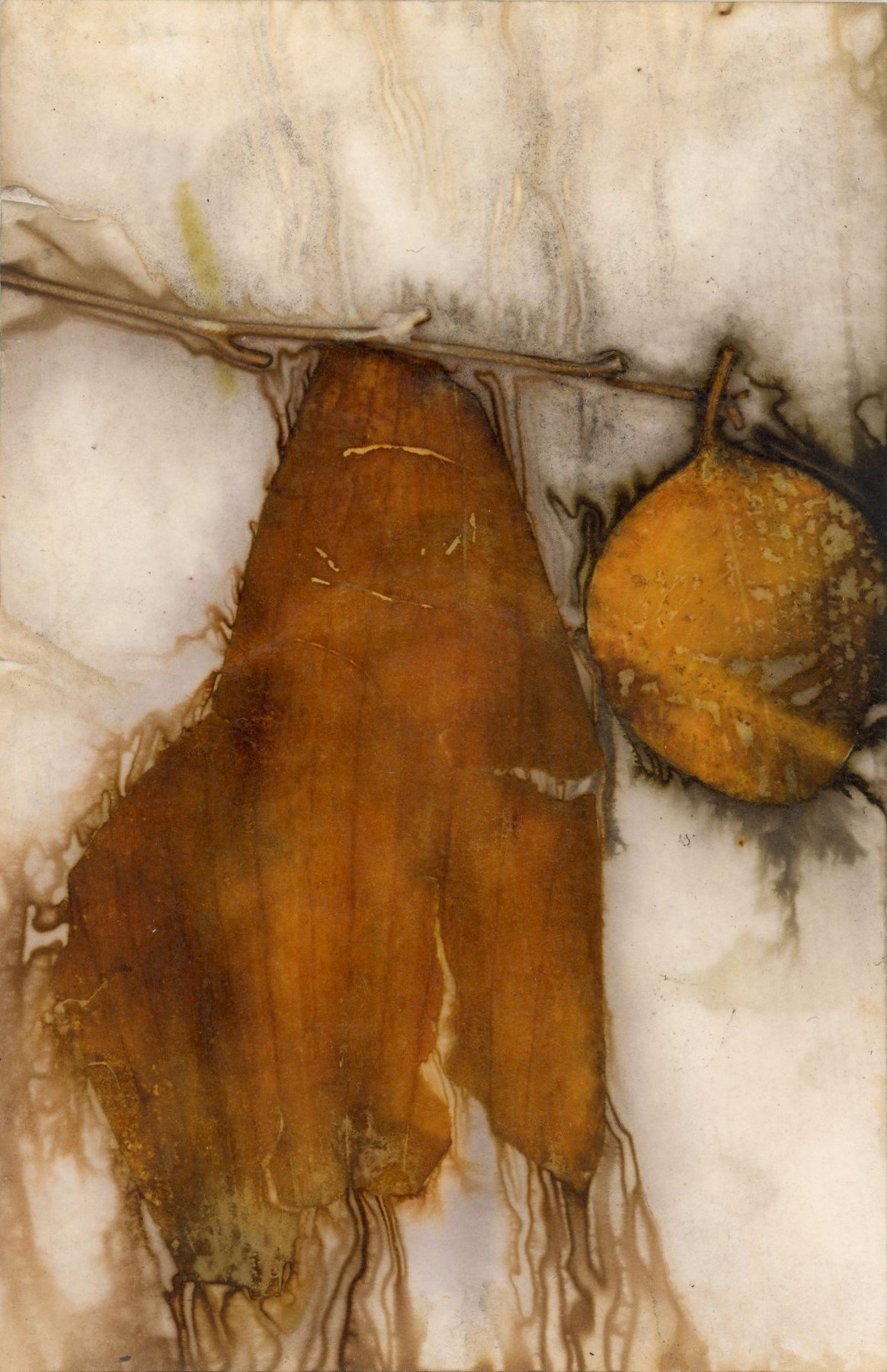
CM: Botanical printmaking is a form of contact printing. It’s a process that uses minerals, heat and pressure to transfer a plant’s natural pigments onto a surface, such as fabric or paper. Most substrates do not have a natural affinity to plant pigments and must be prepared to accept a plant’s print. The French word for this is “mordant,” which means biting. The mordant solution essentially gives the substrate the teeth it needs to chemically bond the plant to the substrate. Most of my mordants contain alum and iron salts, while others contain only vinegar and rust water. It depends on what kind of fiber I’m using and the kind of plants. After mordanting, I then cook the plant onto the substrate via intense pressure and steam. The whole process is slow and labor-intensive but very rewarding.
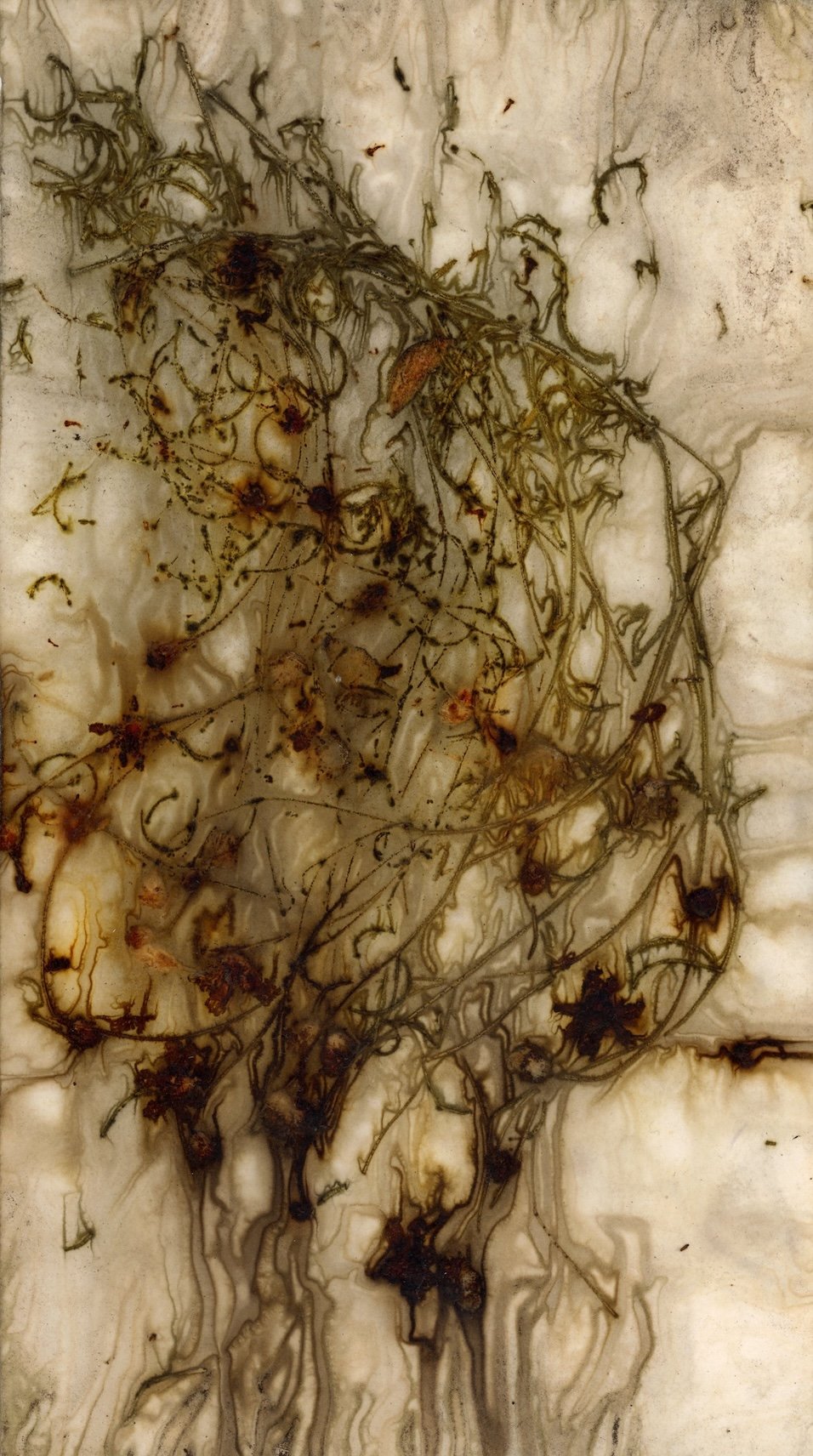
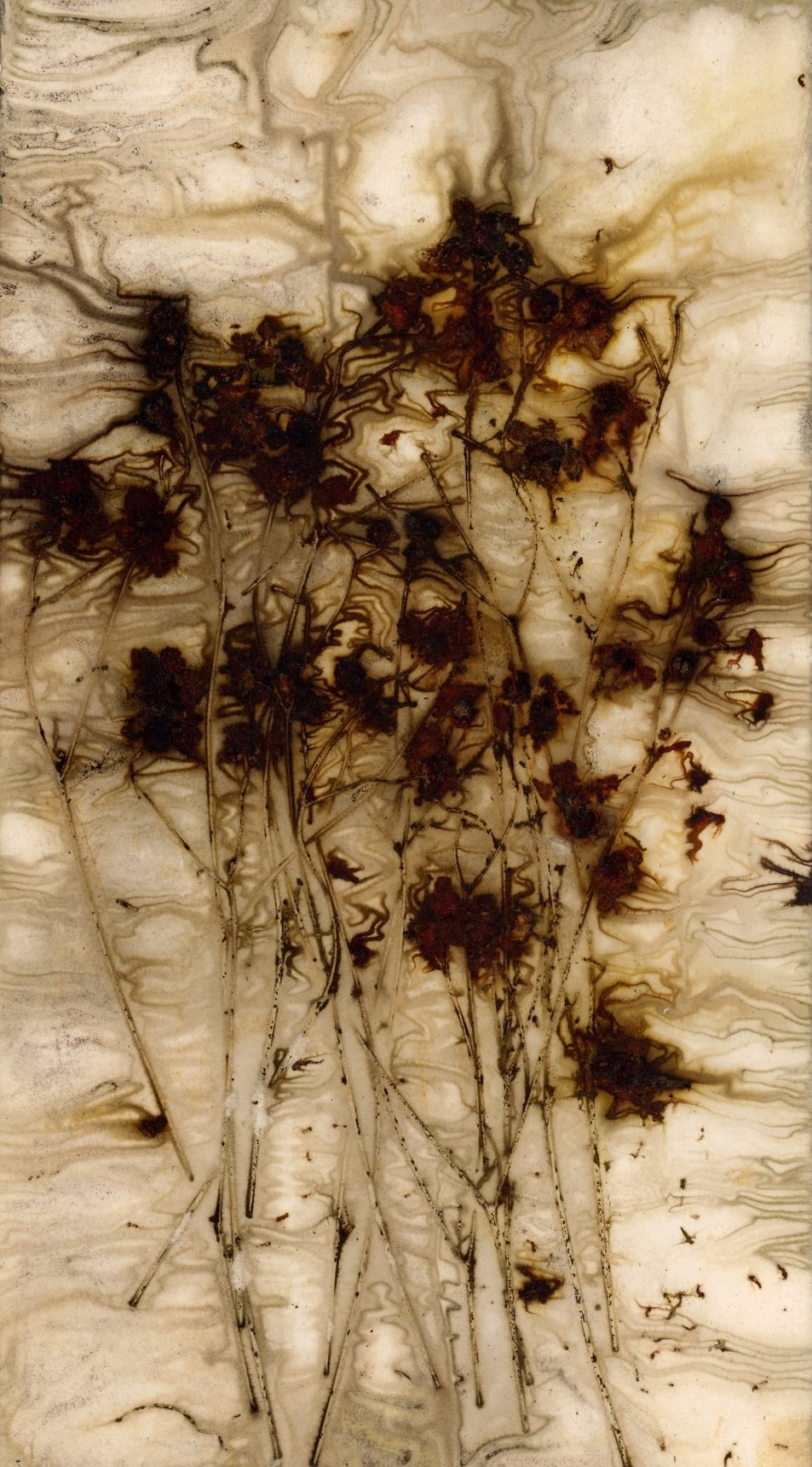
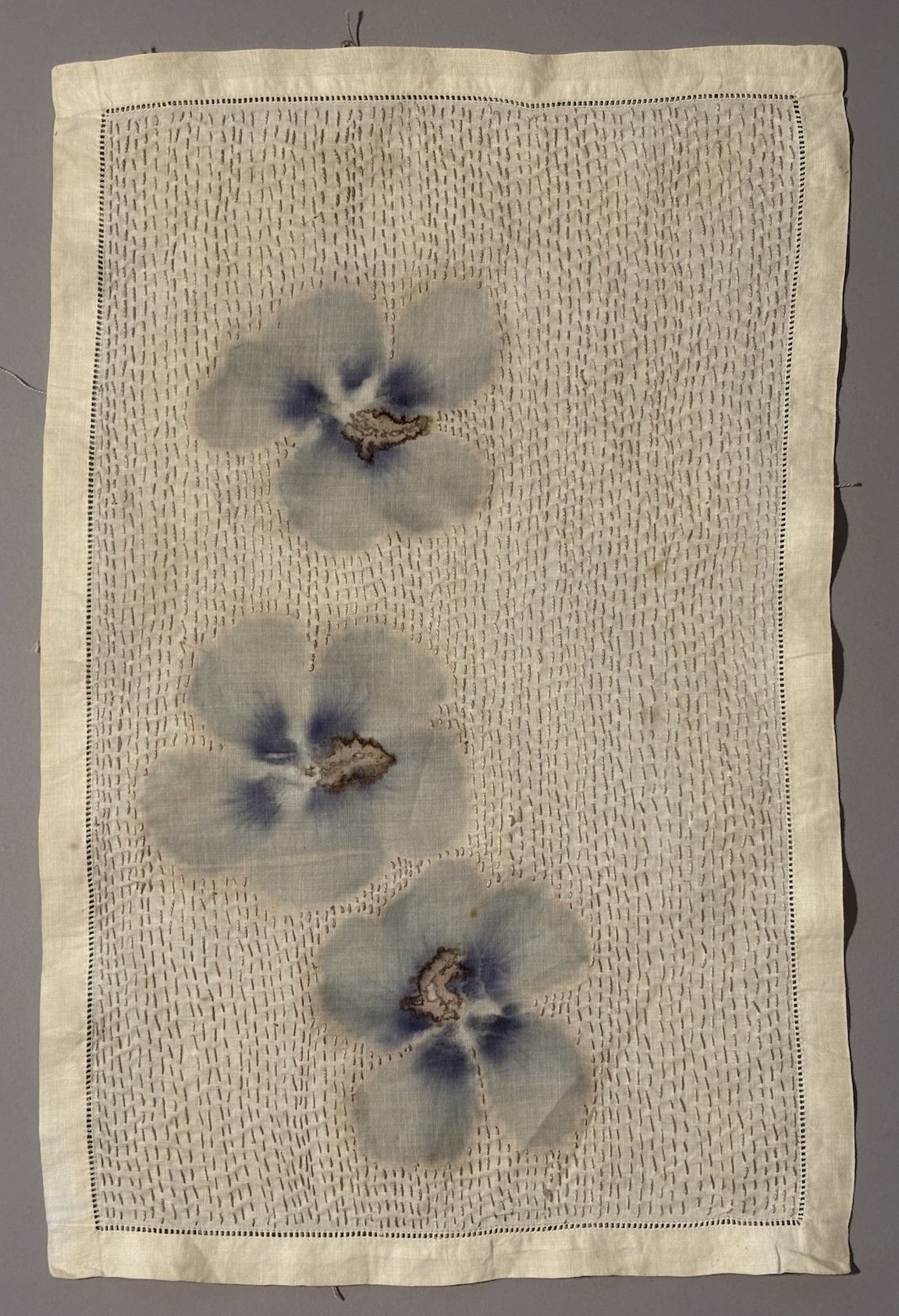
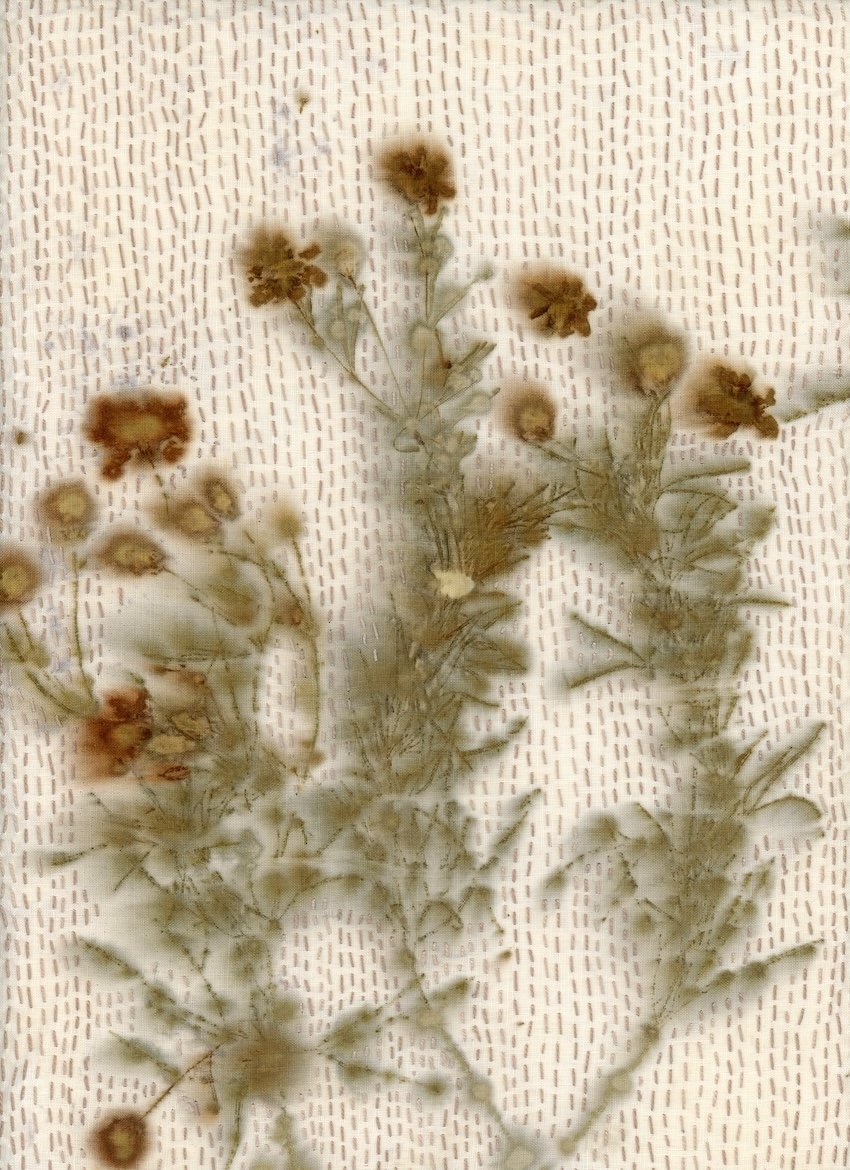
AAS: I find it fascinating that the chemical makeup of the flower or leaf determines what the transfer will be like. One of my favorites is the Coreopsis. [I will feature photo 1 coreopsis here. Talk about it. You did not send the colorful coreopsis loggwood1. If you also want to talk about that one and the colors that can appear, I will include that photo too.]
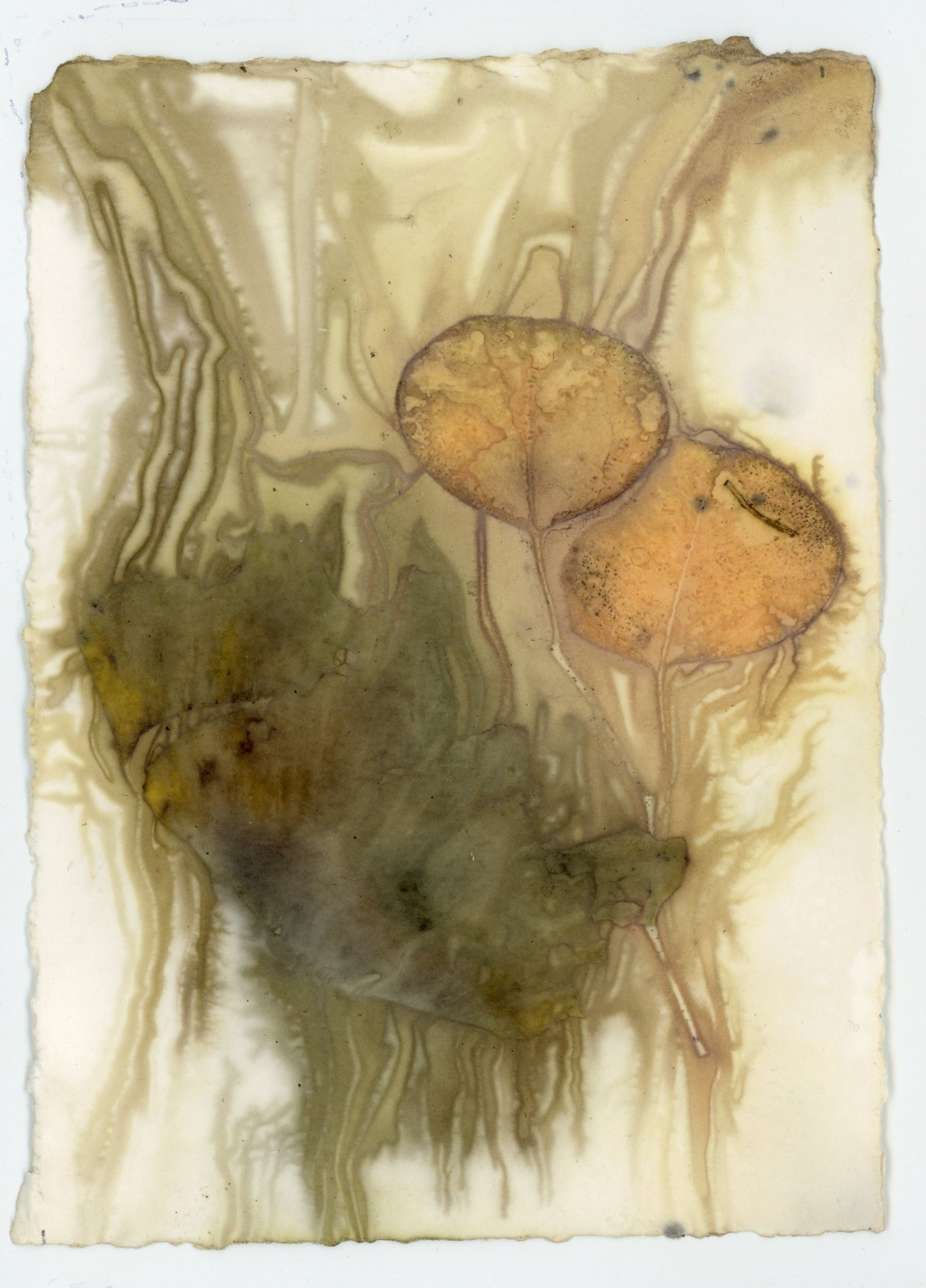
Cosmos and logwood on watercolor paper, 10” x 8"
CM: Yes! I love the colors that came out of that batch of prints, and it’s been hard for me to replicate them ever since. My technique was a bit different from what I just described but the principles remain the same in the way of mordanting, heat, water and pressure. I dipped the flowers in a mordant solution, sandwiched them tightly between two metal plates, and immersed them in a bath of logwood shavings. The logwood tree is a native of Mexico and is naturally purple. I cooked that print for more than two hours in boiling water. I can’t believe the paper could withstand that kind of prolonged exposure to water and heat.
AAS: Are there other specific considerations you must make when printing on fabric? The results you achieve are so lovely.
Shawl in process: printing with fresh flowers in the studio
CM: Yes, fabric is one of many variables in botanical printing. Linen and cotton, which are plant-based, are a bit trickier to work with, whereas wool and silk, which contain an animal protein, more readily accept plant colors. This process does not take well to synthetic fibers; they will not hold the mordant or plant pigments. I love working with viscose rayon. It is the closest thing to silk that I have found but more affordable. Most of my clothing is on viscose, but I plan to experiment on silk in 2027. All of my clothing is hand-washable, but the soap needs to be pH-neutral so as not to harm the natural pigments and chemistry I gave the garment in preparation for printing.
AAS: I first saw your clothes and scarves at AMFA Art Market, and I believe you also sell in the AMFA gift shop. Did your interest in botanical printmaking lead you to fashion design or were you first a dressmaker?
CM: My practice is a form of printmaking, and it translates beautifully onto clothing, or anything that can be worn on the body. When applying to markets or exhibitions, I never know which box to check; am I a textile artist or printmaker? It’s really a marketing question because it’s both. Humankind has been printing on textiles for thousands of years. I tend to lean toward whatever the market will respond to or what resonates with a particular audience.
It is especially meaningful to show a mix of clothing and fine art in a market or storefront setting; many of my customers buy both, and all of them have questions about the process and the many possibilities. For the AMFA Art Market and Museum Store, my collection included clothing, small works on paper, and vintage tapestries. There is cohesion in the body of work because I print seasonally. When hibiscus is in full bloom, you can bet I’ll be working obsessively with it for five or six weeks–onto garments, paper, and antique textiles I have collected and prepared just for this purpose.
Right now, my work cycle is to sell at one high-volume market a year, followed by commissions, and teaching. AMFA Art Market opened a lot of doors for me. I secured additional clothing orders but also received commissions from artists and fashion designers. I own a business with my family called Goofball Industries. My husband, Lindsey, is a chairmaker, and my sons carve birds and do dye work with us. Lindsey and I have begun collaborating on a few projects, pairing my printed textiles with his hand-made furniture. We are hoping to work with an interior designer next year. We use instagram, @goofballindustries, to keep folks up to date.
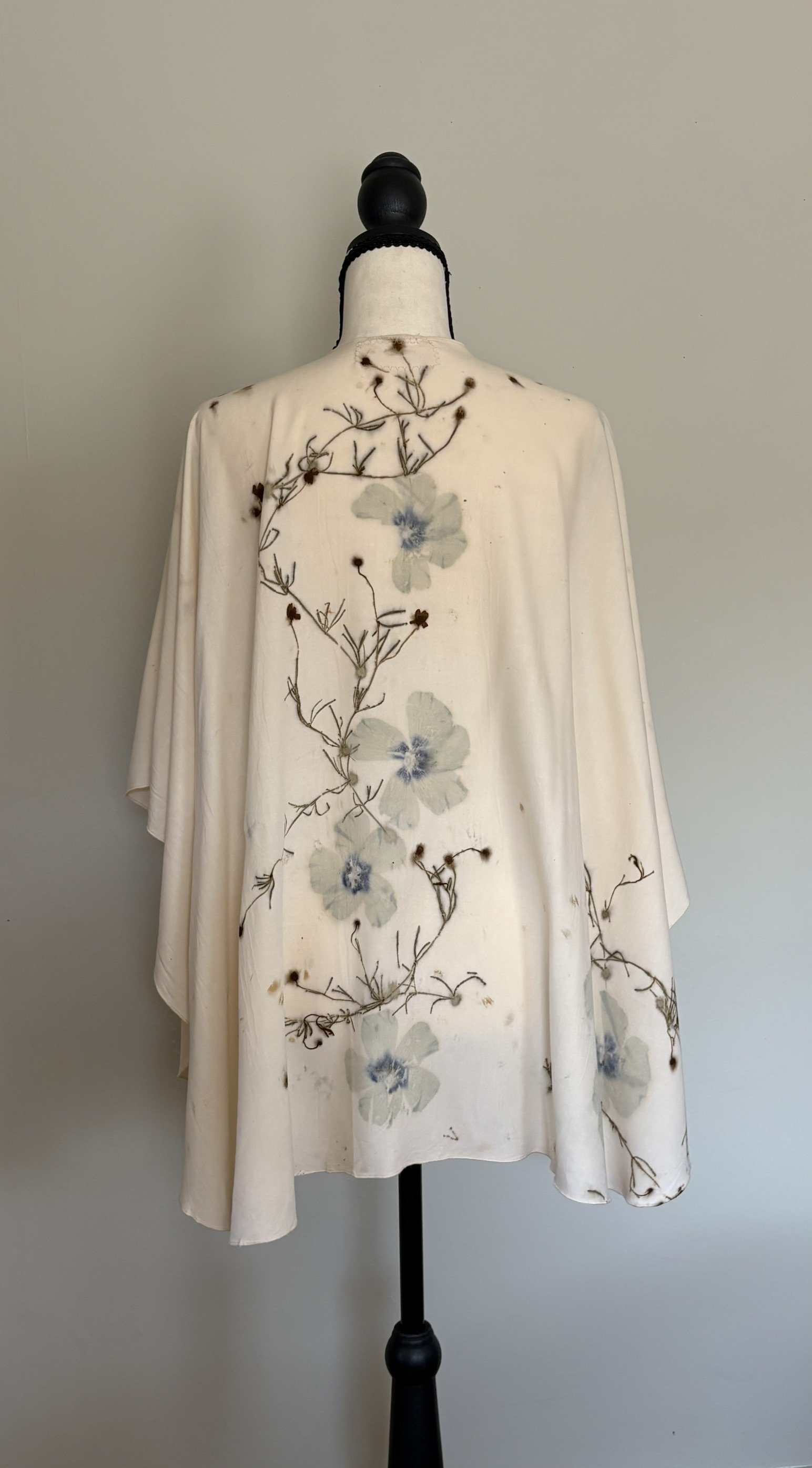
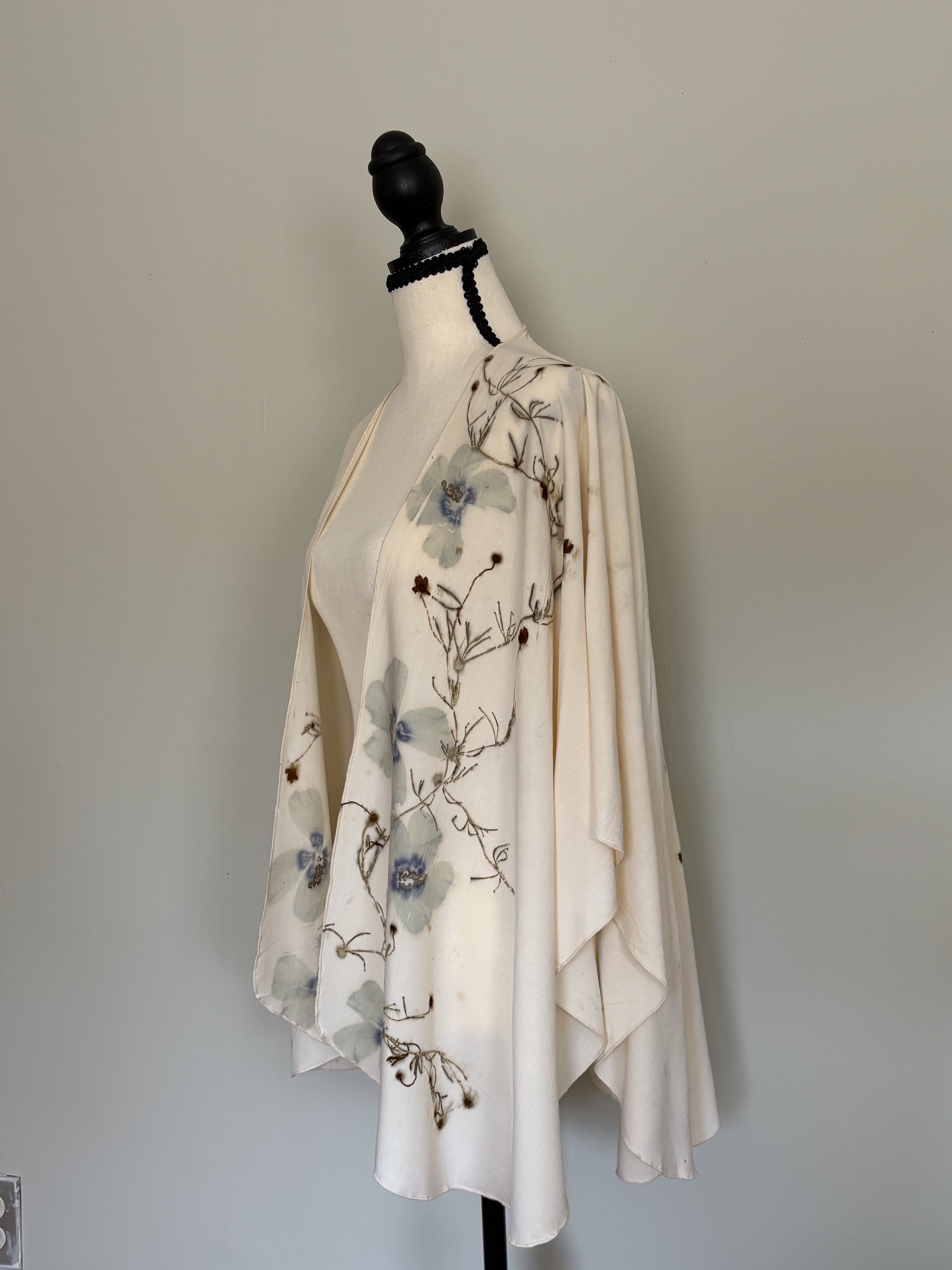
Shawl with coreopsis (detail)
AAS: I love how you use the botanicals to compliment the shape of the garment. I think your Shawl in Coreopsis and Hibiscus very striking.
CM: Thank you, the wildflowers sort of crawl up the spine of that piece. I held back on the volume of plants I used when laying out the design, so there is quite a bit more negative (white) space. Coreopsis and hibiscus print on both sides of their leaves and petals, so I was able to print the front and back of the shawl as a mirror image.
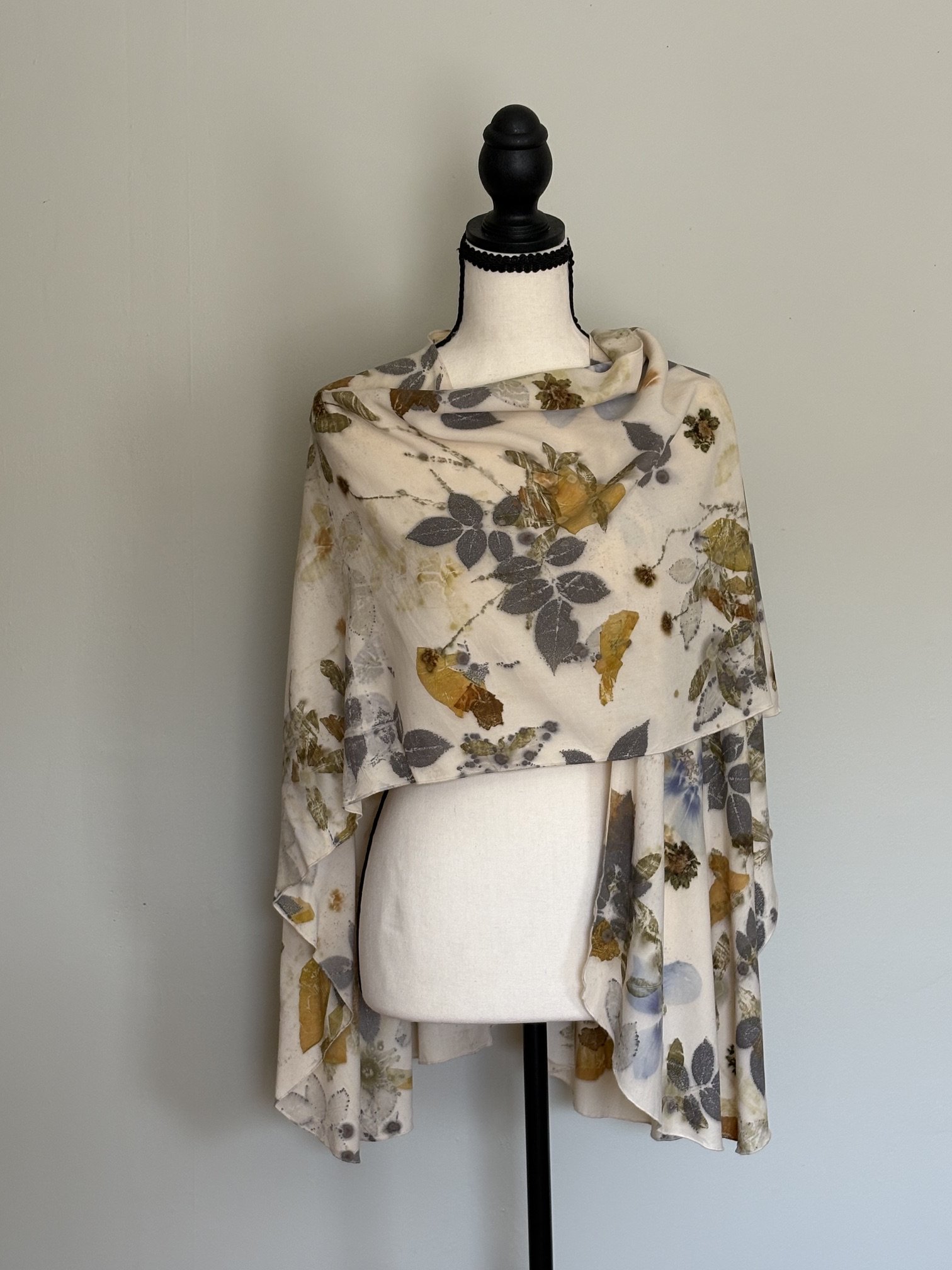
AAS: I grew up with pecan trees, so I instantly recognized them on one of your scarves. They have somewhat of a unique chemistry, don’t they? It is a wonderful effect.
Scarf with pecan
CM: Pecans are wonderful to work with because they are rich in tannins. They also print differently depending on the side of the leaf; the top tends to print pink, and the bottom prints a deep mossy green. My favorite mordant when printing with pecan leaves is heavy in iron, as with the scarf, more so than what I would use when printing a more colorful flower. The iron and tannin reaction yields incredible detail in a print. This is the “bite” that iron gives to the process and it is like looking at a leaf through a microscope.
Honestly, I could spend a year printing with pecans and never get bored. Choice of fabric, mordant, tap water–even time of year or day I harvest the leaves –all interact with the creative process.
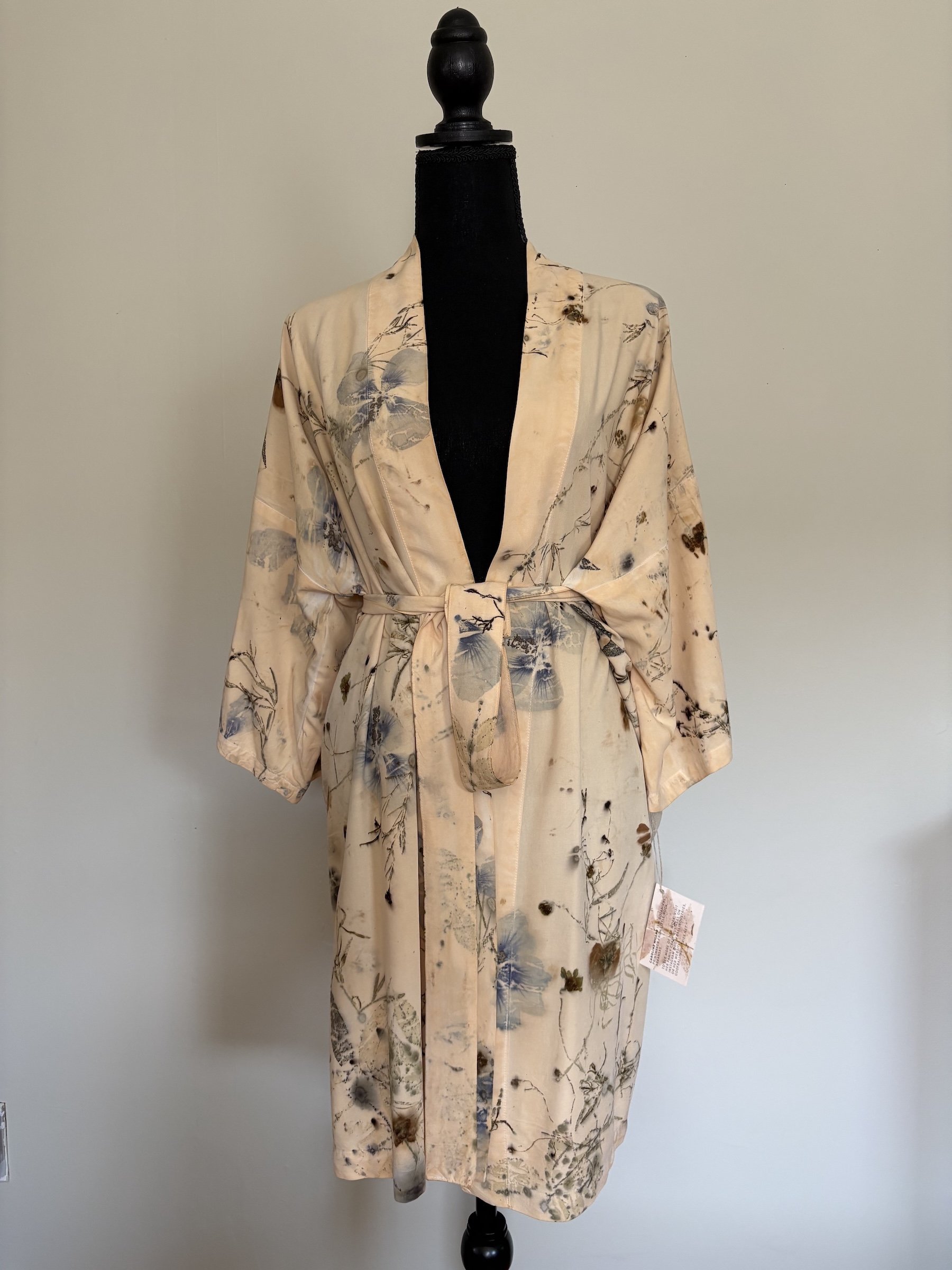
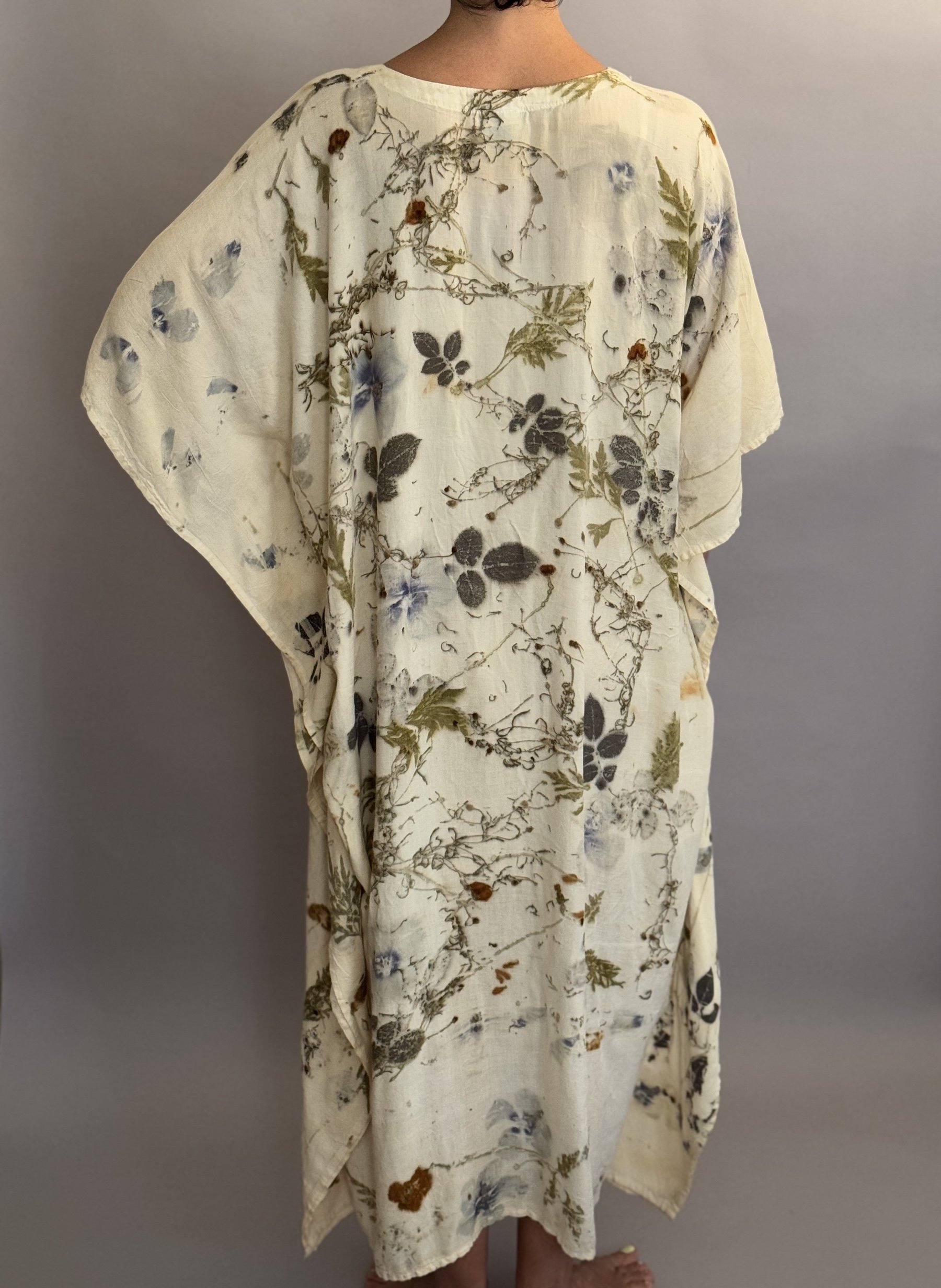
Dress with iron, oak and wisteria
AAS: In your dresses that are stained dark, the effect is totally different. It becomes more textural like with your Dress with Iron, Oak and Wisteria.
CM: You’re right, the effect is different in the iron and oak garments. For these I used a dye blanket to achieve a background color, and the plant acts more as a resist. I soaked a terrycloth blanket in a solution of oak gall for several hours. When I was ready to print, I arranged the wisteria vine directly onto the garment and then covered it in the oak blanket. The silvery purple-gray of the dress is the color of the oak tannins reacting to iron in my mordant. If you were to dip an oak shaving in rust water, the same color would appear. There is so much chemistry happening in that dress!!
AAS: What is it about working with natural fabrics and nature’s art –plants, flowers, and leaves, that keeps you motivated and excited about being creative?
CM: I appreciate the balance of discipline (following recipes, keeping extensive notes, journals and print samples) and experimentation that is part of the creative process. I am also much more engaged than I used to be with the natural world and what is growing around me, not only in my next-door neighbor’s garden but also in the alleyways, vacant parking lots and roadside ditches. I hope I can share this process with even more people in the coming years.
AAS: Tell me about the classes you teach at AMFA.
CM: I gave my first workshop at AMFA earlier this month. I designed the course to be an introduction to botanical printing, and the biggest challenge for me was covering the principles behind the process without boring folks; I also needed to accelerate a few steps similar to how it’s done on a cooking show. So, my students dutifully suffered a few chemistry lessons with me before designing their own works. On the second day of this class, everyone surprised me with clippings from their gardens. They were spilling out of their purses! I hadn’t prepared for that, but it reminded me to make time for individual exploration and sampling. They found so much joy in the discovery aspect of the printing, and it was special for us to witness what the plants can give as a group.